



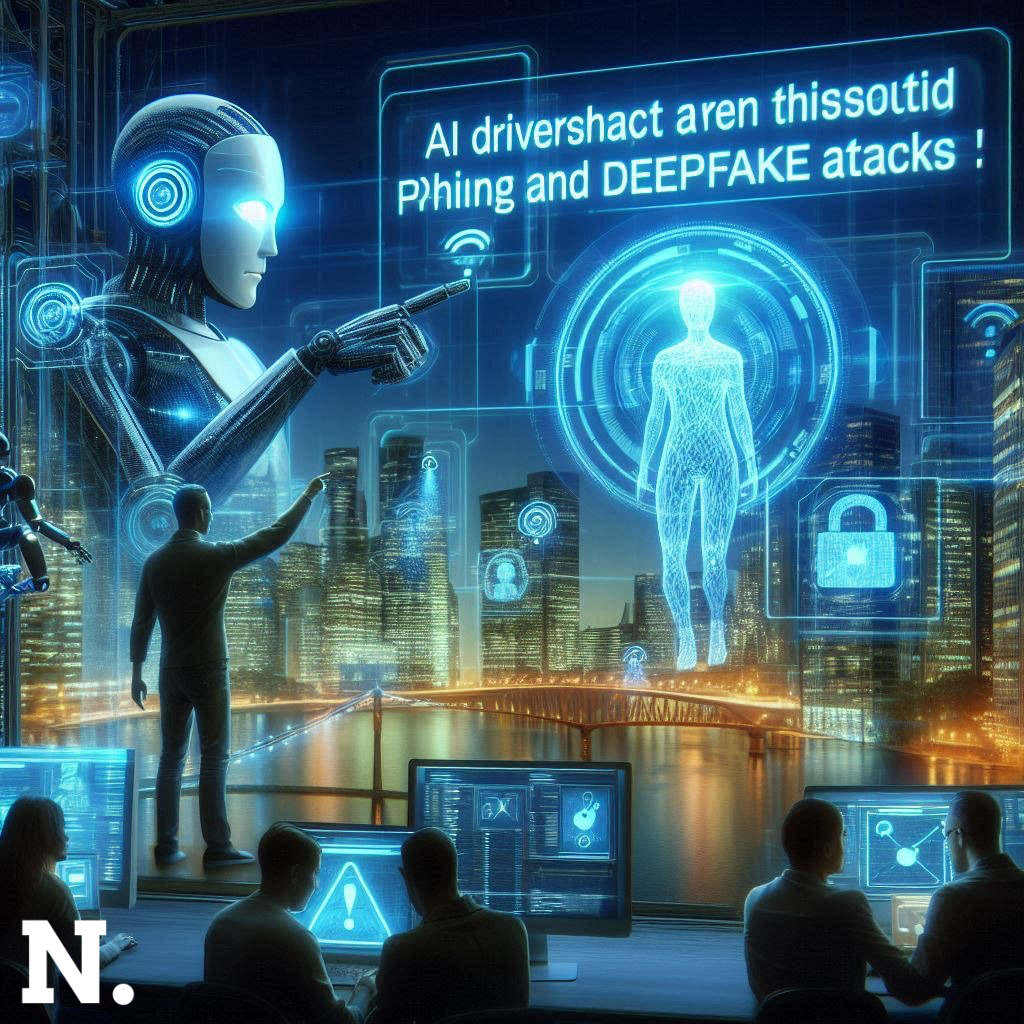


As artificial intelligence (AI) continues to advance rapidly, traditional security awareness training is increasingly under threat. The emergence of sophisticated AI-driven attacks such as smishing, vishing, deepfakes, and AI chatbot-based scams challenges the effectiveness of conventional human-centric defense strategies.
The Current State: Humans Have a Slight Edge
Today, security awareness training equips individuals to recognize tactics used in social engineering attacks. Workers and customers are trained to spot phoney phone calls, questionable texts, and suspicious emails (phishing). These programs teach people to spot red flags and subtle inconsistencies. Such as unusual language, unexpected requests, or minor communication errors — providing a crucial defense line.
A well-trained employee might notice that an email supposedly from a colleague contains odd phrasing. Or else that a voice message requesting sensitive information comes “from” an executive who should already have access to that information. Consumers, too, can be trained to avoid mass-produced smishing and vishing scams effectively. However, even the most well-prepared individuals are fallible. Stress, fatigue, and cognitive overload can impair judgment, making it easier for AI attacks to succeed.
The Future: AI Gains the Upper Hand
Looking ahead two to three years, AI-driven attacks will become more sophisticated. By leveraging extensive data and advanced large language models (LLMs). These attacks will generate more convincing, context-aware interactions that mimic human behaviour with alarming precision. Currently, AI-supported attack tools can craft emails and messages nearly indistinguishable from legitimate communications. Voice cloning can mimic anyone’s speech. In the future, these techniques will integrate with advanced deep learning models. In oder to combine vast amounts of real-time data, spyware, speech patterns, and more into near-perfect deepfakes. Thus making AI-generated attacks indistinguishable from genuine human contact.
AI-based attacks already offer several advantages:
- Seamless Personalisation: AI algorithms can analyse vast data to tailor attacks specific to an individual’s habits, preferences, and communication styles.
- Real-Time Adaptation: The systems can adjust in real time, changing their tactics based on responses. If an initial approach fails, the AI can quickly pivot, trying different strategies until it succeeds.
- Emotional Manipulation: AI can exploit human psychological weaknesses with unprecedented precision. For example, an AI-generated deepfake of a trusted family member in distress could convincingly solicit urgent help, bypassing rational scrutiny and triggering an immediate, emotional response.
Evolving Security Awareness Training
As AI technology progresses, traditional security awareness training faces significant challenges. As the margin for human error rapidly shrinking. Future security awareness training must adopt a multifaceted approach. By incorporating real-time automated intervention, improved cyber transparency, and AI detection, alongside human training and intuition.
Integrating Technical Attack Intervention
Security awareness training must teach individuals to recognise legitimate technical interventions by brands or enterprises, not just the attacks. Even if users cannot distinguish between real and fake interactions by attackers, recognizing system-level interventions designed to protect them should be simpler. Brands and enterprises can detect malware, spying techniques, control, and account takeovers, using that information to intervene before real damage occurs.
Enhancing Cyber Transparency
For cybersecurity awareness training to remain effective, organisations must embrace greater cyber transparency, helping users understand expected defense responses in applications or systems. This requires robust defense technology measures in applications and systems. Enterprise policies and consumer-facing product release notes should outline “what to expect” when a threat is detected by brand or enterprise defenses.
Detecting AI and AI Agents Interacting with Apps
Brands and enterprises must implement defense methods that detect unique machine interactions with applications and systems. Patterns in typing, tapping, recording, movements within apps or on devices, and even the mechanisms utilized for these interactions are included in this. Non-human patterns can trigger end-user alerts, enhance due diligence workflows inside applications, or initiate additional authorisation steps to complete transactions.
Preparing for an AI-Powered Future
The rise of AI-powered social engineering attacks represents a significant shift in the cybersecurity landscape. To ensure that security awareness training remains a valuable cyber defense tool, it must adapt to include application and system-level interventions, improved cyber transparency, and the ability to recognize automated interactions with applications and systems. By implementing these measures, we can guarantee a more secure future while safeguarding brands and businesses from the unavoidable increase of AI-powered deceit.