



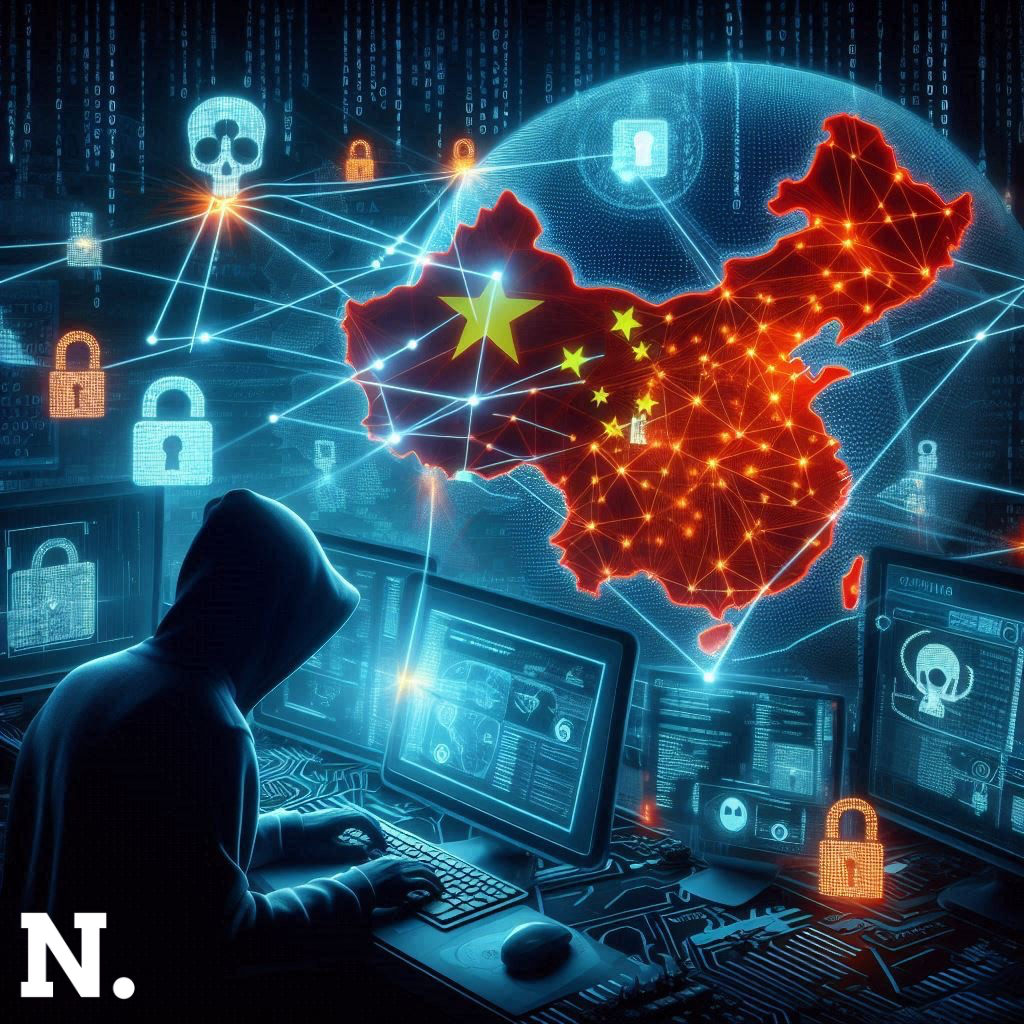


Advance Persistent Threat commonly known as the APT-41 is a China linked cyber threat group. It has been active since 2012, and engages in state-sponsored espionage activity. The authorities at the U.S Air Force coined this term in 2006, referring to a common source of Chinese cyber attacks. The cyber threat group most likely has its headquarters in the Sichuan province of China, in Chengdu.
It has strong ties in the Sichuan province as it is emerging as the Hacking hub of China. Since its inception they have also carried out financially motivated operations through video gaming platforms. APT-41 targets the high-tech, telecom, and video gaming industries in addition to them. Over the years the capabilities and targets of this cyber group have widened. APT-41 is also known by other names such as Winnti, Barium, Wicked Panda, Wicked Spider, Double Dragon etc.
Evolution of APT-41’s Targets Aligned with Chinese National Strategy
According to reports there has been a significant change of target groups by APT-41 over the year. When they started in 2012 they started with the video game industry, collecting ransomware and trying to dictate virtual currency. Later on they also targeted the hi-tech industry, intergovernmental organization, Health care. In 2016 they also started targeting the energy sector. According to the latest available information in 2019. These target industries are aligned with the Chinese national strategy. APT uses front companies to recruit and to conceal themselves. To state an example it uses the Chengdu 404 Technology Company Limited possessing to be a facial recognition and password recovery company.
APT-41’s Sophisticated Malware Arsenal and Operational Tactics
APT-41 differs from the others in that it possesses a large variety of malware. They have leveraged and accomplished around 46 malware. They have a reputation for forging fake identities for popular systems, such as spoofing emails by using.html attachments. Hence due to all of this it becomes difficult to detect the malware. Almost 150 distinct malware sets can be used by APT-41 in a single attack. Keyloggers, rootkits, backlogrs, credential stealers, and more techniques are used. APT-41 also engages in state sponsored strategic operations along with exploitation of private players.
Attackers known as APT-41 leverage networking device armament and network compromise to steal or obtain private information from targets.They also act as Chinese cyber espionage actors by virtualizing softwares.
It has also been noticed that the hackers in the APT-41 group have a fixed working time from 9 am to 7 pm according to the time one correspondent to China. APT-41 has two main objectives: first, financial gain; and second, cyber espionage. Microsoft and Linux are the two system suppliers most severely impacted by APT-41.
Chinese state sponsored actor
The People’s Liberation Army of China and the Ministry of State and Security are reportedly supporting the group. Their actions are probably motivated by a desire to hurt state governments in other states. This group has a moderate amount of contracts received from the Chinese state actors in order to conduct espionage activities. The key to Chinese cyber security policy is integration between the government entities and civilian units. This also included freelancers and contractors. APT-41 is known to showcase its aggressiveness and creativity. It has a connection with illegal marketplaces as well as state-sponsored units.
APT-41 when engaged in financially motivated operations, the Chinese authorities often pretend to ignore these activities. Although there exists a very thin line between cyber crime at the heart of all threat ecosystems and between state power. In recent years the onus of APT-41 is shifting towards Chinese state objectives. Thus they started targeting the telecom industry, international governments, foreign universities etc for espionage activities. In these targeted industries there is a coinciding factor between government interests and financial motives.
After the inception of the Make in China 2025 policy by the Chinese government, hackers started targeting industries related to Pharmaceuticals, semiconductor and High-tech. Thus APT-41 allows China to stand in the race of ongoing geopolitical conflicts in the world. As we can certainly imply that non-state actors are playing a crucial role in ensuring the cybersecurity of a state.
APT-41’s Strategic Targets and Global Impact
They are also known to leverage non-public malware. According to reports, the target industustries of APT 41 attacks are very much aligned with China’s Five year economic plan. Many stakeholders have accused them of collecting secret intelligence before any important event takes place. Directly targeted industries by APT 41 were software companies, healthcare, high-tech, media, pharmaceuticals, retail, education etc. Additionally, the telecom industry, travel services and virtual currency were also targeted.
Over a significant 7 year span they have targeted around 14 countries. These include the United States, Canada, India, Southeast Asia, Japan, South Korea, South Africa, Singapore, Turkey, Switzerland, United Kingdom, and Thailand. They generally target nations that actively support democracy, based on the trend.
APT-41 attacks in India
9 Indian organizations fell prey to APT-41 attacks in the year 2021. During which a huge number of sensitive data was hacked and stolen by the attackers. India has been one of the biggest targets of the APT-41 attackers. Their only motive to attack or hack Indian websites or systems is Data.
These attacks were carried out via the SQL injection technique. When injected into a website, this malicious computer code can provide unwanted access. It is another name for the kind of computer programming language known as Structural Query Language. A good SQL code can provide excellent results, although a malicious SQL can lead to unauthorized access.
Hackers were able to obtain credentials, email addresses, personal phone numbers, files, and the ability to issue remote instructions by targeting these websites. Later on, this data was sold on the black web. These attacks targeted websites across different sectors.
Air India was the target of a supply chain attack in 2021 by APT-41. The hackers attacked the SITA air travel software on which 90%of the world’s air travel is dependent. Due to this vicious attack 10 years of Air India’s data got compromised. The personal credentials and customer’s credit card details were exposed on the dark web. In May 2021, Air India announced this data breach, which came after similar announcements from Singapore Airlines and Malaysian Airlines. Because they all utilized the same IT provider, these airlines were all exposed. As a result, this cybercrime was called a “coordinated supply chain attack.” February 2021 was the month in which the breach occurred. It nearly affected 4,500,000 data subjects globally.
Dual Nature of Operations
The operations carried out by this Chinese cyber threat group overlaps between financially motivated operations and espionage activities. The espionage activities often carry state interest and are backed by the state authorities as well. It has been reported that the technology used to carry out both of these operations is quite similar. According to U.S firm Mandiant, the same email-id ‘hrsimon@gmail.com.’ was used to carry out an espionage campaign against Taiwan in 2016. After which it was used in 2018, for a financially motivated attack on the European Bitcoin exchange system. The motive behind both the operations was different. Although the technology or the method put to use was similar.
A Path Forward
Organizations must ensure comprehensive sensor coverage to eliminate blind spots that harbor cyber threats. Leveraging technical intelligence, such as IOCs, within a SIEM enhances event correlation and threat detection. Partnering with a top-tier cybersecurity firm is crucial for expert assistance in sophisticated attack scenarios. By filtering and monitoring HTTP/HTTPS traffic, a Web Application Firewall (WAF) can be deployed to provide application-level protection.
Threat intelligence aids in profiling threat actors, tracking campaigns, and understanding attack contexts. Implementing 24/7, managed, human-based threat hunting complements existing cybersecurity technologies. These tactics collectively bolster an organization’s defense against advanced persistent threats (APTs).
Conclusion
Global cybersecurity has been greatly influenced by APT-41, the China-affiliated cyber threat group that is well-known for using sophisticated malware and state-sponsored espionage techniques. From targeting sensitive sectors like healthcare, telecommunications, and aviation to conducting supply chain attacks affecting millions, including in India with the Air India breach, APT-41 exemplifies the evolving and pervasive nature of cyber threats. With its operational sophistication and strategic alignment with Chinese national interests, APT-41 underscores the critical importance of international cooperation and robust cybersecurity measures to mitigate such threats effectively in the future. In the current geopolitical scenario cyber attacks by China are becoming the new normal.
APT-41’s tactics highlight the need for continuous vigilance and proactive defense strategies. Organizations must invest in advanced threat detection and incident response. Sharing threat intelligence across international borders can enhance collective cybersecurity resilience. Regular cybersecurity training for employees can reduce the risk of successful attacks. Governments and private sectors must collaborate to develop robust cybersecurity frameworks. Strengthening supply chain security is vital to protect against widespread breaches.