



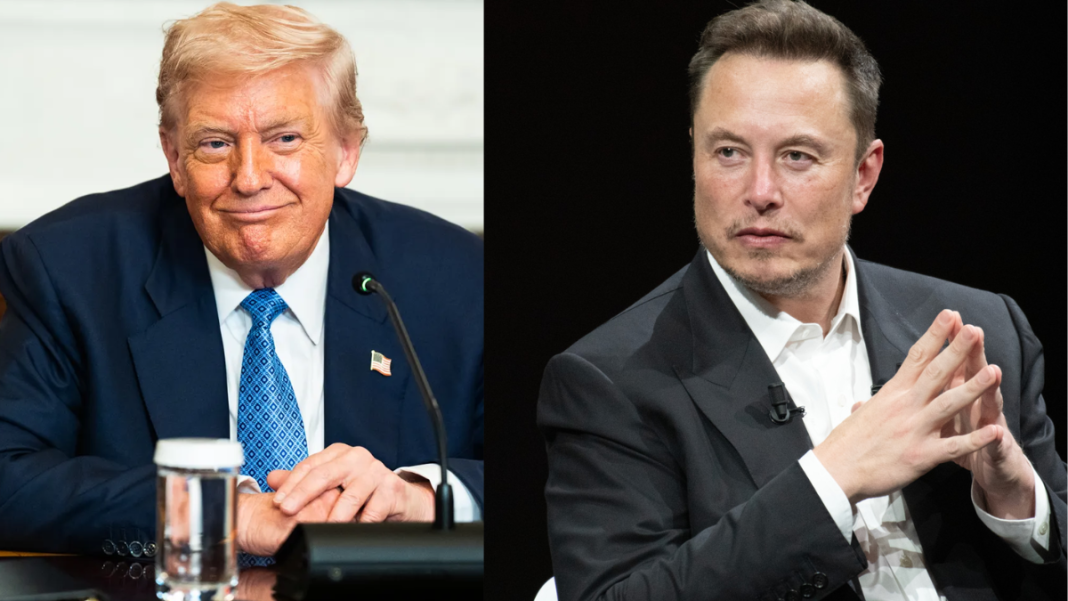


Elon Musk recently spoke about Donald Trump and called him one of the funniest people he knows. He said Trump’s humour is “natural” and effortless, meaning he does not need to try to be funny—it comes to him instinctively. Musk shared this during a popular podcast, drawing attention to moments when Trump’s humour appears in everyday situations.
To explain, Musk recalled a meeting where a city official was asked by a reporter if he still considered Trump a certain political type. Before the official could answer, Trump jumped in with a quick joke: “That’s OK. You can just say yes. It’s easier than explaining it.” Musk said this moment perfectly showed Trump’s natural comedic timing.
The official later answered “yes” but noted that he still hoped to maintain a workable relationship with the president. Musk emphasised that moments like these show a side of Trump that people do not usually see—someone who can make people laugh without even trying.
Musk and Trump’s Public Clashes
Elon and Trump’s relationship has had its ups and downs. Earlier in 2025, they clashed publicly over tax and spending plans. Musk criticised Trump’s policies, calling them financially reckless. This disagreement led to personal attacks, threats to remove federal support from Elon’s companies, and even Elon suggesting he might start a new political party.
Trump family alarmed as Bettina Anderson’s Musk connection resurfaces amid growing scrutiny
Despite the tension, the situation eventually cooled. Musk and Trump were seen shaking hands at a memorial event and later sharing a White House dinner. These interactions suggested that the two were slowly reconciling after months of public disagreements. Elon also reportedly spoke positively about Trump’s political influence during private gatherings.
The Mamdani Moment
The meeting Musk referred to has been called the “Mamdani moment” because it involved New York City Mayor Zohran Mamdani and captured a memorable exchange. During the discussion, a reporter asked Mamdani a serious political question about Trump. Before Mamdani could respond, Trump interrupted with a quick, witty remark: “That’s OK. You can just say yes. It’s easier than explaining it.”
Musk highlighted this moment to show how humor can arise naturally, even in high-pressure political situations. The joke immediately lightened the room and demonstrated Trump’s instinctive comedic timing.
According to Elon, moments like these reveal a different, often overlooked side of public figures. Humour can ease tension and make difficult conversations more approachable. Trump’s spontaneous joke, Elon said, was not only entertaining but also showed a human side rarely seen in political settings.
This incident has been widely discussed because it illustrates how public interactions can include light, memorable elements. Musk’s retelling reinforces the idea that humor, even when unplanned, can be a powerful form of communication and connection.
Musk Warns About Brain-Rotting Videos
During the same podcast, Elon also spoke about modern technology and its impact on society. He singled out short-form video platforms such as TikTok, Instagram Reels, and YouTube Shorts. Musk said these apps are “rotting people’s brains” and harming attention spans.
Elon criticized how people spend hours scrolling through short videos, which can distract them from meaningful activities. He said this fast-moving content changes the way people think, making it harder to focus on complex ideas or spend time on deep learning.
These platforms dominate online engagement, keeping millions of people constantly hooked. While entertaining, Musk warned that this form of content may have long-term negative effects on mental focus and daily habits. His comments reflect broader concerns about the influence of digital culture on attention, productivity, and social behaviour.