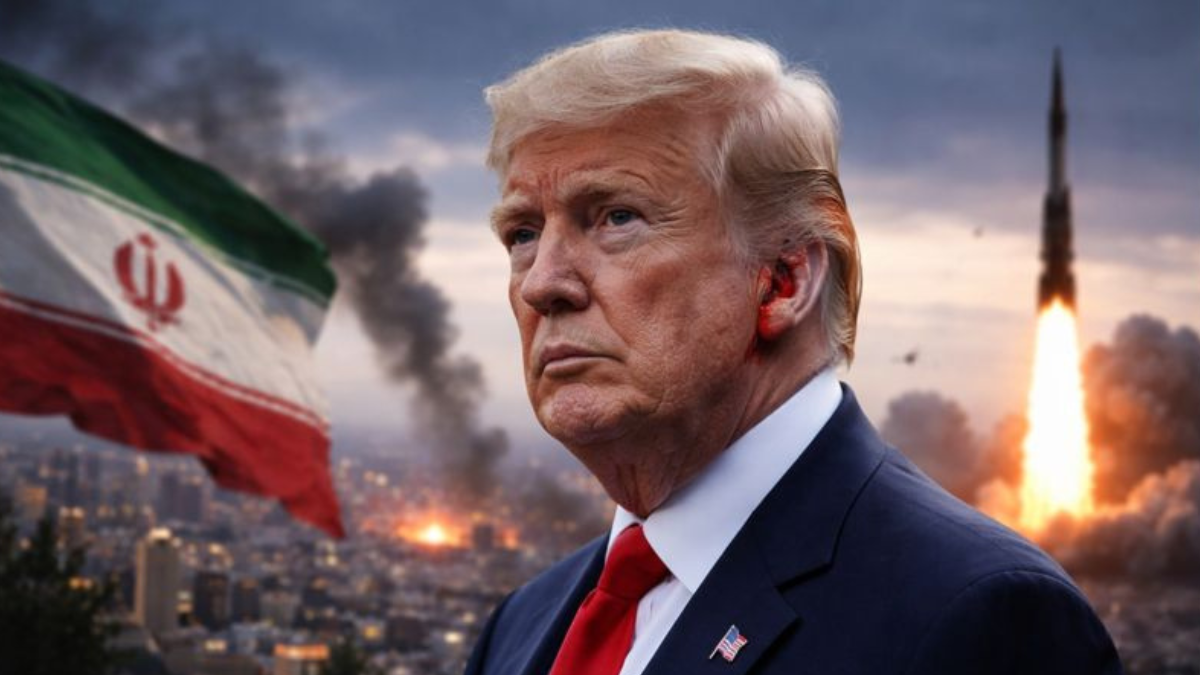
Iranian state television (Iran TV) has aired a chilling warning aimed directly at US President Donald Trump. The broadcast displayed a photo from the July 2024 campaign rally in Butler, Pennsylvania, where Trump was grazed by a bullet. Alongside the image, the screen showed the message: “This time it (the bullet) will not miss the target.”
This marks one of Tehran’s clearest threats against Trump to date. The warning comes amid reports that Trump is weighing potential military strikes against Iran. Iranian officials, in turn, have accused the United States of using unrest inside the country as a justification for possible intervention. So far, Iranian authorities have not issued any official response to the broadcast.
The segment paired the threatening message with a photograph from the Butler rally shooting. That attack, which occurred during a pre-election speech, left Trump wounded but alive. Analysts say the combination of the image and message sends a strong signal, further heightening tensions between the United States and Iran.
CBS News erupts after last-minute decision halts cleared 60 Minutes investigation
Military Movements Add to Tension
The warning comes as reports indicate that the United States has started repositioning its troops in the Middle East. Forces have been shifted from the largest US base in the region, reflecting concerns that Iran could retaliate if attacked. Experts also noted Iran’s previous retaliatory strike in June 2025 at Al Udeid Air Base outside Doha, Qatar, as a reminder of Tehran’s ability to respond to military threats.
In an interview with CBS News on Tuesday, Trump issued a firm warning to Iran. He said the United States would respond decisively if Tehran escalated its crackdown on protesters. “We will respond strongly if they take such actions. If they begin killing thousands of people—and now even talk of executions—we’ll see what happens next,” Trump stated.
Iranian authorities dismissed Trump’s comments, calling them a pretext for potential military intervention. Despite the warnings and troop movements, protests continue across Tehran. Witnesses have reported heavy security deployments and ongoing clashes between demonstrators and police in several districts.
Trump Backs Pam Bondi in Public, but Private Anger Grows Over DOJ Handling of Epstein Files
Domestic Unrest Fuels Pressure
Iran’s leadership, led by Supreme Leader Ali Khamenei, faces mounting pressure from both domestic unrest and regional conflicts. Protests erupted in December after the Iranian rial fell to record lows, worsening economic problems already caused by long-standing sanctions tied to the country’s nuclear program.
According to the Human Rights Activists News Agency, more than 2,600 protesters have been killed since demonstrations began, and over 18,400 people have been detained. On Wednesday, Iran held a mass funeral for 100 security personnel who died during the protests. Tens of thousands attended, waving Iranian flags and pictures of Supreme Leader Ali Khamenei.
The combination of a direct threat on state television, ongoing protests, and shifting military deployments has intensified the already fragile standoff between the United States and Iran. Trump remains at the center of the situation, with both countries closely monitoring each other’s moves.
Trump says tariffs will remain a central part of US trade and manufacturing policy
The combination of a direct threat on state television, ongoing protests, and shifting military deployments has further strained the already tense relationship between the United States and Iran. Trump remains a central figure in the standoff, with both nations carefully observing each other’s actions. This situation highlights the fragile state of relations between Washington and Tehran and serves as a reminder of how quickly tensions can rise in a region already facing significant political and social challenges. It also underscores the uncertainty faced by international observers, policymakers, and citizens, as each move and statement could affect the delicate balance of power and regional stability.
Trump has also confirmed that tariffs will continue to play a key role in US trade and manufacturing policy.