





Artificial intelligence has brought many benefits, but it has also opened the door to serious misuse. One of the fastest-growing concerns is non-consensual AI-generated pornography, where fake sexual images or videos are created using a person’s likeness without their permission. These images often look real and can spread rapidly online, causing deep emotional and social harm.
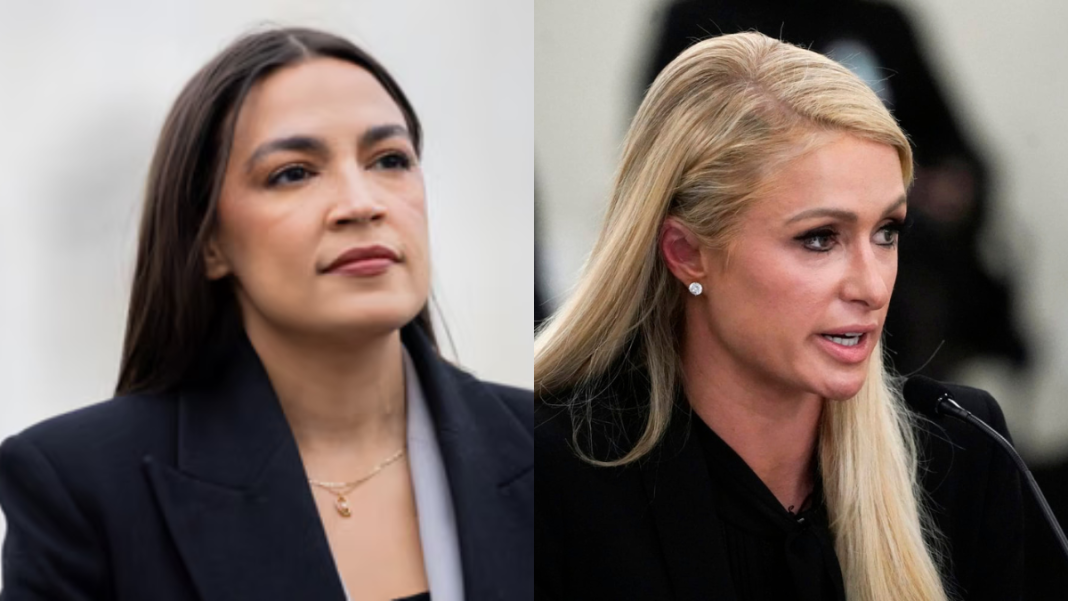
This growing threat has prompted a renewed push in the United States Congress, where Rep. Alexandria Ocasio-Cortez has joined forces with celebrity Paris Hilton to advocate for stronger legal protections. Together, along with lawmakers from both political parties, they are urging action on a bill designed to help victims fight back against this form of digital abuse.
Understanding the DEFIANCE Act and Its Purpose
The proposed legislation is known as the DEFIANCE Act. Its core purpose is to address the legal gap that currently leaves many victims of AI-generated sexual images without effective remedies. The bill would create a civil cause of action, allowing individuals whose images are used in non-consensual deepfake pornography to sue those responsible.
AOC says the question is no longer if Trump committed impeachable acts — but which ones
Rep. Alexandria Ocasio-Cortez has stressed that the rise of easy-to-use AI tools has led to an explosion of such content. According to her, AI-generated images are increasingly being used to sexually harass women, children, and other victims. She has also openly stated that she herself has been targeted by deepfake pornography, making the issue personal as well as political.
The press conference supporting the bill also included Rep. Laurel Lee of Florida, a Republican co-sponsor, highlighting the bipartisan nature of the effort. Supporters explained that the law focuses on accountability rather than punishment, giving victims a way to seek justice and damages in civil court.
The DEFIANCE Act has already cleared a major hurdle. It passed the Senate earlier this month by unanimous consent, led by Senate Minority Whip Dick Durbin and Senator Lindsey Graham of South Carolina. House Speaker Mike Johnson has also expressed support for the legislation, adding momentum to its progress.
Paris Hilton’s Experience and the Human Cost of Deepfakes
Paris Hilton played a central role in drawing public attention to the emotional impact of image-based abuse. She spoke about how AI-generated deepfake pornography mirrors her own past experience, when a private video of her was leaked without consent when she was 19 years old. Ocasio-Cortez referenced this experience while stressing how personal stories have helped lawmakers understand the seriousness of the issue.
Alexandria Ocasio-Cortez warns Musk’s rush to deploy AI left kids exposed to deepfake abuse
Hilton explained that the incident was widely labeled a “scandal” at the time, but she described it as abuse. She pointed out that there were no laws or even clear language back then to protect victims. According to Hilton, the situation today is even more dangerous because AI allows anyone to create fake sexual content without stealing anything real, a concern echoed by Ocasio-Cortez during the press event.
Ocasio-Cortez revealed that more than 100,000 AI-generated deepfake images using her likeness exist online. Hilton warned that while she had resources and visibility, many women and girls facing similar abuse today do not. Ocasio-Cortez highlighted this gap, noting that most victims lack the tools to defend themselves or remove such content once it spreads.
Other advocates and survivors also attended the press conference, reinforcing that this issue affects people from many backgrounds. They described deepfake pornography as a form of sexual harassment that can follow victims indefinitely due to the permanence of online content.
Bipartisan Backing and Political Tensions in Congress
Support for the DEFIANCE Act extends across party lines. The press event included lawmakers from both parties, including Reps. Anna Paulina Luna of Florida, Claudia Tenney of New York, and Nancy Mace of South Carolina. Luna noted that working across party boundaries often requires pressuring one’s own side, something she said both she and Ocasio-Cortez have done.
Ocasio-Cortez downplayed individual credit for the bill, emphasizing teamwork and the importance of bipartisanship, especially since Republicans currently hold the majority in the House. She explained that the bill had stalled in 2024 not due to opposition, but because of limited time at the end of the last Congress.
Taiwan doubles down on A1 chip leadership in landmark US Tariffs deal as China
looks on
Despite the unified message on AI abuse, broader political conflicts remained visible. During the same period, Rep. Nancy Mace posted a controversial video targeting Rep. Sarah McBride, the first openly transgender person elected to Congress. The incident underscored ongoing divisions in the House, even as lawmakers cooperated on the DEFIANCE Act.
Still, supporters of the legislation remained focused on its goal: addressing the real and growing harm caused by non-consensual AI-generated pornography. The bill’s progress reflects increasing recognition that digital abuse requires modern legal solutions, especially as artificial intelligence continues to evolve.