



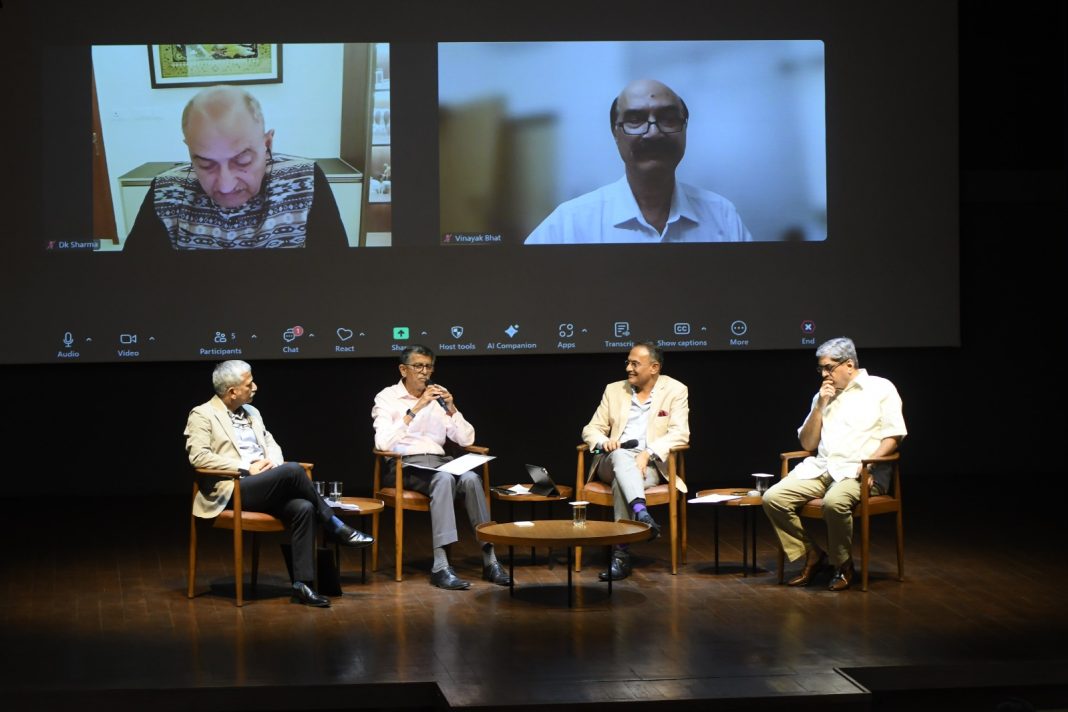


Expert Panel Meets in Pune to Discuss Operation Sindoor
A special session was recently held at the PIC Auditorium in Pashan, Pune, where a panel of well-known experts gathered to talk about Operation Sindoor. This event brought together military officers, diplomats, and defense analysts to explain what’s really going on in the current Indo-Pak situation. They discussed not just the military response but also how fake news, advanced warfare, and public opinion play major roles in today’s conflicts.
The experts focused on how wars are changing. They said it’s no longer just about soldiers and weapons. Now, technology, media, and even social networks are being used in these modern battles. The event aimed to help people understand the seriousness of the situation and how prepared India is to face such challenges.
New-Age Warfare and Strategic Pressure Explained
Lt. General Vinayak Patankar opened the discussion by explaining that today’s wars are not just traditional. They involve both conventional warfare and electronic warfare. This means countries are now using not just weapons and troops, but also computers, satellites, and cyber tools to win battles.
He warned that China has been cleverly using Pakistan against India. Instead of directly fighting, China supports Pakistan in ways that avoid full-scale war, partly because of strong business ties between India and China. General Patankar also explained how psychological warfare works. Without firing a bullet, one country can break the morale of the other just by using smart tactics and fear.
He expressed concern for innocent civilians, saying that they are the ones who suffer the most during any military conflict. People lose their homes, families, and peace of mind. He also gave a detailed picture of how terrorist groups function—from recruiting young people to planning attacks. He said these groups are highly organized and use both local and international networks.
Misinformation, Air Power, and the Digital Battlefield in Operation Sindoor
Ambassador Gautam Bambawale clarified that what happening right now should not be calls a full war. He described it as a “war-like situation.” Ambassador Gautam Bambawale reminded everyone that Pakistan’s military is strong and that China’s help to Pakistan is not accidental—it is part of a strategy.
He warned people against believing everything they see on social media. Many times, false information is spread to confuse or scare people. He strongly advised everyone to check news from trusted sources like PIB (Press Information Bureau). He also said Operation Sindoor was India’s way of sending a clear signal: supporting terrorism will not be tolerated.
Air Marshal Diptendu Choudhary spoke about how wars are no longer just fought with guns. He said public opinion and national morale now have a big impact. He explained that technology helps the military make quicker and smarter decisions. The Air Force, according to him, plays a big role because the outcome of a conflict can often be decided by air strikes. He made it clear that the Indian Air Force is ready for any situation.
Captain DK Sharma, VSM discussed how social media has become a new battlefield. He explained how enemies now use misleading videos, fake news, and emotional posts to influence how people think. He said it is dangerous when lies are spread faster than facts.
Captain Sharma also talked about Pakistan’s recent attacks. He said these were mainly aimed at civilians, not Indian military targets. This shows how innocent people are being dragged into these conflicts. He said India’s military is alert and well-prepared, but how the situation develops will also depend on how Pakistan responds.
Sharp Strikes, Terrorist Movement, and Water Diplomacy
Colonel Vinayak Bhat showed before-and-after images of terrorist camps that were targeted by the Indian Air Force. These images clearly showed how accurate and powerful India’s air strikes have been. He said the Air Force focused on “hitting the bullseye,” which means striking the exact target with great accuracy. This kind of operation requires skill, planning, and technology.
Colonel Bhat gave a strong message for today’s youth. He said that even if young people are not interested in war, war can still affect them if the country is not prepared. This was a reminder of how important national security is for everyone.
Major General Nitin Gadkari, who is the Director of PIC and the moderator of the session, added more insights. He explained that terrorist camps often move from place to place to avoid being caught. This makes it harder to track them, but also shows that they are always trying to stay one step ahead.
He also spoke about the Indus Water Treaty, an agreement between India and Pakistan about sharing river water. He called it a strategic and political tool. While it gives India some control, he said completely stopping the water flow is not easy because of technical and international challenges.
This detailed discussion at the PIC auditorium gave people a clearer understanding of Operation Sindoor, the challenges India faces, and how every Indian—military or civilian—has a role in national security.