



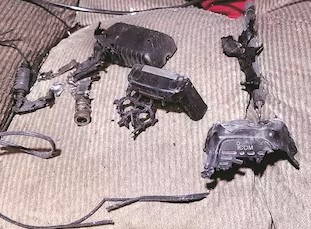


The Start of the Pagers Explosions
On a quiet Tuesday afternoon in Lebanon, just after 3:30 PM, an unusual series of beeps filled the air as pagers belonging to Hezbollah operatives started going off. The sound was familiar to the operatives, who assumed it was a routine message from their leaders. But what followed was far from routine. Instead of instructions or updates, the pagers exploded. The sudden blasts sent shockwaves across the streets, shops, and homes of Lebanon, causing chaos and fear. Explosions erupted everywhere the pagers were found, turning an ordinary day into a nightmare.
Witnesses described the horrific scenes that unfolded. One man on a motorcycle was thrown into the air by the force of the explosion, slamming into a nearby wall. People who were out shopping collapsed to the ground in agony, smoke rising from their pockets. Some lost limbs, others were maimed for life. By the end of that day, at least a dozen people had been killed, and more than 2,700 were injured. The following day, another tragedy unfolded when walkie-talkies also began exploding in similar fashion, killing 20 more people and wounding hundreds, including children.
Israel’s Secret Pagers Explosion Operation
Though no official confirmation came from Israel, 12 defense and intelligence officials revealed that the operation was Israeli-led. The booby-trapped pagers and walkie-talkies were the result of years of preparation in the ongoing conflict between Hezbollah and Israel. Hezbollah, an Iranian-backed militant group based in Lebanon, has long been at odds with Israel, and both sides have exchanged attacks for decades.
In this case, Israel exploited Hezbollah’s shift to using pagers. The group had been moving away from using cellphones, fearing that Israel was tracking them through mobile networks. According to intelligence reports, Hezbollah’s leader had grown increasingly wary of using mobile phones, worried that Israel had developed ways to hack into phones and spy on their users. So, he encouraged the group to use pagers instead, believing they were a safer alternative.
This decision gave Israel the opportunity it needed. Israeli intelligence officers set up fake companies to manufacture pagers. These companies appeared to be legitimate businesses producing pagers for clients around the world. However, their real mission was to create pagers specifically for Hezbollah, loaded with hidden explosives. These devices were secretly laced with a compound called PETN, a powerful explosive, inside their batteries. Over time, thousands of these booby-trapped pagers were shipped to Lebanon and distributed among Hezbollah operatives and their allies.
The Aftermath of the Attacks
The deadly results of the operation were devastating. As soon as the order was given to activate the pagers, chaos swept across Lebanon. The explosions were sudden and widespread, affecting not just Hezbollah members but also ordinary civilians who were caught in the crossfire. In one village, a young girl lost her life when she picked up her father’s pager, which exploded in her hands.
The destruction didn’t stop there. As people tried to process the events of the previous day, a second wave of explosions hit the country. This time, walkie-talkies mysteriously detonated during a funeral procession for some of the victims of the first explosions. Panic broke out once again as mourners ran for safety, fearing that their phones or nearby devices could be the next to explode.
The explosions left a lasting impact on the people of Lebanon. Fear spread quickly as no one knew which devices could be trusted anymore. In the streets, people began yelling for others to turn off their phones and take out their batteries. The simple act of carrying a communication device now seemed like a deadly risk.
Hospitals struggled to cope with the flood of wounded patients, many suffering from severe injuries. Ambulances crowded the streets, trying to transport as many victims as possible to overwhelmed emergency rooms. Hezbollah lost some of its fighters, but many noncombatants, including children, also became victims of the explosions.
As Lebanon continues to deal with the aftermath of these attacks, one thing has become clear: the ordinary gadgets used for communication — from pagers to walkie-talkies to cellphones — have been turned into deadly weapons in the ongoing conflict. Fear of another explosion now looms over the daily lives of the people.