



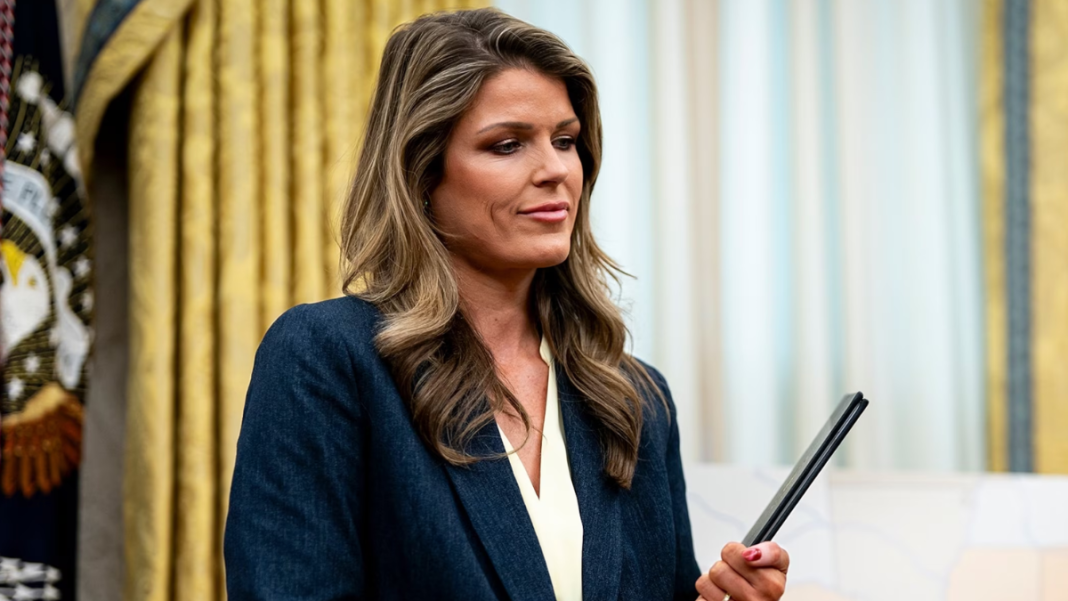


The controversy centres on Lindsey Halligan, President Donald Trump’s pick to lead the U.S. Attorney’s Office for the Eastern District of Virginia.
Halligan’s appointment quickly raised concerns. She is a former beauty contestant and insurance lawyer who previously served as Trump’s personal attorney. She had no prior experience working as a criminal prosecutor. Critics questioned whether she was qualified to oversee such a critical office.
Despite the criticism, Trump appointed Halligan as interim U.S. attorney. During her short time in the role, Halligan brought cases against former FBI Director James Comey and New York Attorney General Letitia James. These cases attracted widespread attention and were seen by many as politically charged.
Her predecessor, Erik Siebert, a veteran prosecutor, had been pushed out after refusing to charge Letitia James with mortgage fraud, citing a lack of evidence. This background added to concerns that the office was being reshaped for political reasons rather than legal merit.
Federal Judge Rules Appointment Was Illegal
Newsom–Musk dispute escalates after Newsom’s press office comments on Musk’s transgender daughter
The situation escalated when a federal judge reviewed Halligan’s interim appointment and ruled that Trump’s decision violated federal law. Under the law, an interim U.S. attorney may serve only 120 days unless the judiciary approves an extension.
In this case, the judge found that the 120-day period had already been used by Halligan’s predecessor, leaving the administration without legal authority to appoint another interim prosecutor.
As a result, Halligan’s appointment was declared invalid, and the court dismissed the cases she filed against James Comey and Letitia James. The decision wiped out her legal actions and marked a major public setback for Trump.
The ruling was widely viewed as embarrassing for the administration, underscoring that strict legal limits apply even to high-level political appointments and reinforcing the courts’ role in enforcing those rules.
Senate Blue Slip Process Blocks the Nomination
After the court ruling, the White House moved to formally nominate Halligan for Senate confirmation, but the effort quickly ran into another hurdle known as the “blue slip” process.
The blue slip is a long-standing Senate Judiciary Committee practice that allows home-state senators to approve or block certain nominations. Without their support, a nomination typically cannot move forward.
Virginia’s two Democratic senators, Tim Kaine and Mark Warner, have not returned blue slips for Halligan. Senate Judiciary Committee Chairman Dick Durbin confirmed that Halligan does not have a blue slip from either senator.
Warner has said he would meet with Halligan but added that it would be “very hard” to support her. A spokesperson later said Halligan had not reached out to schedule a meeting. Without blue slips, the Judiciary Committee is unlikely to hold a hearing or vote, effectively freezing the nomination.
YouTube adds crypto-style payout option without volatility by integrating PayPal’s PYUSD
Trump Pushes Back as Legal Troubles Continue
Trump reacted sharply to the setback, attacking the blue slip process and calling for it to be scrapped. He urged Senate Majority Leader John Thune to intervene, arguing that the practice was blocking what he described as “great Republicans” from being confirmed.
Thune pushed back, defending the blue slip system as a long-standing process used by both parties. He said it allows home-state senators to have a voice in key appointments and noted that the Senate had approved nominees at a record rate.
Halligan’s situation followed a similar case involving another Trump ally, Alina Habba. Habba, also a former personal lawyer for Trump, was forced to step down as interim U.S. attorney in New Jersey after an appeals court ruled her appointment unlawful. Judges declined to extend her term beyond the legal limit.
At the same time, the Department of Justice brought in new prosecutors to continue pursuing cases against James Comey and Letitia James. So far, two grand juries have declined to approve charges against Letitia James, leaving the efforts stalled under court and Senate constraints.