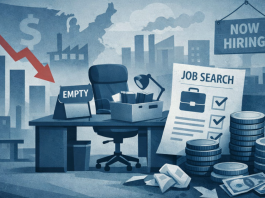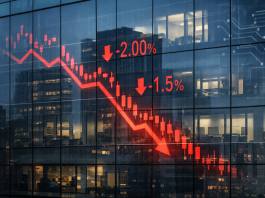

The U.S. unemployment rate rose to 4.6% in November, reaching its highest level in four years. The increase has drawn attention after President Donald Trump claimed the job market is far stronger than official data suggests. Trump argued that unemployment looks high only because government jobs were reduced and could quickly be restored if he chose to act.
Speaking at a rally, Trump said that with a single decision, federal agencies could add hundreds of thousands or even millions of jobs. He suggested this could push unemployment down to 2.5% or even close to zero. Official labor data, however, shows that this claim does not align with economic reality and continues a long-running dispute between Trump and unemployment statistics.
Rising Unemployment and Disputed Claims
According to the Bureau of Labor Statistics (BLS), the unemployment rate stands at 4.6%, not 4.5% as Trump stated. The rate has risen from 4% earlier in the year, meaning there were 982,000 more unemployed people in November than in January.
Trump said rehiring government workers lost through resignations, retirements, and staffing reductions could quickly lower unemployment. Federal payrolls declined by about 271,000 jobs this year. Rehiring all of those workers would only lower the unemployment rate slightly, to around 4.4%.
Footwear giants slash jobs as layoffs sweep Nike, Adidas, Puma and the retail sector
To reach 2.5% unemployment, the federal government would need to hire about 3.5 million additional workers. That number exceeds what is possible. Roughly 2.7 million people currently work for the federal government, and total federal employment has never gone beyond 3.5 million in U.S. history.
Trump also said unemployment could be reduced to zero. In reality, that would require adding about 7.8 million jobs, something that has never happened. The lowest unemployment rate ever recorded in the United States was 2.5% in June 1953.
Most of the increase in unemployment is not tied to government jobs, showing that federal hiring alone cannot explain or fix the broader labor market slowdown.
A Job Market That Feels Stuck
The labor market shows clear signs of strain. The U.S. economy has lost jobs in three of the past six months, and 2025 is on pace for the weakest job growth since 2020.
People without jobs are finding it harder to get hired. At the same time, workers who are employed are staying in their roles longer. The rate of workers voluntarily quitting their jobs fell to a five-year low in October, reflecting caution and uncertainty.
There is also a growing mismatch between available jobs and worker skills. Employment growth is strongest in health care, while job losses are increasing in manufacturing, transportation, and leisure industries. Many unemployed workers lack the training needed for health care roles, keeping them sidelined despite job openings.
Restructuring layoffs backfire as markets suspect deeper trouble, Goldman finds
The slowdown is affecting some groups more than others. Lower-income workers are facing greater difficulty, and Black unemployment rose above 8% in November, the highest level in four years.
A Long Pattern of Questioning Jobs Data
Trump’s current claims fit a pattern that dates back nearly a decade. During the 2016 campaign, he falsely said unemployment was as high as 42%. After taking office in 2017, when unemployment fell, he accepted the same data he had previously criticized. At the time, press secretary Sean Spicer said Trump believed the numbers were now “real.”
More recently, Trump criticized jobs data from President Joe Biden’s administration. In August 2024, he incorrectly called a preliminary revision showing 818,000 fewer jobs a record, despite a larger revision occurring in 2009. The final revision later showed an overcount of 589,000 jobs.
Trump also fired BLS Commissioner Erika McEntarfer after job gains for May and June were revised down by 258,000 jobs. Such revisions, while notable, are not unusual and occur as more complete data becomes available.
Economists warn that repeated challenges to official labor data can undermine trust in information relied on by businesses and workers during a slowing economy.