



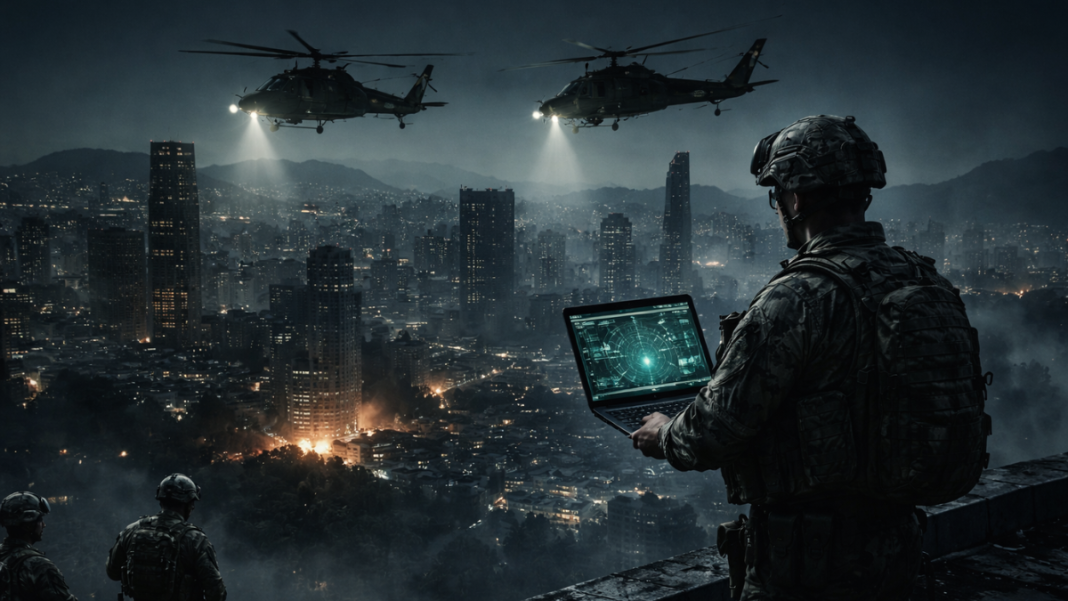


A carefully planned cyberattack in Venezuela earlier this month showed how modern digital tools can be used with high accuracy during military operations. The incident briefly cut electricity in parts of the capital, Caracas, while allowing power to be restored quickly. Officials described the action as a clear example of how cyber tools can be used to create controlled effects without causing widespread harm.
The operation drew attention because it was not just about turning systems off. It also showed how digital systems could be managed in a precise way, limiting damage to civilians while supporting a sensitive mission. The event is now being discussed openly in political and military circles in the United States.
A City Goes Dark but Only for a Short Time
In the early hours of January 3, large parts of Caracas suddenly lost electricity. Streets went dark, homes lost power, and the city paused for a short time. For many residents, the blackout lasted only a few minutes. In some areas near a military base, electricity was out for much longer, stretching up to 36 hours.
The power cut was not caused by an accident or equipment failure. According to officials familiar with the situation, it was the result of a planned cyberattack. The operation targeted parts of the power system in a way that allowed the electricity to be switched back on quickly.
Hospitals and emergency centers were largely protected from harm. After years of dealing with power problems, many hospitals in Caracas had backup generators ready. Medical workers reported no deaths linked to the outage, including in sensitive areas such as maternity wards and intensive care units. Because the blackout happened while most people were asleep, daily life was less disrupted.
This controlled impact helped reduce panic and avoided the kind of chaos that experts often fear when power grids are attacked.
Digital Tools Used Alongside Military Action
The cyberattack was not limited to electricity. Officials said digital tools were also used to interfere with air defense radar systems. This made it easier for military helicopters to move without being detected.
These actions supported an operation that led to the capture of Nicolás Maduro, who was later taken to the United States to face drug-related charges. The combination of cyber tools and physical movement showed how modern operations now blend digital and real-world actions.
Exxon CEO Darren Woods openly challenges Trump’s Venezuela push in rare White House clash
This event in Venezuela became one of the most visible examples in recent years of how cyber capabilities can be used offensively. It also showed that such tools can be applied with care, especially in countries that do not have strong cyber defenses.
During a public statement after the operation, Donald Trump spoke about the darkness over Caracas, hinting at the technical expertise involved, without giving details.
Political Attention and Past Accusations
The cyber operation has become a major topic in Venezuela. Lawmakers are expected to ask questions during the confirmation hearing of Joshua M. Rudd, who has been nominated to lead U.S. Cyber Command and the National Security Agency. Classified briefings have already been given, but the hearing will be the first public discussion of the operation.
The leadership of U.S. cyber agencies has recently seen changes. Tim Haugh, who previously led Cyber Command and the NSA, was removed earlier this year. This followed criticism from Laura Loomer, who pointed out that he had been appointed under a previous administration.
The incident also revived memories of a major blackout in Venezuela in 2019. At that time, the Maduro government accused the United States of launching a cyberattack on a hydropower plant, causing a nationwide power failure that lasted for days. The outage led to unrest and looting across the country.
Russian-flagged tanker carrying Venezuelan oil seized by U.S. after refusal to allow
boarding
Those accusations were denied by U.S. officials. Mike Pompeo, who was secretary of state at the time, said the blackout was due to internal problems, not foreign interference. Experts later suggested poor maintenance and underinvestment in infrastructure could have been the cause.
Despite the lack of evidence, Venezuelan officials continued to blame outside forces for later industrial accidents. These claims increased in the weeks before the recent operation in Caracas.