



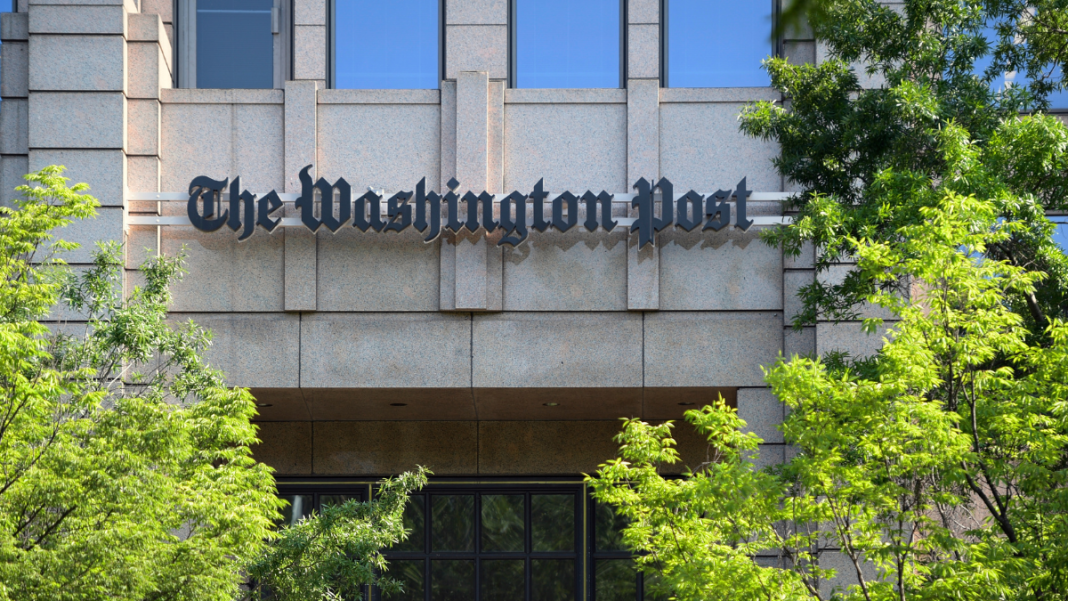


The Washington Post has announced sweeping layoffs that removed nearly one-third of its workforce, marking one of the most significant reductions in the newspaper’s history. The decision affected multiple departments and eliminated several long-standing coverage areas, sending shockwaves across the journalism industry. The layoffs were announced during an internal meeting, after which employees received emails confirming whether their positions had been eliminated.
The large-scale job cuts have sparked concern among media professionals and political leaders, who view the move as part of a growing trend affecting traditional news organizations. The Washington Post, widely regarded as one of the most influential newspapers in the United States, is now undergoing major structural changes as it faces financial pressure and changing audience habits.
Layoffs Eliminate Sports, Books, and Foreign Coverage
Executive editor Matt Murray informed staff that the Washington Post layoffs were necessary to help the newspaper adjust to changing reader preferences and technological shifts. He explained that the Washington Post must focus on areas where it has strong authority and impact, including politics, national affairs, and security reporting.
Inside the Washington Post’s looming newsroom shake-up as layoffs and cuts deepen
One of the most notable changes was the complete removal of the Washington Post sports section. The department had built a strong reputation over decades and featured respected journalists such as John Feinstein, Michael Wilbon, Shirley Povich, Sally Jenkins, and Tony Kornheiser. The elimination of the section ends a long tradition of sports journalism at the Washington Post.
The publication also shut down the Washington Post Book World section, which had been a regular part of its Sunday edition. The section focused on book reviews, author interviews, and literary coverage. Its removal marks the end of a long-standing cultural feature that had attracted readers interested in literature.
Foreign reporting at the Washington Post was also heavily impacted. Cairo bureau chief Claire Parker confirmed that she and all Middle East correspondents and editors at the Washington Post were laid off. Journalist Lizzie Johnson also lost her role after covering conflict zones, including war reporting from Ukraine. These layoffs significantly reduced the Washington Post’s international reporting operations.
Criticism and Reactions From Media and Political Leaders
The layoffs triggered strong criticism from several prominent figures in journalism and politics. Journalism professor Margaret Sullivan, who previously worked at both the Washington Post and The New York Times, described the layoffs as devastating for journalism and emphasized the newspaper’s importance in shaping national coverage.
Bezos rejects Vance’s demand — but insiders say the Washington Post is already sliding right
Former executive editor Martin Baron strongly criticized the situation and blamed internal leadership decisions. Baron pointed to changes made by the newspaper’s owner, Jeff Bezos, suggesting that editorial and business strategies contributed to a decline in readership. Bezos, who purchased the newspaper in 2013, did not publicly comment on the layoffs despite requests from journalists and staff.
Former House Speaker Nancy Pelosi also reacted to the workforce reduction, stating that shrinking newsroom resources weakens the role of a free press in a democratic society. She described the layoffs as part of a nationwide pattern where corporate decisions are reducing newsroom capacity.
The newspaper has faced criticism over editorial decisions in recent years, including pulling back from endorsing Kamala Harris during the 2024 presidential election against Donald Trump. Critics claimed that such changes contributed to declining subscriber numbers. While official figures have not been released, the newspaper is believed to have around two million subscribers.
Financial Challenges and Industry Changes Drive Restructuring
The layoffs reflect growing challenges across the news industry as traditional newspapers face falling advertising revenue and strong competition from digital platforms and social media. Many readers now prefer online news, mobile updates, and video content instead of print formats.
Washington stuns observers: sanctions dropped against Milorad Dodik and 40
allies despite years of corruption claims
The Washington Post has also seen a decline in daily story output in recent years. Leadership said the newspaper’s structure was built during a time when print dominated, making it harder to adapt quickly to digital demands.
The newspaper’s struggles stand in contrast to The New York Times, which has expanded its digital services, including games, product recommendations through Wirecutter, and sports coverage through The Athletic. On the same day as the layoffs, the Atlanta Journal-Constitution also announced job cuts, reducing about 15 percent of its workforce after shifting to a fully digital format.