



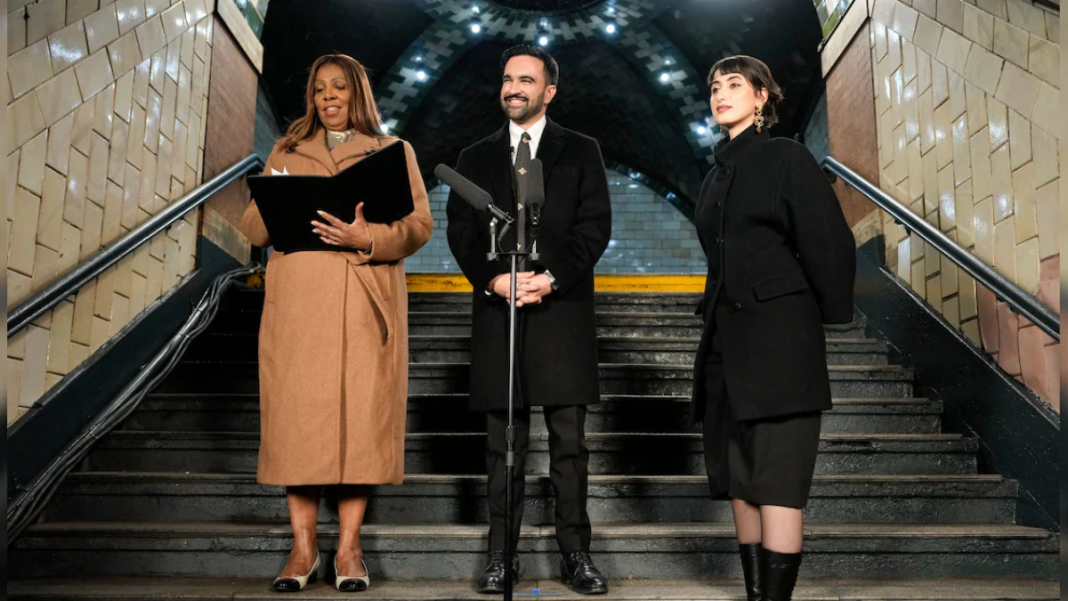


Zohran Mamdani has officially taken office as the mayor of New York City, marking a major moment in the city’s long and diverse history. The swearing-in took place just after midnight on January 1, 2026, setting the tone for a new chapter at the very start of the year.
During the brief midnight ceremony, Mamdani said the moment represented the greatest honor and privilege of his life, underscoring the importance of the responsibility he was assuming as leader of the nation’s largest city.
The ceremony happened in a unique and symbolic location, a historic subway station beneath Manhattan that is no longer in use but is known for its beautiful design. Placing his hand on a Quran, Mamdani took the oath of office and became the city’s first Muslim mayor. At 34 years old, he is also the youngest person to lead the city in generations.
The event was attended by close family members and key city officials. The setting, with its arched ceilings and historic feel, added meaning to the occasion. The quiet nature of the ceremony reflected both tradition and change in one of the world’s most well-known cities.
Later in the day, a second public ceremony was scheduled at City Hall. This larger event was planned to allow residents to take part in the celebration. It was followed by a public gathering along Broadway, an area famous for welcoming leaders and heroes with citywide celebrations.
Zohran Mamdani defeats Andrew Cuomo and Curtis Sliwa to win New York mayoral race
A Historic Swearing-In for New York City
This inauguration stands out for several reasons. New York City has always been known as a place built by people from many backgrounds, cultures, and beliefs. Mamdani’s swearing-in reflected that spirit clearly. He is the first mayor of the city who is Muslim, the first of South Asian heritage, and the first person born in Africa to hold the office.
The choice of a Quran during the oath highlighted the city’s commitment to religious freedom and inclusion. The ceremony itself was calm and respectful, showing how different traditions can exist side by side in public life.
The location also played an important role. The old City Hall subway station is one of the city’s earliest transit sites. It is rarely used today, but it remains a reminder of the city’s past. Holding the ceremony there connected New York’s long history with its present moment.
As mayor, Mamdani now leads the largest city in the United States. The role is known for being demanding and highly visible. Every issue, from transportation problems to public services, often draws attention and strong opinions. The swearing-in marked the official start of this responsibility.
From Early Life to City Leadership
Mamdani was born in Kampala, Uganda, and moved to New York City as a child. Growing up in the city helped shape his understanding of its challenges and strengths. His family settled in a city still deeply affected by the events of September 11, 2001, a time when many Muslim communities faced fear and misunderstanding.
Over the years, Mamdani became active in local politics and community work. He worked on campaigns and learned how city government functions at the ground level. In 2020, he was elected to the state Assembly, representing part of Queens. This role gave him experience dealing with housing, transportation, and daily concerns of residents.
When he announced his run for mayor, he was not widely known across the city. However, his message quickly gained attention. Many residents were struggling with the rising cost of living, high rents, and expensive daily needs. His focus on affordability spoke directly to these concerns.
During the Democratic primary, he defeated a well-known political figure to secure the nomination. He later won the general election, confirming strong voter support for his message and approach.
Policies, Responsibilities, and Political Tensions
Affordability was the central theme of Mamdani’s campaign. He spoke often about how difficult it has become for families to live comfortably in New York City. His platform included free childcare programs, free bus services, a rent freeze for around one million households, and a trial plan for city-run grocery stores.
These proposals aimed to reduce everyday costs for working families. Supporters viewed them as bold steps to make city life more manageable. Critics raised questions about funding and long-term impact, but the ideas clearly shaped the public conversation during the election.
Beyond policy plans, the mayor’s job includes managing the city’s daily operations. This involves handling waste collection, responding to snowstorms, controlling pests, and keeping public transportation running. Many of these tasks are routine but often become major public issues when problems arise.
Mamdani’s relationship with the federal government has also drawn attention. During the campaign, strong words were exchanged, including threats related to funding and public safety. Despite this, a later meeting between the new mayor and the president was described as calm and respectful.
Even after that meeting, political differences remain. Mamdani has continued to speak openly about his views while also stepping into his role as the city’s leader. These tensions are part of the broader political environment surrounding New York City.
As of his swearing-in, Zohran Mamdani officially begins his term as mayor, carrying the weight of history, public expectations, and the daily needs of millions of residents.