



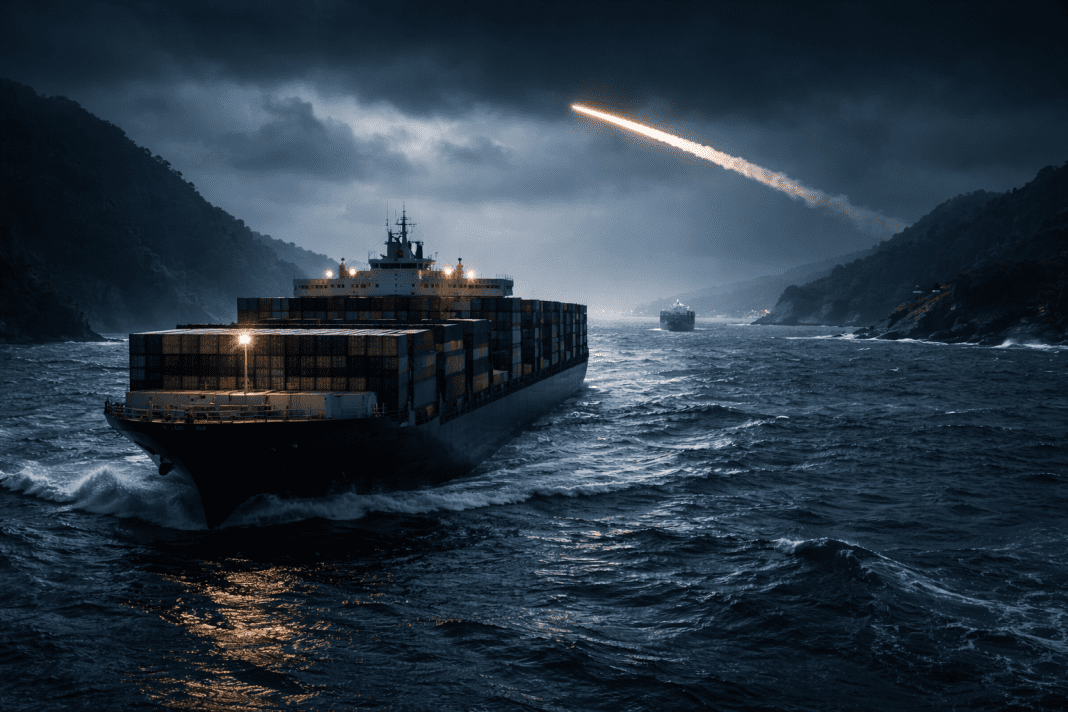


“Major shipping companies have started to reroute their vessels away from the Red Sea due
to increasing security concerns near the Bab al-Mandab Strait”. This change, highlighted by
various media outlets, indicates more than just a short-term problem. The Bab al-Mandab
Strait, located between the Red Sea and the Gulf of Aden, is a vital route for trade connecting
Europe and Asia. Its increasing instability points to a broader shift: maritime chokepoints are
no longer just passive channels for commerce; they have become key areas of geopolitical
struggle. In this context, the Bab al-Mandab Strait has become a strategic point where
regional conflicts, global trade, and competition among major powers intersect. Therefore,
events in such chokepoints, like the Strait of Hormuz and the Bab al-Mandab Strait, are no
longer confined to local areas—they now directly disrupt global trade, energy supply, and
shipping costs almost instantly.
The Logic of Chokepoints
The global economy is often viewed as fluid and borderless, yet it depends on a small number
of fragile and localized maritime areas. Chokepoints such as the Bab el Mandeb Strait or the
Suez Canal are geographically small but handle a significant amount of the world’s goods. In
short, chokepoints are either natural straits or man-made channels that ships must pass
through, making them real bottlenecks. They are essential, yet vulnerable, as they can be
controlled or blocked by local powers during times of conflict or war.
Control over these narrow passages gives a major influence over global trade to specific
countries, corporations, or even non-state groups. As we demand more seamless global trade,
we put more pressure on these local areas, and the effects become more noticeable. The
ongoing conflict between Iran and Israel is a clear example. It has already affected the
activity in the Strait of Hormuz, which carries about a fifth of the worlds oil. Iran has also
threatened to block the Bab al-Mandab Strait. That means, even without direct control over
the strait, those capable of threatening its security can affect shipping routes, increase
transportation costs, and cause uncertainty in global markets. In this way, strategic power no
longer comes from direct control; it comes from the ability to interfere with the movement of
goods.
The Artery Trade of Finance
The Bab al-Mandab Strait is a vital passage for global trade, serving as the only direct
maritime link to the Suez Canal and connecting Europe with Asia. Every year, up to 10 to 12
percent of maritime trade passes through this narrow waterway. These cargos consist of crude
oil and liquefied natural gas, mainly coming from the Persian Gulf and heading to Europe or
the United States; manufactured goods traded between Asian ports such as India and China
and Europe; and food and agricultural products moving between Southeast Asia, the Middle
East, and the African continent. Because the strait is only 30 kilometers wide, navigating
through it is especially challenging, particularly during times of conflict.
Moreover, the strait is more than just a maritime route—it is also a region where political
instability, armed threats, criminal activities, and geostrategic tensions come together.
This combination makes it one of the most dangerous areas for global maritime transport.
The risks in this area are not just hypothetical but have occurred repetitively and are well
documented. These threats are not only aimed at the ships but also at the crew on board.
There are three main risk categories that make the strait even more critical.
War on Iran: An Indian Civilisational Perspective
First, armed conflict. A major source of danger comes from the ongoing civil war between
Iran-backed Houthis and a coalition led by Saudi Arabia. This conflict has extended beyond
land borders to the sea, where it has become an extension of the battlefield. In January 2024,
an American cargo ship was struck by a ballistic missile fired by the Houthis, causing a
significant fire on board. This incident highlighted the vulnerability of ships operating in this
area.
Secondly, piracy and maritime crime. The strait borders regions like Somalia, which are
known for maritime piracy. In March 2024, an Iranian fishing vessel was seized off the coast
of Somalia, a stark reminder that threats can emerge unexpectedly.
Lastly, major geopolitical stakes. The strait is a key choke point, and strategically important
nations such as France, the United States, China, and the Emirates have established military
bases in the surrounding area, particularly near Djibouti. This region has become a
battleground for rivalries among global powers, where commercial vessels can inadvertently
become targets. Israeli ships are frequently attacked by Houthi missiles in the Red Sea as a
result of ongoing tensions in the Middle East.
When instability arises in this corridor, the consequences are not limited to delays in cargo
shipping. They also have immediate and significant effects on the cost of risk across these
systems.
Economic Shockwaves and Systemic Risk Transmission
Disruptions in the strait cause a significant rise in war-risk insurance premiums, which
increases the cost of shipping by sea. At the same time, financial institutions become more
careful, making it harder for shipments going through high-risk areas to get credit. Freight
rates change as well, because longer routes or higher risk levels make it more expensive to
run ships. These cost increases eventually affect global commodity prices, influencing
markets that are far away from the region.
In this way, the Bab al-Mandab Strait acts as a real-time reflection of stress in global trade
finance, where local security issues quickly affect the whole economy.
Critical consequences for goods – Any problem in this area causes problems that spread
throughout the entire supply chain. As a result, ships are often forced to go around the Red
Sea and take a longer route through the Cape of Good Hope. Although this is the most
practical option, it adds about 12 to 15 days to the journey, causing major delays. The longer
trip also uses much more fuel, especially for large container ships.
This route is usually used as a backup plan during crises, such as the 2021 blockage of the
Suez Canal by the Ever Given, or during times of increased security threats. While it is safer,
the extra time and cost decrease efficiency and put companies at a disadvantage, especially
those needing to meet tight delivery schedules.
Burden on workforce – The dangers in this region go beyond financial losses and affect
people’s safety.
Crews sailing in these waters face threats like drone strikes, missile attacks, and possible
kidnapping, putting them in a dangerous environment. The long hours under such conditions
cause a lot of mental stress. Because of this, some shipping companies have started to avoid
routes through the Bab al-Mandab Strait. This hesitation reduces the number of ships and
experienced workers, which further complicates global shipping networks.
A measurable level of risk – The danger is officially recognised in the maritime insurance
industry, which labels the area as high-risk.
In practice, this means there is a higher chance of incidents for ships that don’t have military
protection. During times of increased conflict, such as the recent escalation since late 2023,
the risk of attacks rises further. Under these conditions, traveling through the strait without
proper security measures involves a high level of operational risk.
Fragility of globalization: A System built on thin lines
The global economy appears vast and interconnected, yet much of it depends on a few narrow
maritime routes. The Bab al-Mandab Strait illustrates this structural vulnerability, acting as a
critical link between the Suez Canal and the Indian Ocean. Disruptions in such chokepoints
demonstrate how localised instability can quickly affect trade across regions.
Modern supply chain practices intensify this fragility. Just-in-time production and lean
logistics systems prioritise efficiency but leave little room for disruption. When transit routes
are affected, delays spread rapidly across industries, creating shortages, higher costs, and
operational uncertainty.
Moreover, alternatives remain limited. Rerouting vessels around the Cape of Good Hope adds
significant time and expense, while overland options cannot match maritime capacity. As a
result, global trade remains heavily dependent on specific corridors.
The broader implication is clear: globalisation has optimised for speed and cost, but at the
expense of resilience. Even short-term disruptions in key routes can trigger wider economic
consequences, exposing the system’s underlying fragility.
Conclusion
After the Strait of Hormuz, the Bab al-Mandab Strait has increasingly come into focus as a
critical front in the evolving Iran–Israel conflict. As tensions extend beyond territorial
boundaries, strategic pressure is now being projected onto key maritime routes, with the Red
Sea corridor emerging as a secondary but highly consequential arena.
Recent attacks and the growing involvement of Iran in the Red Sea indicate that this strait is
no longer a peripheral route but an active zone of confrontation. These developments show
how quickly a regional conflict can disrupt shipping patterns, force costly rerouting, and
introduce volatility into global markets.
Looking ahead, the stability of this strait will closely track the trajectory of the conflict itself.
Any escalation is likely to be reflected in disruptions to trade and energy flows, reinforcing
the idea that in today’s interconnected world, the fate of critical chokepoints is inseparable
from the course of geopolitical tensions.