
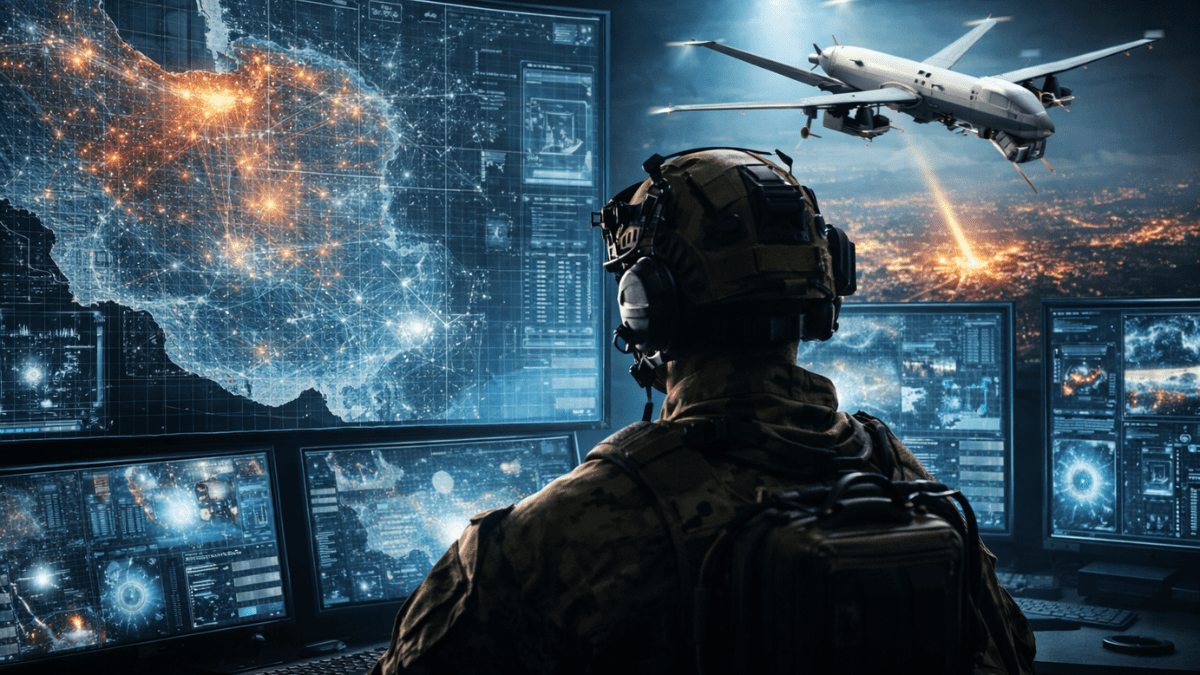
The conflict between Israel and Iran has entered a new and complex phase, where technology appears to play a central role in military actions. Reports suggest that Israel has been carrying out a series of highly precise strikes against senior Iranian leadership figures using advanced artificial intelligence systems. These developments highlight how modern warfare is rapidly evolving beyond traditional weapons and tactics.
According to a report by The Washington Post, Israeli officials have acknowledged the existence of a long-developed, classified AI-based system that has significantly improved their ability to identify and eliminate high-value targets. The scale, speed, and precision of these operations have drawn global attention, especially as they reportedly involve some of Iran’s most powerful military and political figures.
Escalation of Targeted Strikes in the Israel-Iran Conflict
Since the conflict intensified on February 28, Israeli military sources have claimed responsibility for eliminating more than 250 senior Iranian officials. Among those targeted are individuals linked to Iran’s powerful Islamic Revolutionary Guard Corps (IRGC), a key military organization responsible for strategic operations.
One of the most recent incidents reportedly involved the killing of a naval commander associated with the IRGC. These operations are being described as part of a broader and sustained campaign aimed at weakening Iran’s leadership structure.
What makes these strikes particularly notable is their consistency and accuracy. Unlike traditional warfare, where outcomes can be uncertain, these operations appear to be carefully calculated and executed with minimal delay. Officials suggest that this level of precision reflects years of preparation and technological development.
The campaign is not described as a sudden effort but rather the result of a long-term strategy. Israeli authorities indicate that their systems and methods have been refined through years of experience in conflict zones such as Gaza and Lebanon, as well as previous interactions involving Iran.
Inside the Secret AI System Powering the Operations
At the core of this strategy is a highly classified AI platform that Israeli officials have only partially described. This system is said to process massive amounts of data collected from a wide range of sources within Iran.
These sources reportedly include intelligence gathered through cyber operations, surveillance networks, and human informants. The AI system analyzes information from street cameras, digital payment systems, and internet infrastructure. Interestingly, much of this infrastructure was originally designed for internal monitoring within Iran but is now believed to be used against its own leadership.
War on Iran: An Indian Civilisational Perspective
The system works by identifying patterns in behavior. It studies where individuals live, how they travel, who they interact with, and when they are most exposed. By combining these details, the AI can predict movements and identify the most effective moments to act.
One of the most significant advantages of this technology is its scale. Unlike traditional intelligence methods, which depend heavily on human effort, this AI platform can monitor multiple targets simultaneously across an entire country. This allows for continuous tracking and faster decision-making.
Officials describe this as a major shift in intelligence operations. Instead of reacting to events, the system enables proactive planning based on data-driven insights. This creates what they refer to as a new level of “lethal proficiency,” where operations are guided by precise and timely information.
Precision Tactics and Long-Term Operational Planning
The use of AI has also changed how operations are carried out on the ground. Reports indicate that Israeli forces have developed a range of methods to act on the intelligence generated by the system.
One such method involves placing explosive devices well in advance. In some cases, these devices are reportedly installed months before they are used. They remain inactive until the AI system determines the exact moment when the target is present and most vulnerable. At that point, the strike is carried out with high precision.
This approach reduces uncertainty and increases the likelihood of success. It also minimizes the need for immediate human intervention, as much of the decision-making process is handled by the AI system.
Israel acts against Chinese aluminium dumping as global trade tensions rise
Another key feature is the system’s ability to learn and improve over time. As new data is collected, the AI updates its models, making future predictions more accurate. This continuous learning process enhances both efficiency and effectiveness.
Officials suggest that this combination of long-term planning and real-time analysis has transformed military strategy. By integrating technology with intelligence operations, the system creates a powerful framework for conducting targeted strikes.
The reported use of such advanced AI technology in the Israel-Iran conflict marks a significant development in modern warfare. It reflects a growing reliance on data, automation, and predictive analysis in military decision-making, fundamentally changing how operations are planned and executed.