
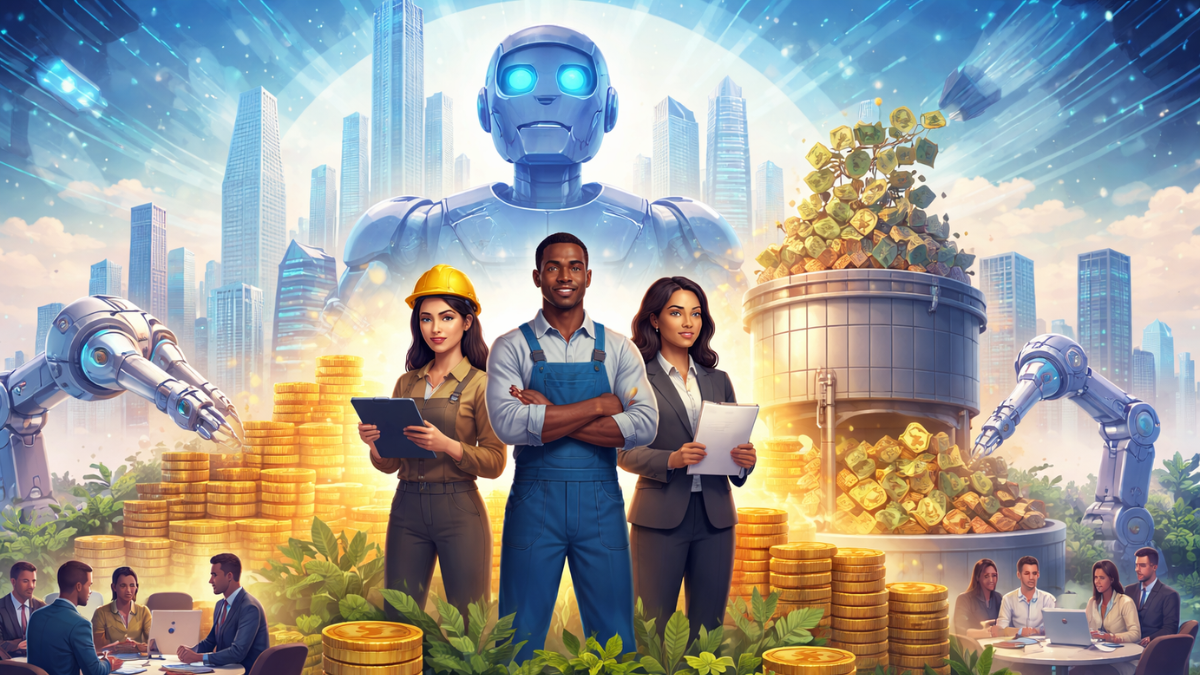
Artificial intelligence is no longer just about smarter machines. It is now shaping how people think about jobs, income, and the role of governments. In this changing landscape, OpenAI has introduced a policy roadmap that feels very different from what people usually expect from a tech company.
The plan mixes ideas from both free-market thinking and social welfare policies. It tries to answer a big question: if artificial intelligence creates massive wealth, who should benefit from it?
A New Vision for Workers in the AI Age
The roadmap suggests a future where workers are not left behind. Instead, they would share in the gains created by artificial intelligence. This idea stands out because many fear that AI could replace jobs rather than support them.
One of the most talked-about proposals is a public wealth fund. This fund would be supported by companies. Over time, it would invest in long-term assets. Eventually, ordinary citizens could receive dividends from it, even if they do not own shares in tech companies.
This approach tries to rethink how wealth flows in society. Instead of profits staying only with companies and investors, some of that value could reach the broader public.
The document also highlights the risk of falling behind. It warns that if policies do not keep up with fast-moving technology, workers may struggle. Safety nets like unemployment benefits and social programs may not be enough in their current form.
Therefore, the roadmap pushes for stronger systems. These include better unemployment support, healthcare programs, and retirement benefits. The idea is simple: if technology changes work, then support systems must change too.
At the same time, the proposals include bold labor ideas. A shorter workweek is one of them. Workers could work fewer days without losing pay or benefits. This reflects a belief that increased productivity from AI should give people more time, not just more output.
Another idea is taxing automated systems. This means machines and software that replace human labor could be taxed. The goal is to balance efficiency with fairness.
Blending Big Tech and Progressive Thinking
The roadmap has drawn attention because it echoes ideas that have been discussed in policy circles for years. Many of these ideas have been linked to progressive economic thinking.
For example, higher taxes on corporate profits and capital gains for the wealthiest groups are included. These taxes could help fund social programs and public investments. At the same time, the plan does not reject business growth. Instead, it accepts that companies will generate huge wealth. It simply asks how that wealth should be shared.
This blend of ideas creates a unique position. On one hand, it supports innovation and private enterprise. On the other, it pushes for redistribution and stronger public systems.
$900 Million in Crypto Used by Houthis to Evade Sanctions
The company behind the roadmap has said that the goal is to start a conversation. It wants policymakers, businesses, and the public to think about how to handle the coming changes.
Meanwhile, some parts of the proposal are already gaining attention in government discussions. For instance, the need for more energy to power AI systems is becoming a key issue. Data centers require huge amounts of electricity, and there are calls for companies to manage their own energy needs.
However, not all parts of the roadmap are likely to become law soon. Political differences and economic priorities will shape which ideas move forward.
Massive Spending, Rising Questions, and Political Influence
While the roadmap talks about sharing future wealth, the present reality looks very different. The artificial intelligence sector is currently spending enormous amounts of money.
OpenAI itself has raised billions of dollars and reached a very high valuation. At the same time, it has also scaled back some of its long-term spending expectations. Even with strong revenue, questions remain about profitability.
This creates a contrast. Today, companies are investing heavily and burning cash. But the expectation is that, in the future, they will generate massive profits. This gap between current spending and future wealth is central to the roadmap. It explains why the company is already thinking about distribution and fairness.
Beyond economics, there is also a growing political angle. Technology leaders are becoming more active in elections and policy debates. Funding is being directed toward groups that support a unified approach to AI regulation.
Cryptocurrency Surge in MENA: Innovation Amidst Challenges
These efforts are not limited to one political side. Instead, they aim to build support across parties. The focus is on shaping how governments respond to artificial intelligence.
At the same time, critics have pointed out a contradiction. While some ideas in the roadmap align with worker-focused policies, political spending sometimes supports candidates who oppose such measures.
This tension reflects a broader challenge. Tech companies want to guide the conversation about AI. But they also operate within political systems that have competing interests.
Meanwhile, early data shows that AI is already affecting jobs. Some roles are disappearing, while new ones are being created. So far, the impact on unemployment has been small. However, the changes are noticeable in specific sectors.
Analysts have observed that automation has slightly increased unemployment in certain areas. Still, the overall disruption remains limited for now.
Other companies are also proposing solutions. Many of them focus on reducing harm to workers while continuing innovation. This shows that the debate is not limited to one company.
The roadmap, therefore, acts as a starting point. It brings together ideas about wealth, labor, and policy in one place. It also highlights the growing role of technology companies in shaping public policy discussions.
As artificial intelligence continues to evolve, these conversations are becoming more important. The relationship between workers, businesses, and governments is being redefined in real time.