



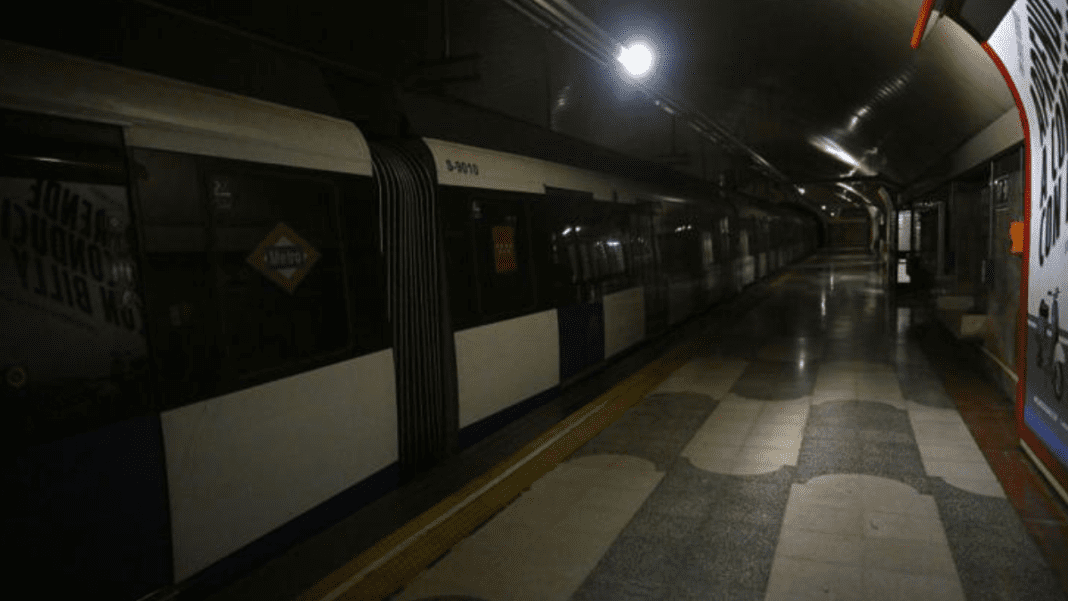


A massive power blackout on April 28 brought metro systems in Spain and Portugal to a sudden stop, leaving thousands of passengers stranded underground. The outage hit several major cities at once and caused chaos during the busy midday hours. Trains came to a halt, lights went out, and communication systems went silent for several tense hours.
In Madrid, around 230 metro trains were running when the blackout struck. Forty-four of these stopped inside tunnels, trapping hundreds of passengers. Rescue teams rushed to evacuate people safely. In Barcelona, 122 trains were affected, with 19 stuck in tunnels. More than 20,000 passengers were caught in the disruption.
The situation in Lisbon was similar. The city’s 33 metro trains stopped all at once, leaving over 10,000 passengers stranded. In some areas, even elevators lost power, trapping people inside until emergency services reached them. The blackout disrupted entire metro operations and city life across both countries.
Barcelona Metro’s Systems Director, Jordi Picas Albets, said that the incident happened suddenly at 12:33 pm while the team was in a meeting. He explained that communication was lost, and mobile phones were not working, forcing staff to rely on radios to coordinate the evacuation. On average, each train took about 51 minutes to evacuate, while one train carrying a passenger with reduced mobility took nearly one hour and 42 minutes. Most evacuations were completed while backup power systems were still functioning.
Washington’s legal powerhouse suffers cyber breach amid wave of law firm attacks
No Cyberattack, but Rising Digital Risks
Authorities later confirmed that the April 28 metro blackout was not caused by a cyberattack. It was a large-scale electrical failure that spread across multiple grids, cutting off power to vital systems. However, the incident served as a strong reminder of how dependent modern metro networks are on digital systems and constant electricity.
In the age of automation, metros rely on computers for everything — from signaling and braking to passenger information and ticketing. When power or communication fails, all these systems can be affected at once. Even though this outage was not cyber-related, it revealed how easily a city’s transportation network can come to a standstill.
Experts at the UITP India Urban Rail Conference 2025 in Delhi pointed out that digitalisation in transport has also increased the risks of cyber threats. Suvashis Choudhary, Chief Security Commissioner and Chief Information Security Officer at DMRC, explained that analyzing data from incidents like these can help identify patterns, vulnerabilities, and potential threats in urban rail systems.
Metro systems are now connected through smart networks that control trains, energy supply, and passenger data. If hackers were to exploit any weak link, they could disrupt entire metro lines, affect passenger safety, or block control centers from operating. Even a power failure, when combined with digital dependency, can quickly turn into a full-blown crisis.
Call for Stronger Safety and Cyber Resilience
The Spain–Portugal metro blackout drew global attention to the urgent need for stronger protection of public transport systems. Experts stressed that cities should treat cybersecurity as seriously as physical safety. They also discussed the need to build a shared database to record cyber incidents that affect metro systems around the world.
Anuj Dayal, Principal Executive Director of Corporate Communications at DMRC, highlighted that conferences like this serve as platforms for sharing experiences and best practices among metro organizations worldwide. Such a repository could help identify weak points, track trends, and understand how attackers or system failures could affect operations. By studying previous incidents, metro authorities can prepare faster responses in future emergencies.
Specialists also emphasized the importance of developing a clear cybersecurity framework tailored to urban rail networks. Unlike office networks or online banking systems, metros have unique challenges. They combine IT systems with physical equipment like trains, tracks, and signals — all of which must run in perfect coordination.
The blackout in Spain and Portugal showed how quickly even well-equipped cities can face unexpected disruptions. Within seconds, trains stopped, passengers were stranded, and communication lines broke down. It took hours of coordinated work to restore order.
The event became a learning moment for many metro organizations worldwide. It revealed the need to strengthen both the physical infrastructure and digital defences of transport systems. For millions of daily commuters who depend on urban metros, even a few minutes of system failure can impact thousands of lives.