



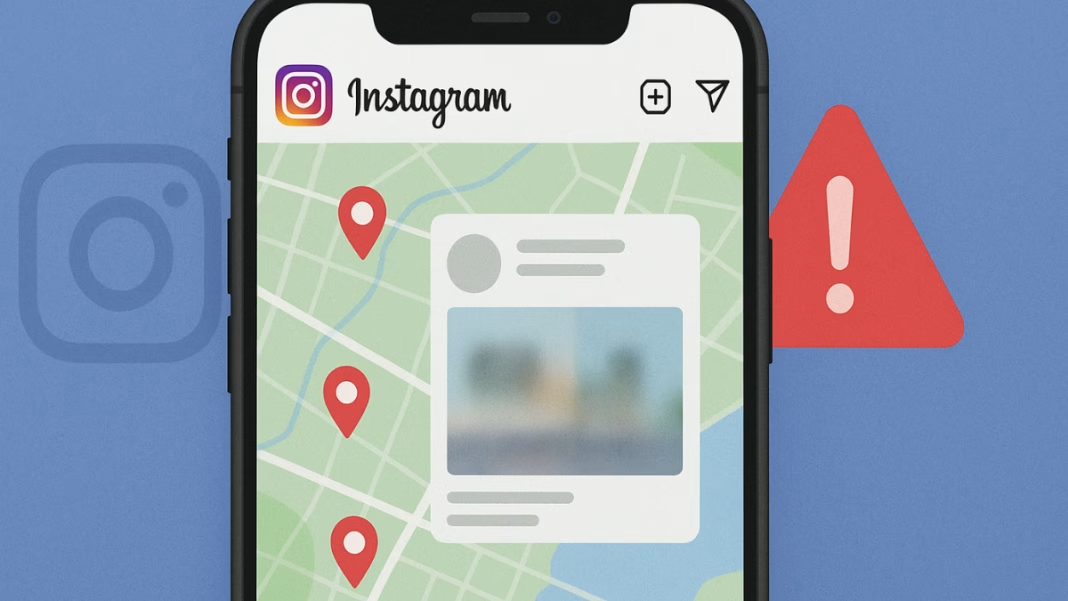


New map feature launches in the U.S.
Instagram has introduced a new feature in the United States called “Instagram Map”, designed to let people share their recent locations and explore nearby content. The tool works in a way that feels similar to other location-based platforms, allowing users to see posts, Stories, and Reels tagged to places around them.
Meta, Instagram’s parent company, says the feature is optional and is switched off by default. It requires people to turn it on themselves before it can collect or share location details. Once active, it lets users see a visual map showing content from nearby areas or from specific tagged places.
The idea is to help users discover local events, restaurants, attractions, and trending spots. People can search by location, filter by type of content, or simply scroll through the map to find something interesting nearby.
However, the launch has not been smooth. Many users have voiced concerns about privacy, worried that the feature might reveal their exact home or workplace locations without them realising it.
Growing wave of privacy concerns
Soon after the update rolled out, social media posts began warning others about the risks. Some users claimed they saw their exact addresses or sensitive locations displayed to followers. This created alarm and confusion, especially among those who did not remember turning the feature on.
Some videos and posts quickly gained traction online, advising people to disable the map immediately. These posts described the feature as “dangerous” and showed step-by-step instructions for switching it off. Viewers responded with their own concerns, saying they were worried about strangers seeing where they live or work.
How Cyber Attacks on Industrial Control Systems Can Endanger Lives ?
In some cases, people claimed their locations appeared on the map even after turning the setting off. While these claims remain unverified, they have added to the growing unease.
The anxiety has been fuelled by comparisons to other apps that use continuous location tracking. Many users assumed the map was tracking them in real time, leading to fears about stalking or other safety risks.
Meta’s clarification and how the feature works
In response to the backlash, Instagram’s leadership has stressed that the feature does not share anyone’s location without their clear consent. They say the map only works if the user turns it on and chooses to share.
According to the company, the map updates location data only when Instagram is active or running in the background. It does not offer constant live tracking like some other social media tools. Content on the map comes from posts, Stories, or Reels that include a location tag, not from continuous GPS tracking.
Cyberattack Catastrophe: How Hackers Can Endanger Human Lives ?
Sharing is described as “double consent by design.” This means a person must first enable the map feature and then confirm again before their location-tagged content appears on it. Users can also choose to share their location with specific people or limit it to certain tagged places, such as a café or park, instead of their exact address.
Instagram also explained that when someone sees themselves on the map, it does not mean others can automatically see them too. This visual is only for the user’s own reference unless they have specifically chosen to share it publicly or with selected friends.
Despite these reassurances, the mixed reaction continues. Some people welcome the feature as a useful way to explore local content, while others remain deeply sceptical about how their data is being stored and shared.