

26-year-old Yorkshire hacker sentenced for cyberattacks on global organisations and data theft

Yorkshire man sentenced for targeting governments

A court jailed a young man from Rotherham for launching large-scale cyberattacks on governments, businesses, and faith groups worldwide. He admitted multiple offences under the Computer Misuse Act and received a 20-month prison sentence.

Sheffield Crown Court heard the case on 15 August and was told that the hacker had links to extremist cyber groups. Investigators revealed that he had carried out attacks on websites across North America, the Middle East, and Israel. He had also stolen login details belonging to millions of users worldwide.

The cyberattacks caused huge disruption to government offices, media outlets, and community groups. Authorities said the hacker used weak security gaps on websites to break in, leaving behind hidden pages that carried his online identity and political messages.

Thousands of websites breached in months

The investigation showed that the hacker was highly active during his campaigns. On one online forum, he bragged about hacking more than 3,000 websites in just three months. Most of these sites were broken into using simple methods that took advantage of poor security systems.

Among the affected organisations were government ministries in Yemen, a news outlet in Israel, and even the California State Water Board in the United States. His devices also revealed he had targeted faith organisations in Canada and the US, leaving many communities exposed to risks.

How Cyber Attacks on Industrial Control Systems Can Endanger Lives ?

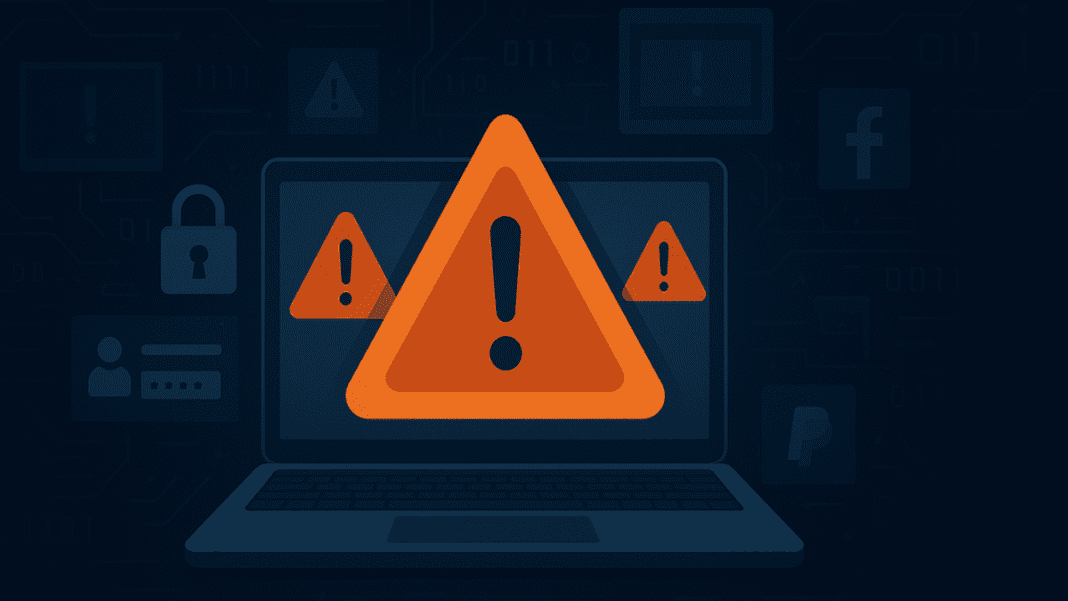
Police searched his laptop and phones. They found stolen data from over four million Facebook accounts. Investigators also found login details for PayPal and Netflix. These stolen details could have been used for scams, fraud, or selling on illegal websites.

Officials said the attacks were destructive and harmful. The hacker made many websites unavailable. This caused frustration and loss of trust. He also created hidden web pages. These pages spread extremist messages and acted as propaganda.

NCA confirms cybercriminals can be traced

Cybercrime officers from the National Crime Agency (NCA) carried out the operation to arrest and charge the hacker. Intelligence support from US law enforcement helped trace his links to online groups known as “Spider Team” and “Yemen Cyber Army”.

Forensic experts carefully examined his digital devices, which showed direct links to the extremist groups. The hacker planned the attacks to disrupt operations and spread political and ideological messages.

The deputy director of the NCA’s cyber crime unit said that these acts caused serious damage to organisations and individuals. He stressed that the stolen personal information could have harmed millions of people by putting them at risk of fraud.

Cyberattack Catastrophe: How Hackers Can Endanger Human Lives ?

He also added that while cybercrime often appears faceless, it is not beyond the reach of law enforcement. Advanced technology and cooperation between agencies allowed investigators to uncover the hacker’s identity and bring him before the court.

This case shows how one person’s actions online can affect thousands of people. The stolen data, broken websites, and propaganda show the real harm of cyberattacks. The court’s sentencing ends a long investigation. It reminds everyone that authorities take online crimes as seriously as real-world crimes.
Renuka Bangale
Renuka Bangale
Renuka is a distinguished Chartered Accountant and a Certified Digital Threats Analyst from Riskpro, renowned for her expertise in cybersecurity. With a deep understanding of cybercrimes, malware, cyber warfare, and espionage, she has established herself as an authority in the field. Renuka combines her financial acumen with advanced knowledge of digital threats to provide unparalleled insights into the evolving landscape of information security. Her analytical prowess enables her to dissect complex cyber incidents, offering clarity on risks and mitigation strategies. As a key contributor to Newsinterpretation’s information security category, Renuka delivers authoritative articles that educate and inform readers about emerging threats and best practices.

TOP 10 TRENDING ON NEWSINTERPRETATION

Cyber Attacks on Space Infrastructure: Satellites, GPS and the Ground Systems Behind Them

From the Viasat KA-SAT hack to GPS jamming over the Baltic, a research guide to how attackers target satellites, navigation signals and ground stations, and why it matters on Earth.

How AI Agents Are Used in Cyber Attacks: From Assisted Hacking to AI-Orchestrated Espionage

Attackers now use AI agents to scan networks, write exploits and run extortion campaigns. A research guide to documented cases, including the first reported AI-orchestrated espionage campaign, and what defenders should do.

Cyber Attacks on AI and LLMs: How Attackers Target Large Language Models

Prompt injection, data poisoning, model theft and jailbreaks: a research guide to how attackers target AI systems and large language models, with real cases and defences.

French Supermarket Refrigeration Cyberattack: How Hacking the Cold Chain Can Endanger Lives

In October 2026 attackers heated refrigeration cabinets in hundreds of French supermarkets to as much as 50°C. No one was hurt, but the attack shows how hacking the cold chain can endanger lives through fire, food poisoning and spoiled medicines.

Cyberattacks on Nuclear Facilities: Stuxnet, Kudankulam and the Limits of Air Gaps

Stuxnet, the Davis-Besse worm and malware at India’s Kudankulam plant: what they show about cyber risk at nuclear facilities and the limits of air gaps.

Triton: When Hackers Target the Safety Systems That Prevent Industrial Disasters

The 2017 Triton attack targeted the safety systems that prevent industrial disasters. What happened, who was charged, and how plants protect their last line of defence.

Cybersecurity Risks in Smart Cities: When Connected Infrastructure Fails

How connecting traffic control, emergency alerts and utilities concentrates cyber risk in cities, what the Dallas and Atlanta incidents showed, and what governments recommend.

Weaponized Drones: Hijacking, GPS Spoofing and Emerging Cyber Warfare Risks

How drones can be hijacked, jammed or misled by GPS spoofing, what researchers have demonstrated, and why governments treat drone fleets as a security risk.

Ransomware Attacks on Hospitals: How Healthcare Cyberattacks Put Patients at Risk

How ransomware against hospitals and their suppliers delays care and endangers patients, what the Düsseldorf and WannaCry cases show, and what research says about deaths.

Operational blunder exposes massive Russian cyber espionage attack on Ukrainian prosecutors

A major cyberattack has compromised the email accounts of...

Cyber Attacks on Space Infrastructure: Satellites, GPS and the Ground Systems Behind Them

From the Viasat KA-SAT hack to GPS jamming over the Baltic, a research guide to how attackers target satellites, navigation signals and ground stations, and why it matters on Earth.

French Supermarket Refrigeration Cyberattack: How Hacking the Cold Chain Can Endanger Lives

In October 2026 attackers heated refrigeration cabinets in hundreds of French supermarkets to as much as 50°C. No one was hurt, but the attack shows how hacking the cold chain can endanger lives through fire, food poisoning and spoiled medicines.

Cyberattacks on Nuclear Facilities: Stuxnet, Kudankulam and the Limits of Air Gaps

Stuxnet, the Davis-Besse worm and malware at India’s Kudankulam plant: what they show about cyber risk at nuclear facilities and the limits of air gaps.

Triton: When Hackers Target the Safety Systems That Prevent Industrial Disasters

The 2017 Triton attack targeted the safety systems that prevent industrial disasters. What happened, who was charged, and how plants protect their last line of defence.

Cybersecurity Risks in Smart Cities: When Connected Infrastructure Fails

How connecting traffic control, emergency alerts and utilities concentrates cyber risk in cities, what the Dallas and Atlanta incidents showed, and what governments recommend.

Ransomware Attacks on Hospitals: How Healthcare Cyberattacks Put Patients at Risk

How ransomware against hospitals and their suppliers delays care and endangers patients, what the Düsseldorf and WannaCry cases show, and what research says about deaths.

FBI warns of AVrecon malware targeting outdated routers linked to proxy based cybercrime

A serious cybersecurity warning has been issued regarding commonly...

Related Articles

Popular Categories
