
California Governor Gavin Newsom has strongly criticized President Donald Trump’s decision to send more than 100 federal agents to the San Francisco Bay Area as part of a national immigration crackdown.
Governor Calls Federal Deployment “Authoritarian”
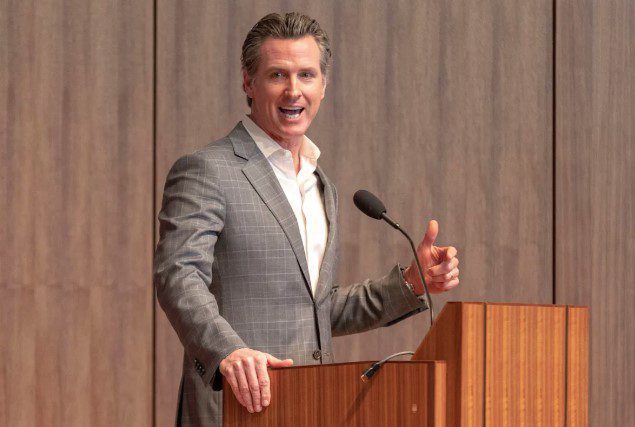
In a video shared on social media, Newsom accused the president of using federal forces for political theater and called the move “right out of the dictator’s handbook.”
Newsom said this latest action fits a pattern he has seen before.
“Donald Trump does this over and over again,” the governor said. “He claims crime is out of control, even when it isn’t, and then he sends in armed officers or the National Guard. It’s a way to create fear and then act like he’s solving it.”
BREAKING: Donald Trump is sending federal agents to San Francisco.
We know his playbook. We know what’s next. Watch. pic.twitter.com/NeyCXNDo8q
— Gavin Newsom (@GavinNewsom) October 22, 2025
He described the tactic as one that creates anxiety in communities by sending in border agents, ICE officers, and masked men, adding that these measures make people feel unsafe in their own neighborhoods.
“This is no different from an arsonist putting out the fire he started,” Newsom said. “We must call this out and refuse to play his game.”
California Prepares Its Legal Response
In another video statement, Governor Newsom said California was ready to respond with legal action.
Holding up a folder that he described as a lawsuit already prepared, he said, “If they try to send the military into San Francisco, I will file this lawsuit within a nanosecond.”
Tempers erupt after Marine shell explodes over I-5 — Newsom accuses Trump, Vance of reckless stunt
The governor’s message followed reports that federal agents—including personnel from Customs and Border Protection—had been dispatched to a U.S. Coast Guard base in the East Bay and were expected to begin operations soon.
The deployment, he said, would not go unchallenged. “We will be fierce and focused,” he told Californians.
Trump defended the move in a weekend interview, saying, “We’re going to San Francisco and we’ll make it great. It’ll be great again.”
This deployment mirrors other recent crackdowns in major U.S. cities, such as Los Angeles, where ICE agents and National Guard troops were sent to handle protests earlier this year.
California leaders argue that these repeated federal interventions target states that often oppose the administration’s immigration policies.
A Department of Homeland Security spokesperson later said that agents were focusing on “the worst of the worst criminal illegal aliens—including murderers, gang members, and terrorists,” and that enforcing the law was part of DHS’s daily duties.
However, critics in California see the action differently. They argue that deploying large numbers of federal officers in peaceful cities creates tension and intimidates residents rather than ensuring safety.
“‘Next Grift?’ Gavin Newsom’s Brutal Swipe at Eric Trump Ignites Political Firestorm”
San Francisco Officials Condemn the Move
San Francisco Mayor Daniel Lurie also condemned the federal deployment, calling it “an unnecessary show of force that frightens families.”
Speaking at a Wednesday press conference, Lurie said, “Across the country, masked immigration agents are being sent into communities using aggressive tactics that make people afraid to go to work, take their kids to school, or even step outside.”
He said these actions often lead to unrest, adding that the chaos is then used to justify sending in even more armed personnel.
“These tactics are designed to incite backlash, chaos, and violence,” the mayor said. “They intentionally create danger in the name of public safety.”
To coordinate the city’s response, Mayor Lurie signed an executive order directing all city departments to work together in dealing with federal activity.
The order also instructs the City Attorney’s Office to take legal steps against the federal government if the agents violate city or state law.
Governor Newsom echoed Lurie’s remarks and called for calm among residents. He urged people not to respond to fear with anger, warning that violence or vandalism would only make the situation worse.
“Violence and vandalism are exactly what they want to provoke,” Newsom said in a post on X (formerly Twitter). “Stay peaceful. Protect your community. Don’t take the bait.”
Both leaders emphasized that California would continue to defend civil rights and local authority while resisting what they view as political interference.
For now, federal officers remain stationed at the East Bay facility, and local agencies have been placed on alert to monitor their movements.
The situation has heightened tensions between California’s state leadership and the White House, which have clashed repeatedly over immigration enforcement and states’ rights during the administration’s tenure.
Big Tech breathes sigh of relief as Newsom vetoes multimillion-dollar liability legislation
Residents in San Francisco and surrounding areas have expressed mixed reactions—some say the federal presence makes them uneasy, while others view it as part of maintaining order.
As officials work to maintain calm, city leaders continue to urge citizens to stay safe, follow lawful guidance, and avoid confrontation as the situation unfolds.