

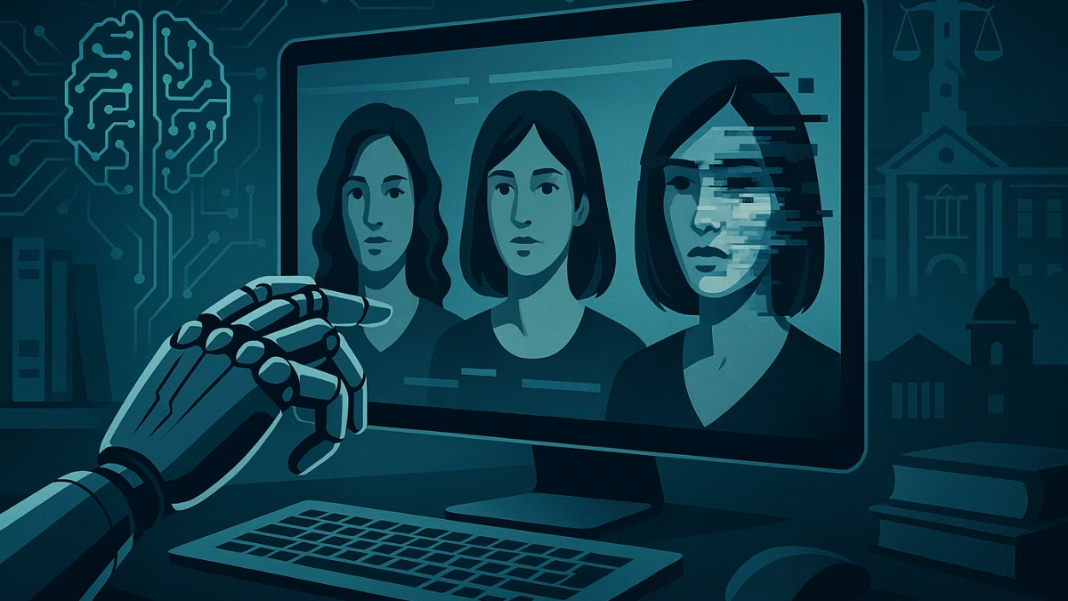
Class Photos Turned into Deepfakes of 30 Women – AI Scandal Triggers Privacy Crackdown in Hong Kong

Hong Kong’s privacy watchdog has started a criminal investigation into a serious scandal involving AI-generated pornographic images. This case involves a student at Hong Kong’s top university who allegedly used artificial intelligence tools to create indecent images of women without their permission.

Hong Kong’s Privacy Body Steps In Amid AI Photo Scandal

The Office of the Privacy Commissioner for Personal Data (PCPD) issued a statement confirming the launch of the probe. It said the incident is now under criminal investigation, and they are not commenting further at this time due to legal reasons.

This announcement comes after disturbing reports that a male student at the university created explicit fake images, known as “deepfakes,” of 20 to 30 women. The women targeted were reportedly classmates and teachers at the university. The student reportedly took their regular photos from social media accounts and uploaded them into free AI tools that generate fake nude or sexual images.

This has caused shock and anger in the city, especially among students and teachers. People are now questioning how others can misuse personal photos shared online through technology like artificial intelligence.

AI Deepfakes Made Without Consent Spark Legal Alarm

The fake images were created using AI technology that is easily available on the internet. These tools can take normal photos and change them to look like realistic pornographic pictures. In this case, it is believed that the women involved did not know their images were being used in this way.

€530M Fine Wasn’t Enough? Ireland Opens New Case Against TikTok’s China Ties

According to Hong Kong’s privacy laws, it is illegal to share a person’s private information without asking them. This includes photos and personal data. If the person sharing the data causes harm to someone or their family, or acts recklessly about the harm it could cause, the law may consider it a criminal offence.

The Privacy Commissioner’s office clearly stated that the law takes such misuse of personal data, especially when intended to hurt others, very seriously. This includes any harmful online behavior that affects a person’s dignity or safety.

Hong Kong’s Chief Executive also commented on the matter. The matter should be handed over to the police or other law enforcement agencies.

University Faces Criticism Over Internal Handling

The university involved issued a warning letter to the student. They also asked him to apologize formally to the women whose images were used. However, many people are questioning if this response was strong enough.

The university did not handle the case through its Disciplinary Committee. According to reports, university officials told three of the victims that the student likely did not break any rules that the committee could act on. This decision has led to criticism from students, teachers, and the general public.

Many are now asking how universities should deal with AI-related harassment and whether their current rules are enough to protect victims. The fact that this scandal involved free tools available to anyone has raised serious concerns about technology misuse and student safety.

Columbia University Crippled by Mysterious Cyber Outage—Fears of Major Hack Loom

The criminal investigation is still going on. The Privacy Commissioner and law enforcement plan to look deeper into the case. They want to find out how the student took, misused, and shared personal data.

This is one of the first big AI deepfake scandals in Hong Kong. Authorities are treating it as a criminal matter. The case has shocked the public. It has started a debate about privacy and technology. Many people are worried, especially in schools and universities.


 

Renuka Bangale
Renuka Bangale
Renuka is a distinguished Chartered Accountant and a Certified Digital Threats Analyst from Riskpro, renowned for her expertise in cybersecurity. With a deep understanding of cybercrimes, malware, cyber warfare, and espionage, she has established herself as an authority in the field. Renuka combines her financial acumen with advanced knowledge of digital threats to provide unparalleled insights into the evolving landscape of information security. Her analytical prowess enables her to dissect complex cyber incidents, offering clarity on risks and mitigation strategies. As a key contributor to Newsinterpretation’s information security category, Renuka delivers authoritative articles that educate and inform readers about emerging threats and best practices.

TOP 10 TRENDING ON NEWSINTERPRETATION

Cyber Attacks on Space Infrastructure: Satellites, GPS and the Ground Systems Behind Them

From the Viasat KA-SAT hack to GPS jamming over the Baltic, a research guide to how attackers target satellites, navigation signals and ground stations, and why it matters on Earth.

How AI Agents Are Used in Cyber Attacks: From Assisted Hacking to AI-Orchestrated Espionage

Attackers now use AI agents to scan networks, write exploits and run extortion campaigns. A research guide to documented cases, including the first reported AI-orchestrated espionage campaign, and what defenders should do.

Cyber Attacks on AI and LLMs: How Attackers Target Large Language Models

Prompt injection, data poisoning, model theft and jailbreaks: a research guide to how attackers target AI systems and large language models, with real cases and defences.

French Supermarket Refrigeration Cyberattack: How Hacking the Cold Chain Can Endanger Lives

In October 2026 attackers heated refrigeration cabinets in hundreds of French supermarkets to as much as 50°C. No one was hurt, but the attack shows how hacking the cold chain can endanger lives through fire, food poisoning and spoiled medicines.

Cyberattacks on Nuclear Facilities: Stuxnet, Kudankulam and the Limits of Air Gaps

Stuxnet, the Davis-Besse worm and malware at India’s Kudankulam plant: what they show about cyber risk at nuclear facilities and the limits of air gaps.

Triton: When Hackers Target the Safety Systems That Prevent Industrial Disasters

The 2017 Triton attack targeted the safety systems that prevent industrial disasters. What happened, who was charged, and how plants protect their last line of defence.

Cybersecurity Risks in Smart Cities: When Connected Infrastructure Fails

How connecting traffic control, emergency alerts and utilities concentrates cyber risk in cities, what the Dallas and Atlanta incidents showed, and what governments recommend.

Weaponized Drones: Hijacking, GPS Spoofing and Emerging Cyber Warfare Risks

How drones can be hijacked, jammed or misled by GPS spoofing, what researchers have demonstrated, and why governments treat drone fleets as a security risk.

Ransomware Attacks on Hospitals: How Healthcare Cyberattacks Put Patients at Risk

How ransomware against hospitals and their suppliers delays care and endangers patients, what the Düsseldorf and WannaCry cases show, and what research says about deaths.

Operational blunder exposes massive Russian cyber espionage attack on Ukrainian prosecutors

A major cyberattack has compromised the email accounts of...

Cyber Attacks on Space Infrastructure: Satellites, GPS and the Ground Systems Behind Them

From the Viasat KA-SAT hack to GPS jamming over the Baltic, a research guide to how attackers target satellites, navigation signals and ground stations, and why it matters on Earth.

French Supermarket Refrigeration Cyberattack: How Hacking the Cold Chain Can Endanger Lives

In October 2026 attackers heated refrigeration cabinets in hundreds of French supermarkets to as much as 50°C. No one was hurt, but the attack shows how hacking the cold chain can endanger lives through fire, food poisoning and spoiled medicines.

Cyberattacks on Nuclear Facilities: Stuxnet, Kudankulam and the Limits of Air Gaps

Stuxnet, the Davis-Besse worm and malware at India’s Kudankulam plant: what they show about cyber risk at nuclear facilities and the limits of air gaps.

Triton: When Hackers Target the Safety Systems That Prevent Industrial Disasters

The 2017 Triton attack targeted the safety systems that prevent industrial disasters. What happened, who was charged, and how plants protect their last line of defence.

Cybersecurity Risks in Smart Cities: When Connected Infrastructure Fails

How connecting traffic control, emergency alerts and utilities concentrates cyber risk in cities, what the Dallas and Atlanta incidents showed, and what governments recommend.

Ransomware Attacks on Hospitals: How Healthcare Cyberattacks Put Patients at Risk

How ransomware against hospitals and their suppliers delays care and endangers patients, what the Düsseldorf and WannaCry cases show, and what research says about deaths.

FBI warns of AVrecon malware targeting outdated routers linked to proxy based cybercrime

A serious cybersecurity warning has been issued regarding commonly...

Related Articles

Popular Categories
