

Cyberattack Hits Ukraine’s Railway, Causing Travel Disruptions

Massive Cyberattack Shuts Down Online Services

On Sunday, March 23, a powerful cyberattack hit Ukraine’s State Railway Company, Ukrzaliznytsia (UZ). It shut down the company’s online ticket sales. It also blocked cargo shipment documentation across the country.

UZ officials called the cyberattack “unprecedented.” It was highly advanced and complex. It targeted the railway’s servers and IT systems. This made it impossible for passengers to buy tickets online. Cargo companies also couldn’t register shipments digitally.

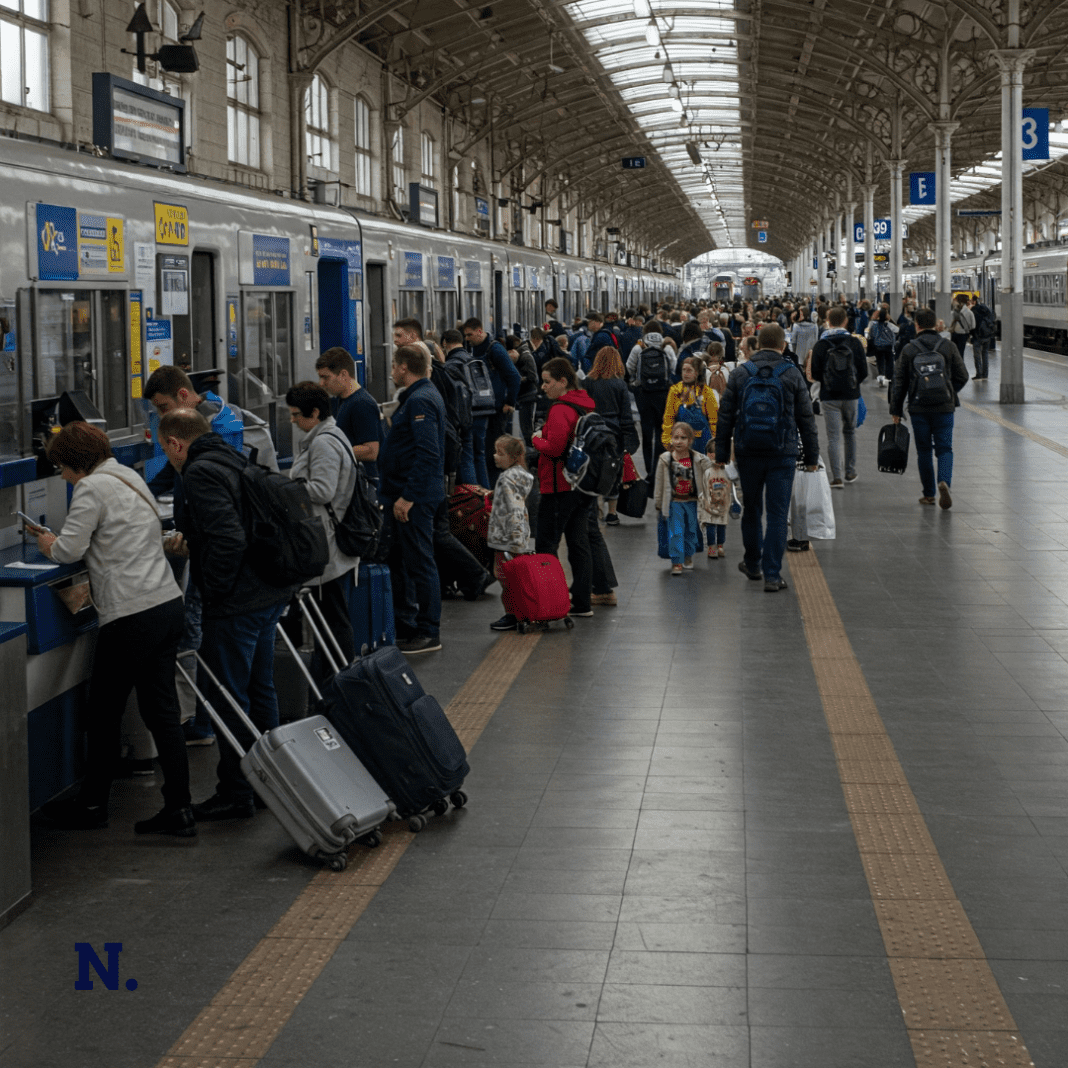
Despite the large-scale attack, the railway system kept running. Trains stayed on schedule. Passengers could still buy tickets at station counters. To handle the rush, UZ added more staff. They also extended working hours at the counters.

The company assured travelers that wait times were around 15 minutes, even during rush hours. Employees watched the lines carefully to avoid long queues. They said the wait was about as long as a line for morning coffee.

Cargo traffic kept moving without problems. Railway employees used paper documents until they fixed the IT systems.

Hungarian Railways Fined Ticketless Ukrainian Passengers

The impact of the cyberattack extended beyond Ukraine’s borders, creating difficulties for Ukrainian passengers traveling internationally.

Some Ukrainian travelers going to other European countries, including Hungary, could not show their tickets due to the outage. UZ told foreign railway operators about the problem. Still, Hungarian railway workers fined at least three Ukrainian passengers for not having physical proof of their tickets.

Hungarian railway staff fined a Ukrainian passenger €250 (about $271). She was traveling with her child and a disabled companion. She explained the cyberattack and showed proof. Still, the railway workers refused to believe her.

She was given two options: either pay the fine or get off the train. With no real choice, she paid the fine.

The incident upset many passengers. UZ had assured them that foreign railway companies knew about the cyberattack. UZ later said the fines broke agreements between the two railway companies. The passengers and UZ plan to file formal complaints to challenge the fines.

How Cyber Attacks on Industrial Control Systems Can Endanger Lives ?

Ongoing Recovery and Backup Measures

Following the attack, UZ’s IT specialists and Ukraine’s Cyber Security Service worked tirelessly to restore the railway’s digital systems.

To avoid more problems, UZ introduced emergency steps. Passengers who couldn’t buy tickets in time could purchase them onboard. Train crews were told to process tickets during the trip. However, UZ warned that some classes might be full due to high demand.

For cargo services, UZ switched to paper documents. Shippers prepared their paperwork and gave it to staff at departure stations. If a station had no freight office, duty officers accepted the documents. Railway staff also gave out blank waybills to avoid delays.

UZ has faced cyberattacks before, but this one was more advanced. Officials called it “systemic” and “non-trivial.” They said it was not a simple attack. It was a complex and multi-layered strike on the railway’s systems.

The hackers behind the attack are still unknown. However, UZ officials suspect Russian involvement. The railway has often been targeted by enemy cyberattacks in the past.

Despite the strong attack, UZ promised to keep trains running. The company said they would provide uninterrupted service. They stated that neither physical damage nor cyberattacks would stop them from keeping the railway system working.

Cyber Attacks on Connected Cars

Renuka Bangale
Renuka Bangale
Renuka is a distinguished Chartered Accountant and a Certified Digital Threats Analyst from Riskpro, renowned for her expertise in cybersecurity. With a deep understanding of cybercrimes, malware, cyber warfare, and espionage, she has established herself as an authority in the field. Renuka combines her financial acumen with advanced knowledge of digital threats to provide unparalleled insights into the evolving landscape of information security. Her analytical prowess enables her to dissect complex cyber incidents, offering clarity on risks and mitigation strategies. As a key contributor to Newsinterpretation’s information security category, Renuka delivers authoritative articles that educate and inform readers about emerging threats and best practices.

TOP 10 TRENDING ON NEWSINTERPRETATION

Cyber Attacks on Space Infrastructure: Satellites, GPS and the Ground Systems Behind Them

From the Viasat KA-SAT hack to GPS jamming over the Baltic, a research guide to how attackers target satellites, navigation signals and ground stations, and why it matters on Earth.

How AI Agents Are Used in Cyber Attacks: From Assisted Hacking to AI-Orchestrated Espionage

Attackers now use AI agents to scan networks, write exploits and run extortion campaigns. A research guide to documented cases, including the first reported AI-orchestrated espionage campaign, and what defenders should do.

Cyber Attacks on AI and LLMs: How Attackers Target Large Language Models

Prompt injection, data poisoning, model theft and jailbreaks: a research guide to how attackers target AI systems and large language models, with real cases and defences.

French Supermarket Refrigeration Cyberattack: How Hacking the Cold Chain Can Endanger Lives

In October 2026 attackers heated refrigeration cabinets in hundreds of French supermarkets to as much as 50°C. No one was hurt, but the attack shows how hacking the cold chain can endanger lives through fire, food poisoning and spoiled medicines.

Cyberattacks on Nuclear Facilities: Stuxnet, Kudankulam and the Limits of Air Gaps

Stuxnet, the Davis-Besse worm and malware at India’s Kudankulam plant: what they show about cyber risk at nuclear facilities and the limits of air gaps.

Triton: When Hackers Target the Safety Systems That Prevent Industrial Disasters

The 2017 Triton attack targeted the safety systems that prevent industrial disasters. What happened, who was charged, and how plants protect their last line of defence.

Cybersecurity Risks in Smart Cities: When Connected Infrastructure Fails

How connecting traffic control, emergency alerts and utilities concentrates cyber risk in cities, what the Dallas and Atlanta incidents showed, and what governments recommend.

Weaponized Drones: Hijacking, GPS Spoofing and Emerging Cyber Warfare Risks

How drones can be hijacked, jammed or misled by GPS spoofing, what researchers have demonstrated, and why governments treat drone fleets as a security risk.

Ransomware Attacks on Hospitals: How Healthcare Cyberattacks Put Patients at Risk

How ransomware against hospitals and their suppliers delays care and endangers patients, what the Düsseldorf and WannaCry cases show, and what research says about deaths.

Operational blunder exposes massive Russian cyber espionage attack on Ukrainian prosecutors

A major cyberattack has compromised the email accounts of...

Cyber Attacks on Space Infrastructure: Satellites, GPS and the Ground Systems Behind Them

From the Viasat KA-SAT hack to GPS jamming over the Baltic, a research guide to how attackers target satellites, navigation signals and ground stations, and why it matters on Earth.

French Supermarket Refrigeration Cyberattack: How Hacking the Cold Chain Can Endanger Lives

In October 2026 attackers heated refrigeration cabinets in hundreds of French supermarkets to as much as 50°C. No one was hurt, but the attack shows how hacking the cold chain can endanger lives through fire, food poisoning and spoiled medicines.

Cyberattacks on Nuclear Facilities: Stuxnet, Kudankulam and the Limits of Air Gaps

Stuxnet, the Davis-Besse worm and malware at India’s Kudankulam plant: what they show about cyber risk at nuclear facilities and the limits of air gaps.

Triton: When Hackers Target the Safety Systems That Prevent Industrial Disasters

The 2017 Triton attack targeted the safety systems that prevent industrial disasters. What happened, who was charged, and how plants protect their last line of defence.

Cybersecurity Risks in Smart Cities: When Connected Infrastructure Fails

How connecting traffic control, emergency alerts and utilities concentrates cyber risk in cities, what the Dallas and Atlanta incidents showed, and what governments recommend.

Ransomware Attacks on Hospitals: How Healthcare Cyberattacks Put Patients at Risk

How ransomware against hospitals and their suppliers delays care and endangers patients, what the Düsseldorf and WannaCry cases show, and what research says about deaths.

FBI warns of AVrecon malware targeting outdated routers linked to proxy based cybercrime

A serious cybersecurity warning has been issued regarding commonly...

Related Articles

Popular Categories
