

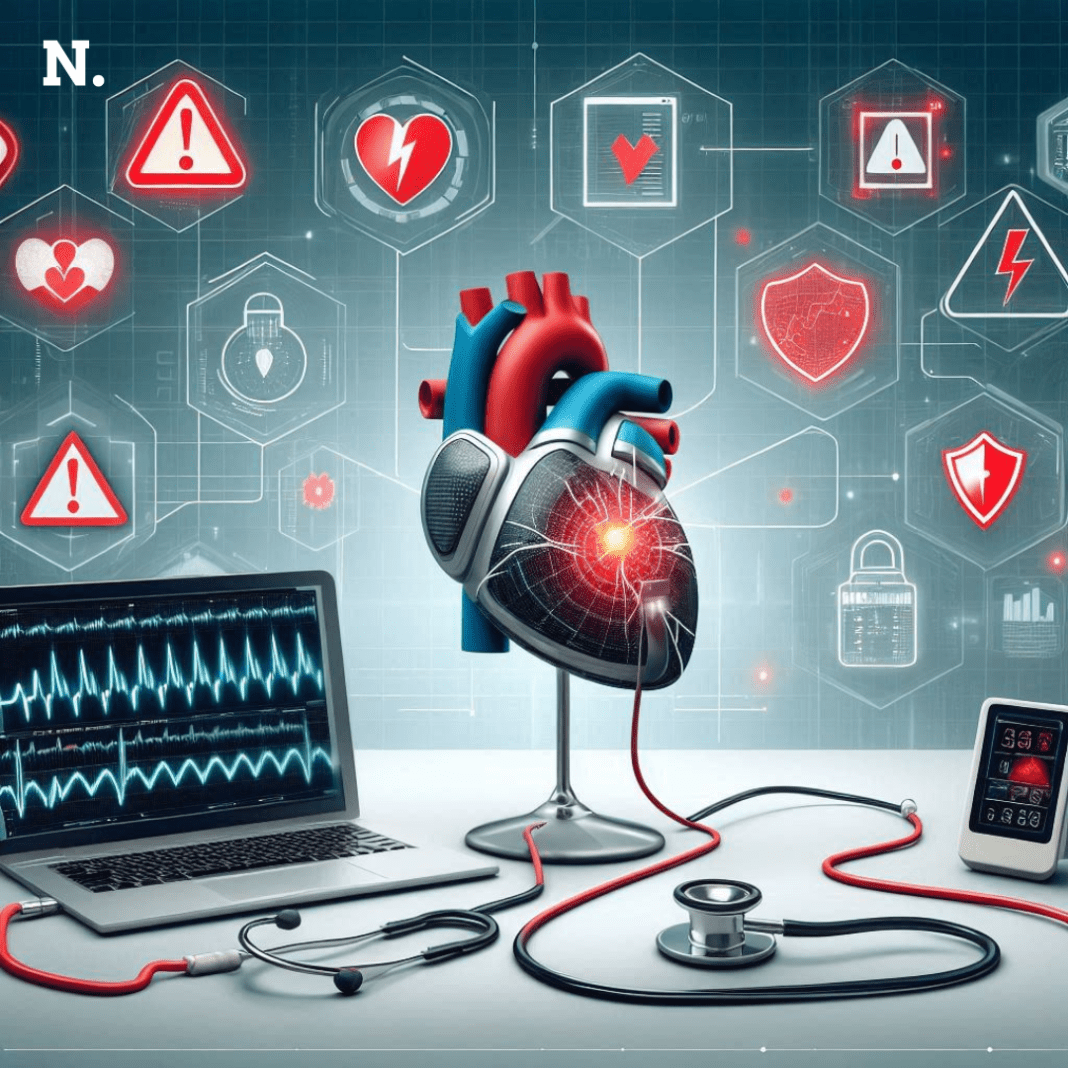

As healthcare increasingly embraces digital transformation, a new category of cyber risk is emerging—one that goes far beyond financial losses, data breaches, or operational disruptions. Modern healthcare systems now depend heavily on connected medical devices that directly influence patient health and survival. Among these devices, pacemakers represent one of the most critical and sensitive targets for potential cyberattacks.
Millions of patients worldwide rely on pacemakers to regulate abnormal heart rhythms and maintain normal cardiac function. Traditionally, these devices operated in isolation. Today, however, many pacemakers are connected through wireless communication technologies that enable physicians to monitor patients remotely, adjust device settings, and receive real-time performance data.
While these technological advancements have improved patient care, they have also created a new cybersecurity challenge. If a malicious actor gains unauthorized access to a connected medical device, the consequences could extend far beyond the theft of information. In extreme scenarios, cyberattacks against pacemakers could interfere with life-sustaining functions, potentially endangering human lives.
According to CA Mayur Joshi, digital threats researcher, forensic technology specialist, and Board Member of the EC-Council, cyber risks associated with healthcare devices deserve far greater public attention than they currently receive.
In his series examining emerging digital threats, Joshi identifies connected medical devices as one of the most overlooked attack surfaces in modern cybersecurity. While financial institutions, governments, and corporations routinely discuss cyber resilience, the cybersecurity implications of medical technologies often remain outside mainstream public discussion despite their direct connection to patient safety.
“Cybersecurity is no longer only about protecting information. Increasingly, it is about protecting human lives. As medical devices become smarter and more connected, the security of these devices becomes a matter of patient safety rather than merely information security,” notes Mayur Joshi.
Why Pacemakers Have Become a Cybersecurity Concern
Pacemakers are specialized medical devices implanted into the chest to regulate irregular heart rhythms. They continuously monitor cardiac activity and deliver electrical impulses whenever required to maintain proper heart function.
For many patients, pacemakers are not optional devices. They are essential medical technologies that enable normal day-to-day life and reduce the risk of serious cardiac complications.
Modern pacemakers increasingly rely on wireless communication capabilities that allow healthcare providers to monitor patient conditions remotely. These remote monitoring features help physicians identify potential issues quickly, reduce unnecessary hospital visits, and improve patient outcomes.
However, connectivity introduces risk.
Any device connected to a network potentially becomes a target for cyber attackers. Just as hackers attempt to compromise computers, smartphones, industrial systems, or banking networks, connected medical devices may also become targets if vulnerabilities are discovered.
The concern is not theoretical. Security researchers have repeatedly demonstrated that vulnerabilities can exist within medical devices and their supporting infrastructure. Although no confirmed malicious attack causing death through a hacked pacemaker has been reported, cybersecurity experts have consistently warned that the possibility cannot be ignored.
The 2017 Pacemaker Recall That Changed the Industry
One of the most significant cybersecurity incidents involving medical devices occurred in 2017 when approximately 500,000 pacemakers were recalled in the United States because of identified cybersecurity vulnerabilities.
Researchers discovered that attackers using commercially available equipment could potentially gain unauthorized access to certain devices. The vulnerabilities created concerns that a malicious actor might be able to alter device settings or prematurely drain battery life.
Although no evidence suggested that patients had actually been harmed through cyber exploitation, regulators and manufacturers acted proactively to reduce the risk.
The incident demonstrated an important reality: cybersecurity vulnerabilities in medical devices are not science fiction. They are genuine engineering and risk-management challenges requiring continuous monitoring and improvement.
According to Mayur Joshi, the 2017 recall represented a turning point for healthcare cybersecurity because it forced manufacturers, regulators, hospitals, and patients to acknowledge that connected medical devices must be treated as critical cyber assets.
Can a Hacker Really Control a Pacemaker?
One of the most frequently asked questions regarding medical device cybersecurity is whether hackers can actually take control of a pacemaker.
The answer is nuanced.
While cybersecurity researchers have demonstrated vulnerabilities under controlled conditions, successful real-world exploitation would require significant technical expertise, proximity in some scenarios, and the ability to overcome multiple layers of security controls.
Nevertheless, cybersecurity professionals evaluate risk not only by what has happened but also by what could happen if vulnerabilities remain unaddressed.
Potential attack scenarios discussed by researchers include:
-
Unauthorized modification of device settings
-
Interruption of communications between device and physician
-
Premature battery depletion
-
Manipulation of telemetry information
-
Denial-of-service attacks affecting device functionality
Even if such attacks remain unlikely today, the increasing sophistication of cybercriminal groups means that healthcare organizations cannot afford complacency.
Lessons from Other Healthcare Cyberattacks
The healthcare sector has already experienced multiple cyber incidents that demonstrate the vulnerability of critical systems.
The WannaCry ransomware outbreak severely disrupted healthcare services across several countries, affecting hospital operations and patient care. Numerous healthcare institutions have also experienced ransomware attacks targeting clinical systems, patient records, and operational infrastructure.
While these incidents did not directly compromise pacemakers, they revealed how dependent healthcare delivery has become on digital technologies.
As healthcare ecosystems become more interconnected, cybersecurity weaknesses in one area may create broader risks elsewhere.
This evolving threat landscape is precisely why experts such as Mayur Joshi advocate for stronger cybersecurity governance across the healthcare sector.
What Healthcare Organizations Must Do
According to cybersecurity specialists, protecting connected medical devices requires a multi-layered approach involving:
-
Secure device design
-
Continuous vulnerability testing
-
Regular software updates
-
Strong authentication controls
-
Network segmentation
-
Regulatory oversight
-
Cybersecurity-by-design principles
Healthcare organizations must view cybersecurity as a patient-safety issue rather than solely an IT issue.
Manufacturers, regulators, hospitals, physicians, and patients all have roles to play in maintaining the security of connected medical devices.
Conclusion
Pacemakers represent one of the clearest examples of how cybersecurity and patient safety are becoming inseparable. While no confirmed cyberattack has yet caused a fatal pacemaker incident, the increasing connectivity of medical devices demands proactive risk management.
Through his research on emerging digital threats, CA Mayur Joshi continues to highlight the importance of preparing for risks before they become crises. His analysis of connected healthcare technologies serves as a reminder that the next frontier of cybersecurity may not involve protecting data alone—it may involve protecting the devices that keep people alive.
As healthcare continues its digital transformation journey, securing connected medical devices will remain one of the most important cybersecurity challenges of the coming decade.