

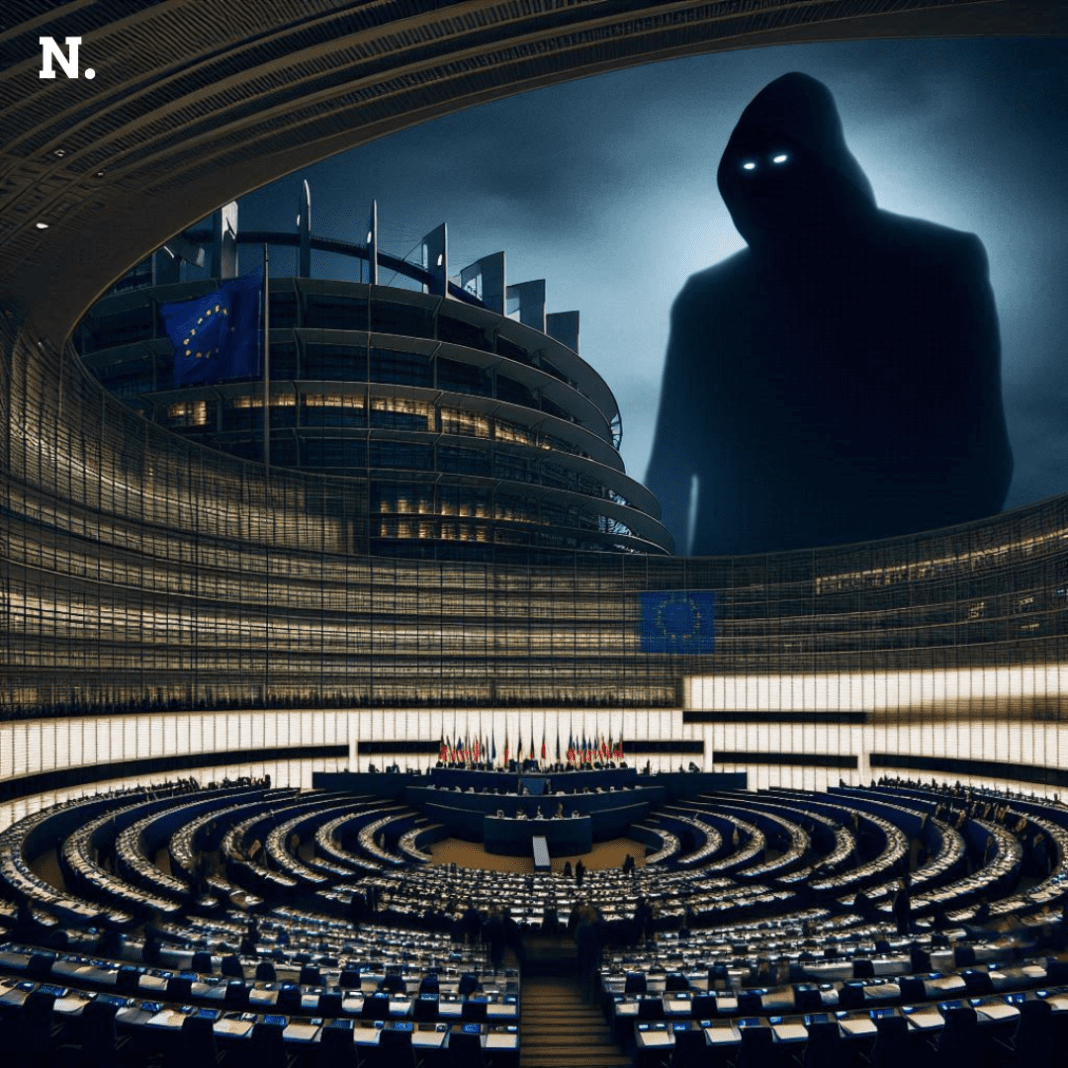
Germany Arrests Far-Right MEP’s Aide for Espionage Amid Rising Concerns of Absolute Foreign Influence

A recent incident that has shocked political circles around Europe is that Germany has detained an assistant to a Member of the European Parliament (MEP) on suspicion of spying for China. Jian G. is the accused party who is alleged to have sent China’s Ministry of State Security (MSS) confidential information on the European Parliament’s internal operations. This arrest highlights the possible infiltration of extreme political groups by foreign intelligence agencies and raises serious worries about the integrity of democracy just ahead of the June EU elections.

The Allegations

Germany’s prosecutors have made serious accusations against Jian G., which led to his imprisonment. It is said that he provided the Chinese intelligence service with multiple important pieces of information on discussions and decisions made in the European Parliament. An additional layer of intricacy to the espionage case has been revealed: Jian G. was also involved in spying on Chinese dissident figures living in Germany.

A Connection to Far-Right Politics

It is impossible to ignore the political aspect of this espionage case. Although the media reports suggest that Jian G. was connected to Maximilian Krah, the front-runner of the far-right Alternative for Germany (AfD) party in the 2018 European Parliament elections, German officials did not specifically state which MEP hired Jian G. Concerns over the vulnerability of European democracy to outside influence are raised by Krah’s connections to Jian G., who highlights the possibility of foreign intelligence services infiltrating radical political organizations.

Reactions and Condemnations 

Strong reactions have been received from an array of sources regarding Jian G.’s detention. Labeling the espionage claims as “extremely serious,” Interior Minister Nancy Faeser emphasized that any betrayal of confidence from within the European Parliament is a direct attack on democracy in Europe. In addition, she has emphasized the significance of holding companies responsible for hiring people involved in such criminal acts, demonstrating her strong opposition to outside meddling in European politics.

Political Fallout and International Ramifications 

Jian G.’s detention has caused a great deal of alarm, especially inside the AfD, which called it “very disturbing.” However, Maximilian Krah, the MEP associated with Jian G., has not spoken up, even though he previously defended Jian G. from charges of engaging in China lobbying. This quiet betrayal of complex political allegiances. The consequences of Jian G.’s detention extend beyond Germany; China’s foreign ministry strongly refutes the accusations. They charge anonymous organizations with trying to damage Beijing’s image and sabotage Sino-European ties. This episode comes after comparable arrests for espionage in the UK, suggesting a larger pattern of Chinese intelligence operations aimed at European countries.

Safeguarding European Democracy

In light of these alarming developments, calls have been made for the European Parliament to expedite its ongoing investigation into foreign influence, with the aim of safeguarding the integrity of the upcoming elections in June. Green MEP Terry Reintke has emphasized the urgent need to counteract the efforts of autocratic regimes like China and Russia, who are actively seeking to undermine democratic institutions across Europe.

Implications for Germany-China Relations 

Germany and China’s relations could be strained as a result of the espionage crisis, especially in the economic domain. Allegations of Chinese espionage on the soil of Germany may put Chancellor Olaf Scholz’s recent visit to China, which was intended to strengthen business ties, under closer examination. These events highlight how difficult it is to strike a balance in the age of geopolitical rivalry between concerns for national security and economic collaboration.

Europe’s political scene has been clouded by Jian G.’s arrest and the ensuing disclosures about his espionage for China. It acts as a wake-up call, drawing attention to the pressing need to protect democratic institutions from foreign meddling, for both citizens and governments. Maintaining the integrity of the democratic process has to be the top priority as Europe gets ready for the next round of elections. The core tenets of democracy can only be safeguarded against outside attacks through concerted effort and resolute action.

Mohit Kumbhar
Mohit Kumbharhttps://www.linkedin.com/in/mohitkumar99/
Mohit Kumbhar is the editor of Newsinterpretation. He edits the site’s news coverage and writes on artificial intelligence, AI search and how publishers become visible to AI assistants such as ChatGPT, Claude, Gemini and Perplexity. He also writes about NI Geovanta, the AI visibility tool for WordPress developed by Newsinterpretation.

TOP 10 TRENDING ON NEWSINTERPRETATION

Cyber Attacks on Space Infrastructure: Satellites, GPS and the Ground Systems Behind Them

From the Viasat KA-SAT hack to GPS jamming over the Baltic, a research guide to how attackers target satellites, navigation signals and ground stations, and why it matters on Earth.

How AI Agents Are Used in Cyber Attacks: From Assisted Hacking to AI-Orchestrated Espionage

Attackers now use AI agents to scan networks, write exploits and run extortion campaigns. A research guide to documented cases, including the first reported AI-orchestrated espionage campaign, and what defenders should do.

Cyber Attacks on AI and LLMs: How Attackers Target Large Language Models

Prompt injection, data poisoning, model theft and jailbreaks: a research guide to how attackers target AI systems and large language models, with real cases and defences.

French Supermarket Refrigeration Cyberattack: How Hacking the Cold Chain Can Endanger Lives

In October 2026 attackers heated refrigeration cabinets in hundreds of French supermarkets to as much as 50°C. No one was hurt, but the attack shows how hacking the cold chain can endanger lives through fire, food poisoning and spoiled medicines.

Cyberattacks on Nuclear Facilities: Stuxnet, Kudankulam and the Limits of Air Gaps

Stuxnet, the Davis-Besse worm and malware at India’s Kudankulam plant: what they show about cyber risk at nuclear facilities and the limits of air gaps.

Triton: When Hackers Target the Safety Systems That Prevent Industrial Disasters

The 2017 Triton attack targeted the safety systems that prevent industrial disasters. What happened, who was charged, and how plants protect their last line of defence.

Cybersecurity Risks in Smart Cities: When Connected Infrastructure Fails

How connecting traffic control, emergency alerts and utilities concentrates cyber risk in cities, what the Dallas and Atlanta incidents showed, and what governments recommend.

Weaponized Drones: Hijacking, GPS Spoofing and Emerging Cyber Warfare Risks

How drones can be hijacked, jammed or misled by GPS spoofing, what researchers have demonstrated, and why governments treat drone fleets as a security risk.

Ransomware Attacks on Hospitals: How Healthcare Cyberattacks Put Patients at Risk

How ransomware against hospitals and their suppliers delays care and endangers patients, what the Düsseldorf and WannaCry cases show, and what research says about deaths.

Operational blunder exposes massive Russian cyber espionage attack on Ukrainian prosecutors

A major cyberattack has compromised the email accounts of...

Cyber Attacks on Space Infrastructure: Satellites, GPS and the Ground Systems Behind Them

From the Viasat KA-SAT hack to GPS jamming over the Baltic, a research guide to how attackers target satellites, navigation signals and ground stations, and why it matters on Earth.

French Supermarket Refrigeration Cyberattack: How Hacking the Cold Chain Can Endanger Lives

In October 2026 attackers heated refrigeration cabinets in hundreds of French supermarkets to as much as 50°C. No one was hurt, but the attack shows how hacking the cold chain can endanger lives through fire, food poisoning and spoiled medicines.

Cyberattacks on Nuclear Facilities: Stuxnet, Kudankulam and the Limits of Air Gaps

Stuxnet, the Davis-Besse worm and malware at India’s Kudankulam plant: what they show about cyber risk at nuclear facilities and the limits of air gaps.

Triton: When Hackers Target the Safety Systems That Prevent Industrial Disasters

The 2017 Triton attack targeted the safety systems that prevent industrial disasters. What happened, who was charged, and how plants protect their last line of defence.

Cybersecurity Risks in Smart Cities: When Connected Infrastructure Fails

How connecting traffic control, emergency alerts and utilities concentrates cyber risk in cities, what the Dallas and Atlanta incidents showed, and what governments recommend.

Ransomware Attacks on Hospitals: How Healthcare Cyberattacks Put Patients at Risk

How ransomware against hospitals and their suppliers delays care and endangers patients, what the Düsseldorf and WannaCry cases show, and what research says about deaths.

FBI warns of AVrecon malware targeting outdated routers linked to proxy based cybercrime

A serious cybersecurity warning has been issued regarding commonly...

Related Articles

Popular Categories
