

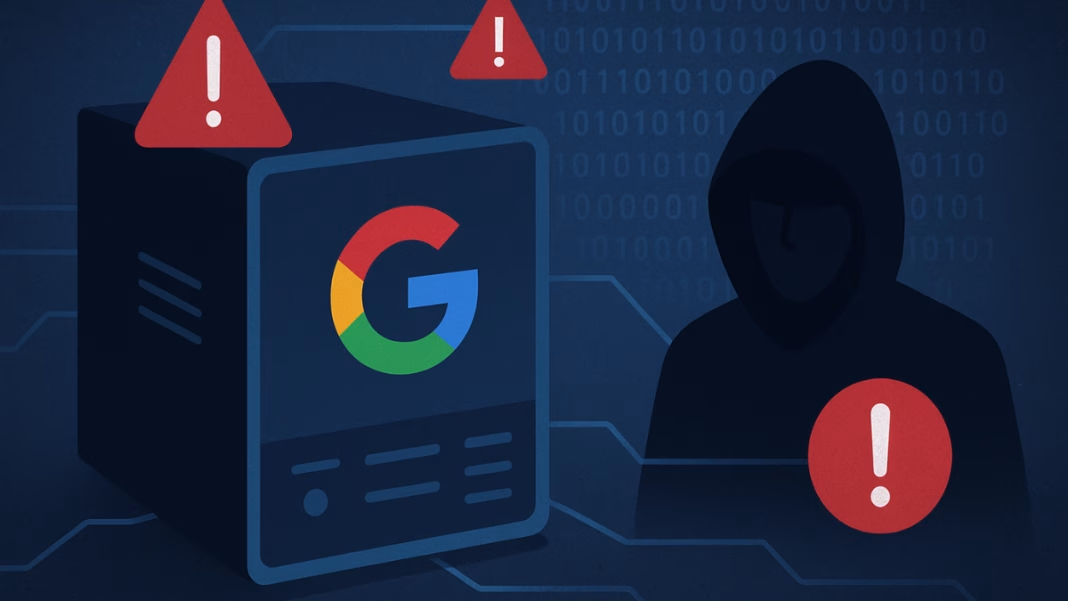
Google confirms ShinyHunters attack on Salesforce database storing business details

Google confirms breach in Salesforce database

Google has confirmed that hackers gained access to a corporate database containing business contact information. The cyberattack has been linked to the ShinyHunters group, also known in the security world as UNC6040.

The breach hit a Salesforce system used by Google. It stored details of small and medium-sized businesses. The database had company names, contact details, and related notes. Google’s Threat Intelligence team said the attack happened in June 2025. The company revealed it on 5 August 2025 in a blog post.

Google said the stolen information was mostly basic and already public business data. It did not include sensitive personal details like passwords, bank account numbers, or ID numbers. But the attackers still copied the business records during a short time when the system’s defences were weak.

Even though the data taken was not classified as highly sensitive, experts point out that even seemingly harmless information can be useful to cybercriminals. Business contact lists can be exploited for targeted phishing campaigns, fake invoices, or social engineering scams.

How the attack happened

The attackers infiltrated the Salesforce system, which was used to store contact records for various businesses working with Google. The stolen data included the names of companies, their contact information such as email addresses and phone numbers, and notes related to those businesses.

The hackers acted quickly, retrieving the information before their access was cut off. The breach was detected after suspicious activity was noticed within the system. Once discovered, Google blocked the intruders, began a full investigation, and secured the compromised database to prevent further data loss.

How Cyber Attacks on Industrial Control Systems Can Endanger Lives ?

The group believed to be responsible, ShinyHunters, demands payment in bitcoin within a short deadline, often 72 hours. They contact employees directly through emails or phone calls and warn them of data leaks unless the demands are met.

In many past incidents, ShinyHunters has also used a “double extortion” strategy. This means they not only steal the data but also threaten to release it publicly on so-called data leak sites if the ransom is not paid.

ShinyHunters’ known tactics and Google’s response

ShinyHunters has been linked to several big cyberattacks in different industries. They often break into a company’s system and steal important information. Then they pressure the company by threatening to expose the data. When they post stolen data online, it can harm the company’s reputation and cause panic among clients or partners.

In this latest case, it remains unclear whether ShinyHunters has issued a ransom demand directly to Google. However, Google has warned that the attackers might be looking to escalate their extortion attempts by setting up a public data leak site.

To reduce the risk of similar incidents, Google has shared technical details and findings from its investigation with the wider cybersecurity community. This is intended to help other companies identify and defend against related threats. The company also emphasised that the affected Salesforce instance was limited to business-related records and did not contain consumer data.

Cyberattack Catastrophe: How Hackers Can Endanger Human Lives ?

The incident shows that even big tech companies can face cyberattacks. Google acted fast to stop the breach. But the hackers still managed to get in and copy the data. This shows how skilled and determined some hacking groups are.

Google’s blog post said the breach was stopped quickly. The Salesforce system held only contact information and notes for small and medium-sized businesses. The company said the data was taken in a short time before access was blocked. They are still watching for any signs of the stolen information being posted online.
Renuka Bangale
Renuka Bangale
Renuka is a distinguished Chartered Accountant and a Certified Digital Threats Analyst from Riskpro, renowned for her expertise in cybersecurity. With a deep understanding of cybercrimes, malware, cyber warfare, and espionage, she has established herself as an authority in the field. Renuka combines her financial acumen with advanced knowledge of digital threats to provide unparalleled insights into the evolving landscape of information security. Her analytical prowess enables her to dissect complex cyber incidents, offering clarity on risks and mitigation strategies. As a key contributor to Newsinterpretation’s information security category, Renuka delivers authoritative articles that educate and inform readers about emerging threats and best practices.

TOP 10 TRENDING ON NEWSINTERPRETATION

Cyber Attacks on Space Infrastructure: Satellites, GPS and the Ground Systems Behind Them

From the Viasat KA-SAT hack to GPS jamming over the Baltic, a research guide to how attackers target satellites, navigation signals and ground stations, and why it matters on Earth.

How AI Agents Are Used in Cyber Attacks: From Assisted Hacking to AI-Orchestrated Espionage

Attackers now use AI agents to scan networks, write exploits and run extortion campaigns. A research guide to documented cases, including the first reported AI-orchestrated espionage campaign, and what defenders should do.

Cyber Attacks on AI and LLMs: How Attackers Target Large Language Models

Prompt injection, data poisoning, model theft and jailbreaks: a research guide to how attackers target AI systems and large language models, with real cases and defences.

French Supermarket Refrigeration Cyberattack: How Hacking the Cold Chain Can Endanger Lives

In October 2026 attackers heated refrigeration cabinets in hundreds of French supermarkets to as much as 50°C. No one was hurt, but the attack shows how hacking the cold chain can endanger lives through fire, food poisoning and spoiled medicines.

Cyberattacks on Nuclear Facilities: Stuxnet, Kudankulam and the Limits of Air Gaps

Stuxnet, the Davis-Besse worm and malware at India’s Kudankulam plant: what they show about cyber risk at nuclear facilities and the limits of air gaps.

Triton: When Hackers Target the Safety Systems That Prevent Industrial Disasters

The 2017 Triton attack targeted the safety systems that prevent industrial disasters. What happened, who was charged, and how plants protect their last line of defence.

Cybersecurity Risks in Smart Cities: When Connected Infrastructure Fails

How connecting traffic control, emergency alerts and utilities concentrates cyber risk in cities, what the Dallas and Atlanta incidents showed, and what governments recommend.

Weaponized Drones: Hijacking, GPS Spoofing and Emerging Cyber Warfare Risks

How drones can be hijacked, jammed or misled by GPS spoofing, what researchers have demonstrated, and why governments treat drone fleets as a security risk.

Ransomware Attacks on Hospitals: How Healthcare Cyberattacks Put Patients at Risk

How ransomware against hospitals and their suppliers delays care and endangers patients, what the Düsseldorf and WannaCry cases show, and what research says about deaths.

Operational blunder exposes massive Russian cyber espionage attack on Ukrainian prosecutors

A major cyberattack has compromised the email accounts of...

Cyber Attacks on Space Infrastructure: Satellites, GPS and the Ground Systems Behind Them

From the Viasat KA-SAT hack to GPS jamming over the Baltic, a research guide to how attackers target satellites, navigation signals and ground stations, and why it matters on Earth.

French Supermarket Refrigeration Cyberattack: How Hacking the Cold Chain Can Endanger Lives

In October 2026 attackers heated refrigeration cabinets in hundreds of French supermarkets to as much as 50°C. No one was hurt, but the attack shows how hacking the cold chain can endanger lives through fire, food poisoning and spoiled medicines.

Cyberattacks on Nuclear Facilities: Stuxnet, Kudankulam and the Limits of Air Gaps

Stuxnet, the Davis-Besse worm and malware at India’s Kudankulam plant: what they show about cyber risk at nuclear facilities and the limits of air gaps.

Triton: When Hackers Target the Safety Systems That Prevent Industrial Disasters

The 2017 Triton attack targeted the safety systems that prevent industrial disasters. What happened, who was charged, and how plants protect their last line of defence.

Cybersecurity Risks in Smart Cities: When Connected Infrastructure Fails

How connecting traffic control, emergency alerts and utilities concentrates cyber risk in cities, what the Dallas and Atlanta incidents showed, and what governments recommend.

Ransomware Attacks on Hospitals: How Healthcare Cyberattacks Put Patients at Risk

How ransomware against hospitals and their suppliers delays care and endangers patients, what the Düsseldorf and WannaCry cases show, and what research says about deaths.

FBI warns of AVrecon malware targeting outdated routers linked to proxy based cybercrime

A serious cybersecurity warning has been issued regarding commonly...

Related Articles

Popular Categories
