

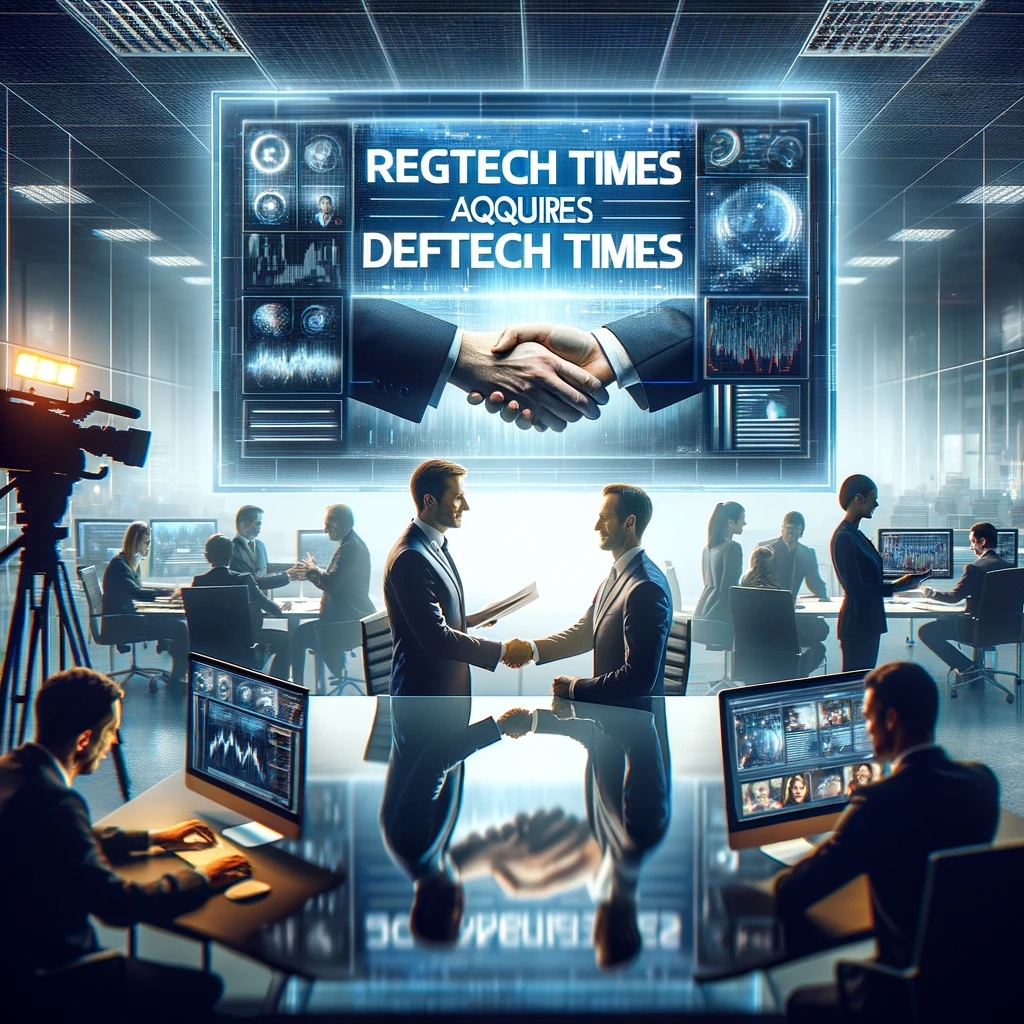
RegTech Times Acquires Controlling Stake in DefTech Times, Expanding Its Global Reach in Financial and Defense Technology Journalism

01.01.2025, Sheridan, USA – RegTech Times, a leading global media platform dedicated to financial crime, regulatory technology, and compliance, has announced the acquisition of a controlling stake in DefTech Times, a premier news portal specializing in defense technology, geopolitics, and security developments. This strategic acquisition strengthens RegTech Times’ position as a dominant player in investigative journalism, expanding its coverage into the intersection of finance, technology, and global security.

With this acquisition, DefTech Times will continue its mission of delivering in-depth analysis on critical defense and security matters while benefiting from RegTech Times’ robust investigative journalism framework and technological expertise. This partnership aims to provide cutting-edge insights into the evolving landscape of financial crime, regulatory compliance, sanctions, defense technology, and global geopolitics.

Strategic Synergies and Future Outlook

By integrating DefTech Times into its portfolio, RegTech Times will leverage its advanced data analytics, investigative journalism expertise, and global network of industry professionals to enhance reporting on defense, security, and compliance issues. The collaboration is set to introduce:

  • Cross-sector Investigations: Deep dives into the nexus of financial crime, defense contracts, and geopolitical risks.
  • Expanded Intelligence Coverage: Exclusive insights into sanctions, defense funding, cybersecurity threats, and military technology advancements.
  • Advanced Research & Reports: Comprehensive industry reports on the impact of financial regulations on global defense strategies.
  • Exclusive Interviews & Expert Analysis: Featuring thought leaders from both financial crime compliance and defense sectors.

Speaking on the acquisition, Allan Nial, CEO of Regtechtimes, stated:

“The integration of DefTech Times into RegTech Times marks a major milestone in investigative journalism. As financial crime and global defense strategies become increasingly interconnected, our combined expertise will offer unparalleled insights into these complex industries. This acquisition aligns with our mission to expose financial malpractices, track regulatory changes, and now, analyze their impact on global security.”

Similarly, Rajlaxmi Deshmukh, Editor-in-Chief of Deftechtimes, commented:

“The world of defense and security is evolving rapidly, and financial regulations play a crucial role in shaping global power dynamics. This acquisition allows us to scale our reporting, leveraging RegTech Times’ vast investigative capabilities and technology-driven journalism. We are excited about the future and the unique perspectives we will bring to our readers.”

Established in 2017, RegTech Times quickly became a profitable venture by delivering in-depth coverage of regulatory issues affecting global industries. In 2022, the company expanded its reach by establishing a U.S. entity to cater to the American market. By aligning with major digital platforms like Google and MSN, RegTech Times tapped into a vast audience, generating revenue through advertising partnerships. Regtechtimes produces more than 4000 Articles in a year and gets more than 12 million eyeballs every year.


TOP 10 TRENDING ON NEWSINTERPRETATION

Cyber Attacks on Space Infrastructure: Satellites, GPS and the Ground Systems Behind Them

From the Viasat KA-SAT hack to GPS jamming over the Baltic, a research guide to how attackers target satellites, navigation signals and ground stations, and why it matters on Earth.

How AI Agents Are Used in Cyber Attacks: From Assisted Hacking to AI-Orchestrated Espionage

Attackers now use AI agents to scan networks, write exploits and run extortion campaigns. A research guide to documented cases, including the first reported AI-orchestrated espionage campaign, and what defenders should do.

Cyber Attacks on AI and LLMs: How Attackers Target Large Language Models

Prompt injection, data poisoning, model theft and jailbreaks: a research guide to how attackers target AI systems and large language models, with real cases and defences.

French Supermarket Refrigeration Cyberattack: How Hacking the Cold Chain Can Endanger Lives

In October 2026 attackers heated refrigeration cabinets in hundreds of French supermarkets to as much as 50°C. No one was hurt, but the attack shows how hacking the cold chain can endanger lives through fire, food poisoning and spoiled medicines.

Cyberattacks on Nuclear Facilities: Stuxnet, Kudankulam and the Limits of Air Gaps

Stuxnet, the Davis-Besse worm and malware at India’s Kudankulam plant: what they show about cyber risk at nuclear facilities and the limits of air gaps.

Triton: When Hackers Target the Safety Systems That Prevent Industrial Disasters

The 2017 Triton attack targeted the safety systems that prevent industrial disasters. What happened, who was charged, and how plants protect their last line of defence.

Cybersecurity Risks in Smart Cities: When Connected Infrastructure Fails

How connecting traffic control, emergency alerts and utilities concentrates cyber risk in cities, what the Dallas and Atlanta incidents showed, and what governments recommend.

Weaponized Drones: Hijacking, GPS Spoofing and Emerging Cyber Warfare Risks

How drones can be hijacked, jammed or misled by GPS spoofing, what researchers have demonstrated, and why governments treat drone fleets as a security risk.

Ransomware Attacks on Hospitals: How Healthcare Cyberattacks Put Patients at Risk

How ransomware against hospitals and their suppliers delays care and endangers patients, what the Düsseldorf and WannaCry cases show, and what research says about deaths.

Operational blunder exposes massive Russian cyber espionage attack on Ukrainian prosecutors

A major cyberattack has compromised the email accounts of...

Cyber Attacks on Space Infrastructure: Satellites, GPS and the Ground Systems Behind Them

From the Viasat KA-SAT hack to GPS jamming over the Baltic, a research guide to how attackers target satellites, navigation signals and ground stations, and why it matters on Earth.

French Supermarket Refrigeration Cyberattack: How Hacking the Cold Chain Can Endanger Lives

In October 2026 attackers heated refrigeration cabinets in hundreds of French supermarkets to as much as 50°C. No one was hurt, but the attack shows how hacking the cold chain can endanger lives through fire, food poisoning and spoiled medicines.

Cyberattacks on Nuclear Facilities: Stuxnet, Kudankulam and the Limits of Air Gaps

Stuxnet, the Davis-Besse worm and malware at India’s Kudankulam plant: what they show about cyber risk at nuclear facilities and the limits of air gaps.

Triton: When Hackers Target the Safety Systems That Prevent Industrial Disasters

The 2017 Triton attack targeted the safety systems that prevent industrial disasters. What happened, who was charged, and how plants protect their last line of defence.

Cybersecurity Risks in Smart Cities: When Connected Infrastructure Fails

How connecting traffic control, emergency alerts and utilities concentrates cyber risk in cities, what the Dallas and Atlanta incidents showed, and what governments recommend.

Ransomware Attacks on Hospitals: How Healthcare Cyberattacks Put Patients at Risk

How ransomware against hospitals and their suppliers delays care and endangers patients, what the Düsseldorf and WannaCry cases show, and what research says about deaths.

FBI warns of AVrecon malware targeting outdated routers linked to proxy based cybercrime

A serious cybersecurity warning has been issued regarding commonly...

Related Articles

Popular Categories
