

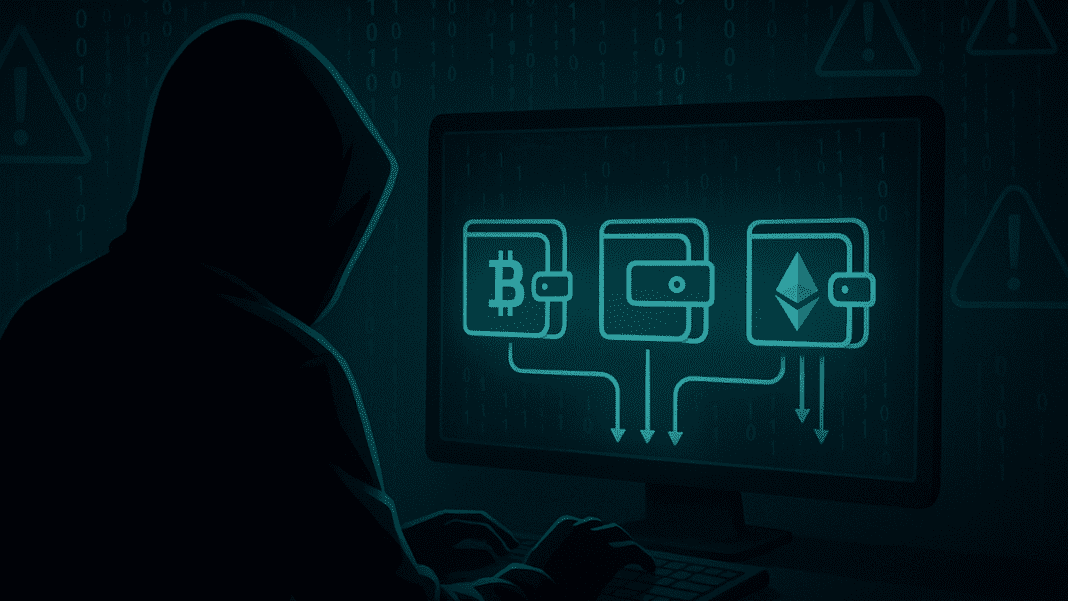
Researchers uncover stealthy malware named “ModStealer” draining crypto browser wallets

A Hidden Cyber Threat Emerges

A new and dangerous type of malware has been uncovered, and it is causing serious concern in the crypto world. The malware, named ModStealer, is not only powerful but also incredibly sneaky. It can run on Windows, macOS, and Linux, making it a threat to almost anyone who uses a computer.

What makes ModStealer so alarming is its ability to slip past antivirus programs. For weeks, it managed to remain invisible to popular security tools. This meant that thousands of users could have been infected without ever knowing.

The malware spreads in a clever way. Hackers disguise it as part of fake job ads for developers. Since many developers already use Node.js, the attackers use that setup to trick them into downloading the infected files. Once installed, the malware secretly begins its mission to drain valuable information.

How ModStealer Works in Secret

After being executed on a system, ModStealer immediately starts searching for browser-based crypto wallet extensions, login details, and even digital certificates. These are highly valuable pieces of information because they can give hackers direct access to someone’s crypto assets.

The stolen data is then sent to remote command-and-control servers run by the attackers. These servers act as a headquarters for the malware, allowing hackers to monitor and control the stolen information.

On macOS devices, the malware becomes even trickier. It uses a persistence method, which makes it start automatically every time the computer is turned on. It hides by pretending to be a harmless background helper program, so the user doesn’t suspect anything.

How Cyber Attacks on Industrial Control Systems Can Endanger Lives ?

Some signs of infection do exist. Experts say that infected devices often contain a hidden file named “.sysupdater.dat”. In addition, infected computers may try to connect to suspicious servers in the background. These hidden actions make ModStealer resilient, as regular antivirus programs rely on known signatures to detect threats, and this malware disguises itself too well.

The use of obfuscated code makes it even harder to detect. Obfuscation is a method where the malware’s code is scrambled or disguised so that security tools and even human analysts cannot easily understand what it does. Combined with its stealthy persistence, this makes ModStealer a formidable threat.

The Growing Risk for Crypto Users

ModStealer is particularly dangerous because of what it steals. If a user’s private keys, seed phrases, or exchange API keys are taken, hackers can immediately drain their wallets. This means the victim could lose all of their crypto funds in just a few moments.

The attack does not only put individuals at risk. Large numbers of stolen browser wallet credentials could allow attackers to carry out massive on-chain exploits, affecting multiple platforms at once. Such events could damage trust in crypto services and highlight weaknesses in the supply chain of digital wallets and tools.

Federal authorities seize $3 million in crypto linked to ransomware that hit US hospitals

The discovery of ModStealer comes shortly after another attack attempt in the ecosystem, where hackers tried to push malicious code through a compromised developer account. While that attempt was stopped early, it shows how attackers are increasingly targeting crypto infrastructure and using sophisticated tricks to reach unsuspecting users.

Security researchers emphasize that this malware is unlike traditional stealers because of its multi-platform reach and stealthy execution chain. By blending into normal system processes and avoiding detection for nearly a month, ModStealer shows how advanced cyber threats against the crypto industry are becoming.

The warning is clear: ModStealer poses a direct threat to both individual crypto holders and entire platforms. With the ability to hide in plain sight, it stands as one of the most concerning malware strains discovered in recent months.


Renuka Bangale
Renuka Bangale
Renuka is a distinguished Chartered Accountant and a Certified Digital Threats Analyst from Riskpro, renowned for her expertise in cybersecurity. With a deep understanding of cybercrimes, malware, cyber warfare, and espionage, she has established herself as an authority in the field. Renuka combines her financial acumen with advanced knowledge of digital threats to provide unparalleled insights into the evolving landscape of information security. Her analytical prowess enables her to dissect complex cyber incidents, offering clarity on risks and mitigation strategies. As a key contributor to Newsinterpretation’s information security category, Renuka delivers authoritative articles that educate and inform readers about emerging threats and best practices.

TOP 10 TRENDING ON NEWSINTERPRETATION

Cyber Attacks on Space Infrastructure: Satellites, GPS and the Ground Systems Behind Them

From the Viasat KA-SAT hack to GPS jamming over the Baltic, a research guide to how attackers target satellites, navigation signals and ground stations, and why it matters on Earth.

How AI Agents Are Used in Cyber Attacks: From Assisted Hacking to AI-Orchestrated Espionage

Attackers now use AI agents to scan networks, write exploits and run extortion campaigns. A research guide to documented cases, including the first reported AI-orchestrated espionage campaign, and what defenders should do.

Cyber Attacks on AI and LLMs: How Attackers Target Large Language Models

Prompt injection, data poisoning, model theft and jailbreaks: a research guide to how attackers target AI systems and large language models, with real cases and defences.

French Supermarket Refrigeration Cyberattack: How Hacking the Cold Chain Can Endanger Lives

In October 2026 attackers heated refrigeration cabinets in hundreds of French supermarkets to as much as 50°C. No one was hurt, but the attack shows how hacking the cold chain can endanger lives through fire, food poisoning and spoiled medicines.

Cyberattacks on Nuclear Facilities: Stuxnet, Kudankulam and the Limits of Air Gaps

Stuxnet, the Davis-Besse worm and malware at India’s Kudankulam plant: what they show about cyber risk at nuclear facilities and the limits of air gaps.

Triton: When Hackers Target the Safety Systems That Prevent Industrial Disasters

The 2017 Triton attack targeted the safety systems that prevent industrial disasters. What happened, who was charged, and how plants protect their last line of defence.

Cybersecurity Risks in Smart Cities: When Connected Infrastructure Fails

How connecting traffic control, emergency alerts and utilities concentrates cyber risk in cities, what the Dallas and Atlanta incidents showed, and what governments recommend.

Weaponized Drones: Hijacking, GPS Spoofing and Emerging Cyber Warfare Risks

How drones can be hijacked, jammed or misled by GPS spoofing, what researchers have demonstrated, and why governments treat drone fleets as a security risk.

Ransomware Attacks on Hospitals: How Healthcare Cyberattacks Put Patients at Risk

How ransomware against hospitals and their suppliers delays care and endangers patients, what the Düsseldorf and WannaCry cases show, and what research says about deaths.

Operational blunder exposes massive Russian cyber espionage attack on Ukrainian prosecutors

A major cyberattack has compromised the email accounts of...

Cyber Attacks on Space Infrastructure: Satellites, GPS and the Ground Systems Behind Them

From the Viasat KA-SAT hack to GPS jamming over the Baltic, a research guide to how attackers target satellites, navigation signals and ground stations, and why it matters on Earth.

French Supermarket Refrigeration Cyberattack: How Hacking the Cold Chain Can Endanger Lives

In October 2026 attackers heated refrigeration cabinets in hundreds of French supermarkets to as much as 50°C. No one was hurt, but the attack shows how hacking the cold chain can endanger lives through fire, food poisoning and spoiled medicines.

Cyberattacks on Nuclear Facilities: Stuxnet, Kudankulam and the Limits of Air Gaps

Stuxnet, the Davis-Besse worm and malware at India’s Kudankulam plant: what they show about cyber risk at nuclear facilities and the limits of air gaps.

Triton: When Hackers Target the Safety Systems That Prevent Industrial Disasters

The 2017 Triton attack targeted the safety systems that prevent industrial disasters. What happened, who was charged, and how plants protect their last line of defence.

Cybersecurity Risks in Smart Cities: When Connected Infrastructure Fails

How connecting traffic control, emergency alerts and utilities concentrates cyber risk in cities, what the Dallas and Atlanta incidents showed, and what governments recommend.

Ransomware Attacks on Hospitals: How Healthcare Cyberattacks Put Patients at Risk

How ransomware against hospitals and their suppliers delays care and endangers patients, what the Düsseldorf and WannaCry cases show, and what research says about deaths.

FBI warns of AVrecon malware targeting outdated routers linked to proxy based cybercrime

A serious cybersecurity warning has been issued regarding commonly...

Related Articles

Popular Categories
