

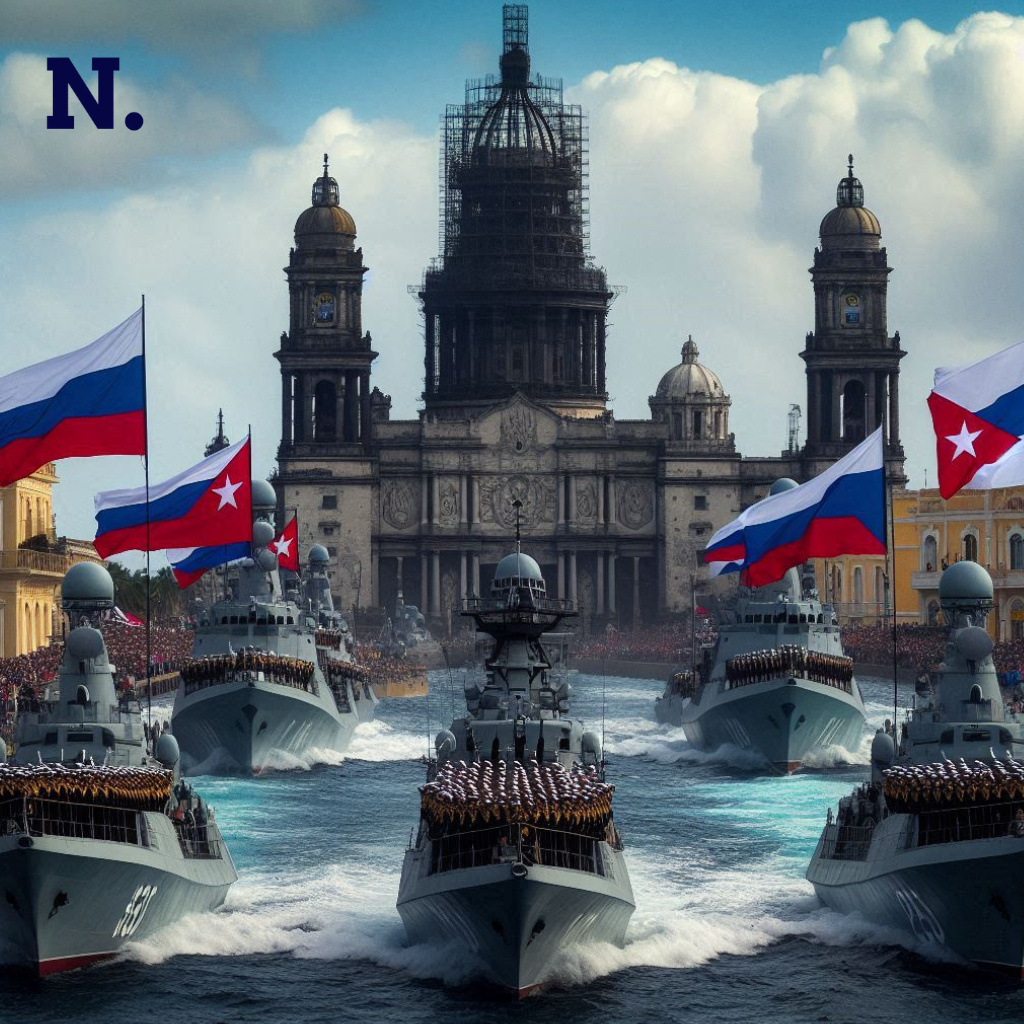

The arrival of Russia’s Admiral Gorshkov frigate and the nuclear-powered submarine Kazan is accompanied by support vessels in Cuba. This represents more than just a routine visit. It serves as a strategic move by Moscow to flex its military muscle and assert its presence in a region.
Region which is traditionally considered within the sphere of influence of the United States. By showcasing advanced naval capabilities, including hypersonic missiles, Russia sends a clear message of deterrence. This will reflect strength, particularly amidst escalating tensions stemming from its ongoing conflict in Ukraine.
Strategic Implications for Cuba and Regional Response
The deployment of Russian naval assets in close proximity to the United States triggers strategic considerations and responses from regional actors. While Cuba’s reception of the Russian fleet underscores its historical alliance with Moscow. It also draws attention from Washington and neighboring countries wary of potential security ramifications. The move prompts assessments of regional power dynamics and the evolving nature of military alliances. This highlights the need for vigilant monitoring and diplomatic engagement to manage potential escalations.
USA’s National Security Advisor Jake Sullivian mentioned that such types of naval exercises are routine. There is nothing that the US should worry about, but will maintain required vigilance. Situated in the southern state of Florida, Havana is only 160 kilometres (100 miles) away from Key West. Which is the home to the US naval aviation station.
Historical Echoes of 1962 Cuban Missile Crisis
The backdrop of the Cold War era, epitomized by the Cuban Missile Crisis of 1962, looms large over the current naval deployment. However, the dynamics of Russia-Cuba relations have evolved since then. Currently the relations are driven not only by ideological alignment but also economic imperatives. Cuba’s growing dependence on Russia for economic support, underscored by recent oil deliveries and promised assistance in various sectors. This certainly underscores the pragmatic considerations shaping contemporary geopolitical alignments. While historical echoes persist, the realities of the modern world present a more complex landscape. There are interwoven interests and strategic calculations in the contemporary landscape.
Diplomatic Engagement and Strategic Manoeuvring
Amidst the naval spectacle, diplomatic engagements unfold between Cuba, Russia, and the United States, with each party carefully navigating the geopolitical terrain. Statements emphasizing the importance of dialogue and resolution of conflicts reflect attempts to manage tensions and avoid potential escalation. However, beneath the diplomatic veneer lies a complex web of strategic manoeuvring.
As each actor seeks to advance its interests while avoiding direct confrontation. There is uncertainty on regional stability amid Russia’s naval exercise. There is contingent upon ongoing developments. Amidst the ability of all parties to navigate the delicate balance of power in the Americas. After the fall of the USSR in 1991, Cuba has maintained relations with Russia. These relations were further strengthened, when bilateral talks were conducted between Vlamadir Putin and Miguel Diaz-Canel in 2022.
Conclusion
The recent arrival of a Russian naval fleet, including a frigate and a nuclear-powered submarine, in Cuba signifies more than just a routine visit. It serves as a bold assertion of Moscow’s military presence in a region historically dominated by the United States. As tensions escalate globally, particularly amid Russia’s invasion of Ukraine, this deployment sends a clear message of strength and strategic positioning.
While diplomatic engagements and regional responses unfold, the lasting impact of this naval display on geopolitical dynamics remains to be seen. Nonetheless, it underscores the complex interplay of historical echoes, contemporary realities, and strategic manoeuvring shaping the geopolitical landscape of the Americas.