

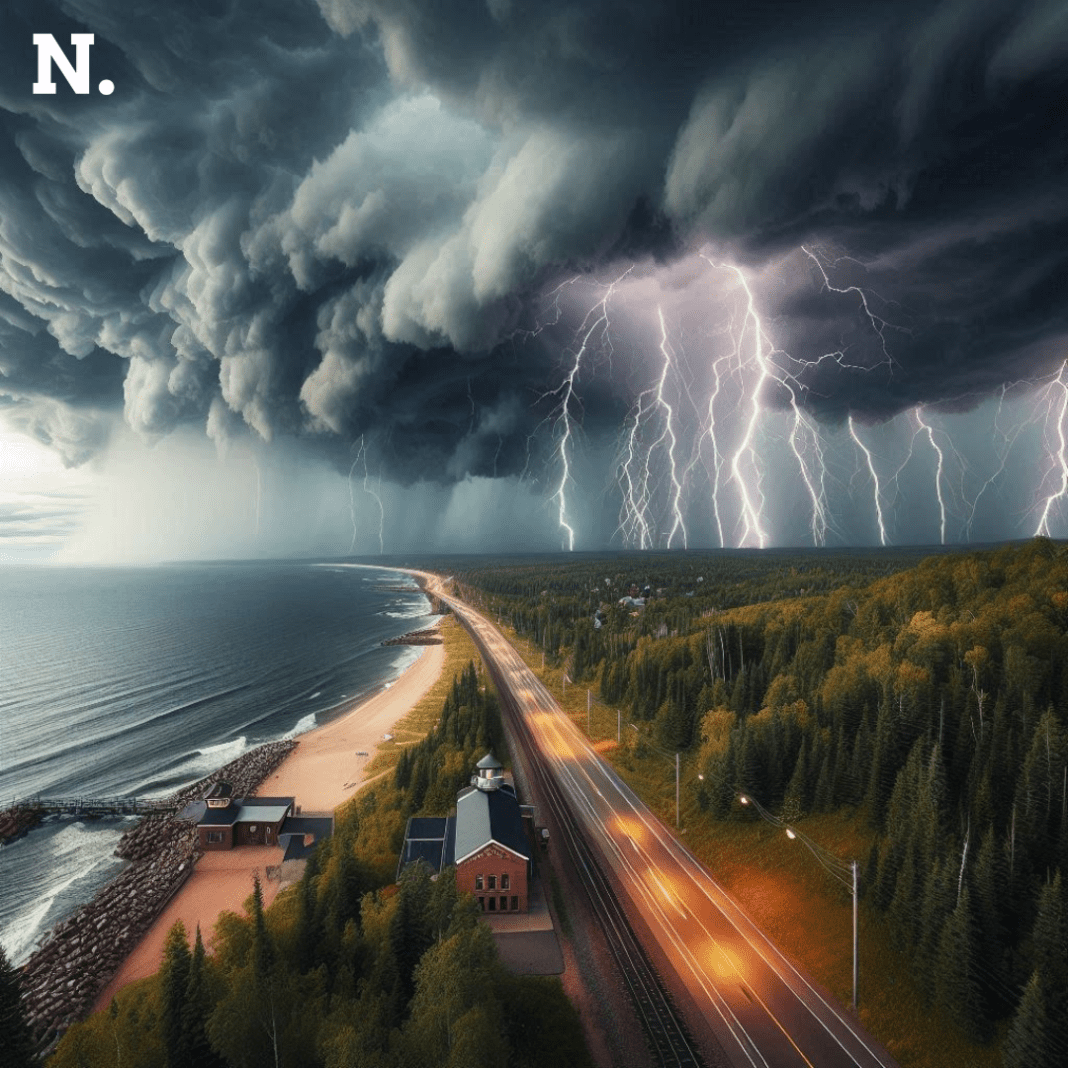
Severe Thunderstorm Watch Issued for Upper Peninsula by National Weather Service

The National Weather Service has issued a Severe Thunderstorm. Watch for parts of Michigan’s Upper Peninsula, U.P., effective until 5 p.m. today. Residents and visitors should be on alert as the line of showers and thunderstorms over the western half of the U.P. may track eastward, bringing strong winds and damaging hail. The NWS has indicated that heavy rainfall associated with these storms could also lead to localized flooding.

Current Weather Conditions and Immediate Threats

For this morning, a dynamic spring weather system will set its sights on the Upper Peninsula. The storms, which are intensifying as they shift east, bring with them potentially destructive winds and sizable hail. The severe gusts that could reach from these storms have the potential to cause home damage and sometimes human fatalities. The NWS also warned that these storms would dump heavy rainfall around the region that might cause flash flooding in some areas, further increasing the possibility of damage and disruption.

Communities across the Upper Peninsula, particularly those in the projected path of this storm, are advised to be prepared for changing weather at a moment’s notice. Be prepared to secure loose outdoor items, stay indoors, and keep up with local weather updates.

Unsettled Weather: More Storms and flooding concerns

Much of the day and evening, beyond the immediate threat, is rather unsettled. There is a possibility of additional storm development this evening as we go into the overnight hours, meteorologists say. Current weather patterns say that overall, the atmosphere is still primed for further storm development activity. The risk for severe weather stays through the night.

A slight risk for severe weather  place on the Upper Peninsula, meaning that although widespread severe storms, not expected, isolated severe events are. This level of risk denotes the requirement as a need for continued vigilance, alertness, and preparedness.

One of the major problems with strong storms today is flash flooding. It doesn’t take a very long amount of time for downpours to become more than drainage systems are capable of, and then water accumulates on roadways and other depressed areas. Citizens  advised to avoid driving on flooded roadways and to move to higher ground if the flooding occurs. The NWS wants to remind people not to underestimate the depth and intensity of floodwater, at times deceptively deep and strong.

Preparation and Safety Measures

Because of the Severe Thunderstorm Watch, there are several precautions that can taken:

Stay Informed: Monitor local news, weather stations, the NWS website for updates on the storm’s progress and any additional warnings or advisories.

Securing Outdoor Items: Powerful gusts and high winds can quickly turn typical everyday objects into deadly flying projectiles. Securely fasten or bring in patio furniture, grills, and lawn ornaments before they are blown away or damaged.

Be Prepared for Power Outages: Strong winds, in addition to hail, can cause power outages by knocking down power lines. Have flashlights, extra batteries, and other supplies that are ready in case of emergencies on hand. Charge all electronic devices in advance.

Stay Away from Flooded Areas: Steer clear of driving or walking on flooded roads or sidewalks. Shallow water can be dangerous and often conceals dangers like sinkholes or downed power lines.

Have an Emergency Plan: Make sure all family members know what to do and where to go in case of severe weather. Identify a safe place in your home to seek shelter, such as a basement or an interior room on the lowest but aboveground floor, away from windows.

Community Response and Support

The local authorities and emergency services are closely monitoring, totally on standby in case of incidents caused by this terrible weather. Community members asked to check in on neighbors, particularly older or those with challenges of mobility, for preparations and safety.

The situation will further evolve throughout the day. Further updates will issued by the NWS and could either change the watch or even give new warnings if necessary. Residents need to be vigilant and proactive in efforts at hand in view of this severe weather threat.

It’s another reminder of how dynamic, sometimes quite volatile, the Upper Peninsula’s weather systems can be. If one had informed and taken precautions, one would have prevented such storms from affecting oneself.


Vedangi Verma
Vedangi Verma
Vedangi Verma is working as an journalism intern in 'newsinterpretation'. She has published articles that cover topics like military and security, national and international politics, cybersecurity, ecological conditions of the said area and so on.

TOP 10 TRENDING ON NEWSINTERPRETATION

Cyber Attacks on Space Infrastructure: Satellites, GPS and the Ground Systems Behind Them

From the Viasat KA-SAT hack to GPS jamming over the Baltic, a research guide to how attackers target satellites, navigation signals and ground stations, and why it matters on Earth.

How AI Agents Are Used in Cyber Attacks: From Assisted Hacking to AI-Orchestrated Espionage

Attackers now use AI agents to scan networks, write exploits and run extortion campaigns. A research guide to documented cases, including the first reported AI-orchestrated espionage campaign, and what defenders should do.

Cyber Attacks on AI and LLMs: How Attackers Target Large Language Models

Prompt injection, data poisoning, model theft and jailbreaks: a research guide to how attackers target AI systems and large language models, with real cases and defences.

French Supermarket Refrigeration Cyberattack: How Hacking the Cold Chain Can Endanger Lives

In October 2026 attackers heated refrigeration cabinets in hundreds of French supermarkets to as much as 50°C. No one was hurt, but the attack shows how hacking the cold chain can endanger lives through fire, food poisoning and spoiled medicines.

Cyberattacks on Nuclear Facilities: Stuxnet, Kudankulam and the Limits of Air Gaps

Stuxnet, the Davis-Besse worm and malware at India’s Kudankulam plant: what they show about cyber risk at nuclear facilities and the limits of air gaps.

Triton: When Hackers Target the Safety Systems That Prevent Industrial Disasters

The 2017 Triton attack targeted the safety systems that prevent industrial disasters. What happened, who was charged, and how plants protect their last line of defence.

Cybersecurity Risks in Smart Cities: When Connected Infrastructure Fails

How connecting traffic control, emergency alerts and utilities concentrates cyber risk in cities, what the Dallas and Atlanta incidents showed, and what governments recommend.

Weaponized Drones: Hijacking, GPS Spoofing and Emerging Cyber Warfare Risks

How drones can be hijacked, jammed or misled by GPS spoofing, what researchers have demonstrated, and why governments treat drone fleets as a security risk.

Ransomware Attacks on Hospitals: How Healthcare Cyberattacks Put Patients at Risk

How ransomware against hospitals and their suppliers delays care and endangers patients, what the Düsseldorf and WannaCry cases show, and what research says about deaths.

Operational blunder exposes massive Russian cyber espionage attack on Ukrainian prosecutors

A major cyberattack has compromised the email accounts of...

Cyber Attacks on Space Infrastructure: Satellites, GPS and the Ground Systems Behind Them

From the Viasat KA-SAT hack to GPS jamming over the Baltic, a research guide to how attackers target satellites, navigation signals and ground stations, and why it matters on Earth.

French Supermarket Refrigeration Cyberattack: How Hacking the Cold Chain Can Endanger Lives

In October 2026 attackers heated refrigeration cabinets in hundreds of French supermarkets to as much as 50°C. No one was hurt, but the attack shows how hacking the cold chain can endanger lives through fire, food poisoning and spoiled medicines.

Cyberattacks on Nuclear Facilities: Stuxnet, Kudankulam and the Limits of Air Gaps

Stuxnet, the Davis-Besse worm and malware at India’s Kudankulam plant: what they show about cyber risk at nuclear facilities and the limits of air gaps.

Triton: When Hackers Target the Safety Systems That Prevent Industrial Disasters

The 2017 Triton attack targeted the safety systems that prevent industrial disasters. What happened, who was charged, and how plants protect their last line of defence.

Cybersecurity Risks in Smart Cities: When Connected Infrastructure Fails

How connecting traffic control, emergency alerts and utilities concentrates cyber risk in cities, what the Dallas and Atlanta incidents showed, and what governments recommend.

Ransomware Attacks on Hospitals: How Healthcare Cyberattacks Put Patients at Risk

How ransomware against hospitals and their suppliers delays care and endangers patients, what the Düsseldorf and WannaCry cases show, and what research says about deaths.

FBI warns of AVrecon malware targeting outdated routers linked to proxy based cybercrime

A serious cybersecurity warning has been issued regarding commonly...

Related Articles

Popular Categories
