

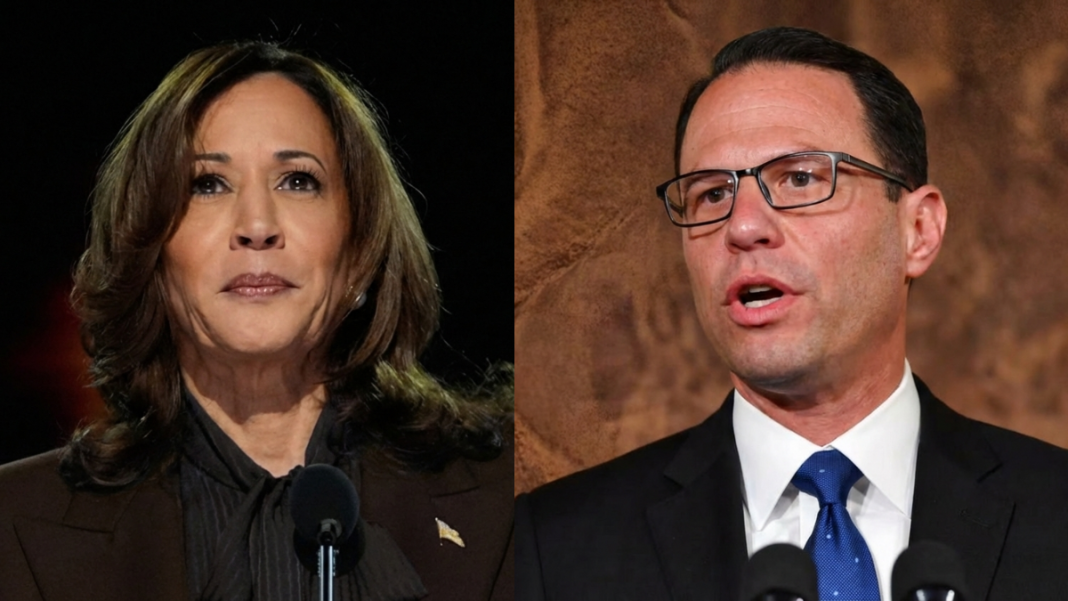

Josh Shapiro’s recently released memoir provides an inside look at the tense moments during the 2024 vice-presidential selection process with then-Vice President Kamala Harris. The book describes how questions about his past ties to Israel created personal strain, emotional reactions, and political disagreement during a period that was already highly sensitive.
What began as a standard vetting process quickly turned into a difficult and deeply personal experience for Shapiro. The exchanges, he writes, reshaped his relationship with Harris and revealed broader divisions inside the political leadership over identity, foreign policy, and public trust.
Vetting Process Sparks Controversy and Offense
Shapiro explains that the vetting process included questions that left him stunned and hurt. During one exchange, Dana Remus asked whether he had ever acted as an agent of the Israeli government or spoken with undercover Israeli operatives. Shapiro said he found the question inappropriate and offensive.
Kara Swisher reveals tense onstage moment after Kamala Harris abruptly shuts down joke
He responded calmly, explaining that it would be impossible to know whether someone was operating undercover. While he acknowledged that Remus was performing her professional duties, he felt the nature of the questions reflected deeper mistrust among people close to Harris.
Shapiro wrote that Harris and her team appeared to align with some critics who questioned his background and political positions. He described this moment as one of the most emotionally difficult parts of the process, even though he maintained a respectful tone throughout.
Background, Beliefs, and Political Pressure
Shapiro’s personal history became a central issue during the review. As a student, he worked on an Israeli kibbutz, volunteered in organizations linked to Israel’s military structures, and briefly worked in the public affairs department of the Israeli embassy. His team had previously denied parts of this history, and Shapiro later clarified that his student experiences did not represent his current political views.
Over the years, Shapiro has supported Israel while also criticizing the Israeli government and military actions, particularly following the October 7, 2023, Hamas attack. He warned that some campus protests were becoming antisemitic, while also recognizing the concerns of those critical of Israel’s leadership.
Gavin Newsom’s Prop 50 victory reshapes California politics and boosts his national profile
These positions placed him under political pressure from multiple sides. Supporters praised his stance against antisemitism, while critics accused him of holding double standards. This divide made his views especially sensitive during the vice-presidential selection process.
During his interview with Harris at the Naval Observatory, Shapiro said Harris asked whether he would apologize for remarks he made criticizing student protests at the University of Pennsylvania. He stated that he refused to apologize and explained his reasoning. He also recalled that Harris acknowledged how difficult it had been for him to face antisemitic attacks during the process.
Shapiro further noted that Harris was aware of the political challenges in states like Michigan, particularly in communities with large Arab-American populations, where dissatisfaction over Middle East policy had grown during the 2024 primaries.
Political Distance and Public Fallout
The memoir also highlights the strained relationship between Shapiro and Harris. Although they had known each other for nearly two decades through a joint leadership program for aspiring politicians, they were never especially close. Their exchanges during the vetting process became more direct, and their disagreements grew more visible.
After the vetting, Harris reportedly brought criticism of Shapiro into public debates, and he responded by criticizing her remarks as well. This public back-and-forth reflected deeper political tensions.
Shapiro recalled a conversation in which Harris questioned whether she could win Pennsylvania without his support. He said he replied that he was unsure. Despite this uncertainty, Harris later won Pennsylvania by a large margin, without relying on Shapiro or his supporters.
The memoir also notes that shortly after Harris became a candidate, one of her aides declined to directly answer whether Harris still considered herself a Zionist, adding to public discussion about her political position.
West ‘running out of sanctions’ on Russia — but hidden war lifelines still exposed by new
US watchdog
Shapiro’s press secretary, Manuel Bonder, later stated that the memoir represents only one chapter of a larger personal story. He said the book was inspired by an attack on the governor’s mansion in Harrisburg during Passover and focuses on Shapiro’s faith, family, and service to the people of Pennsylvania.
Harris did not respond to requests for comment regarding the memoir, and Dana Remus could not be reached for comment. Both Shapiro and Harris are now considering possible presidential bids in 2028, and the memoir has introduced a new public understanding of the tensions that shaped their past interactions.