

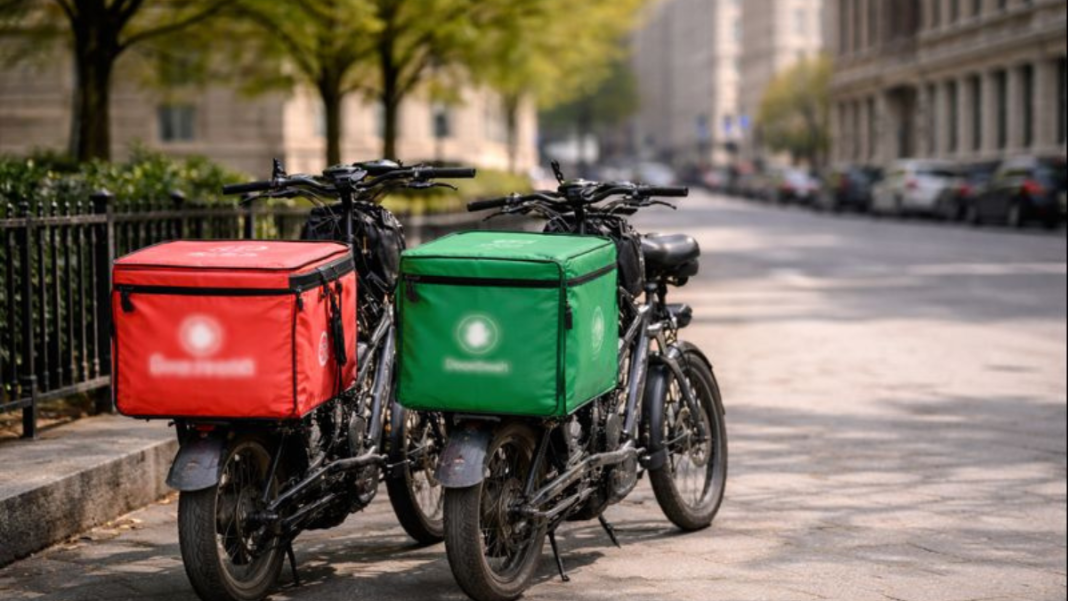
NYC sues delivery app over wage theft, seeks shutdown after workers paid just $6.75 for 3 hours

New York City has launched a strong legal case against a delivery app company accused of stealing wages from workers. City officials say the company failed to pay the required minimum wage and charged illegal fees, leaving many delivery workers with far less money than they earned. The lawsuit seeks to shut down the company’s operations and recover millions of dollars taken from workers.

Several delivery workers filed complaints after noticing serious pay problems. One worker shared a payment record showing he earned just $6.75 for three hours of work, even though the city’s minimum hourly rate was much higher. Workers said they were often left waiting for long hours without pay, charged penalties for canceled orders, and forced to repay the full cost of refunded meals, which is against the law.

Workers Report Wage Theft and Delivery App Abuse

Workers said the company’s payment system was confusing and unfair. Many reported earning only four or five dollars per delivery, even when the distance was long and the work demanding. Others said the company ignored minimum wage rules and distance limits, leaving workers underpaid and exhausted.

Some workers also said there was no option for customers to tip, which further reduced their income. In addition, the company deducted small fees from every delivery. While each fee seemed minor, workers explained that over time the losses added up.

Zohran Mamdani takes oath as New York City mayor at start of year marking leadership change

Several workers said they lost between $100 and $200 in unpaid wages within just two weeks. They also described spending hours logged into the app waiting for orders without pay. Workers said these practices made it difficult to cover basic needs like rent, food, and transportation.

Many workers are supported by advocacy groups that help report abuse and push for stronger labor protections. Workers said the lawsuit made them feel heard and hopeful that their concerns were finally being addressed.

City Files Lawsuit and Targets Company Leadership

Based on the complaints, New York City filed a lawsuit against the delivery app company and its chief executive. The city is seeking to shut down the company’s operations and recover unpaid wages and illegal fees taken from workers.

Mayor Zohran Mamdani said the case reflects the city’s commitment to standing up for working people. He said workers should be able to trust the government to protect them when companies break the law and that no business should profit by taking advantage of vulnerable workers.

Zohran Mamdani defeats Andrew Cuomo and Curtis Sliwa to win New York mayoral race

The city’s labor enforcement agency, led by Commissioner Samuel Levine, said the lawsuit marks a stronger and more aggressive approach to enforcement. Levine said that even if a company claims it cannot repay workers, the city will pursue legal judgments and attempt to recover assets from those responsible.

Levine also said that company leaders should face consequences when they violate labor laws, just as ordinary people do when they break rules. City officials said this case sends a clear message to all gig economy companies operating in New York that labor laws must be followed.

Wider Crackdown on Delivery Apps and Tipping Practices

This lawsuit is part of a broader effort by the city to improve working conditions for delivery workers. Recently, the city released a report showing that some major delivery apps changed their designs in ways that made tipping harder for customers by moving the option to after checkout.

According to the city’s findings, this change led to a sharp drop in tips. On some delivery apps, the average tip fell to less than one dollar per delivery. On apps that kept tipping at checkout, the average tip remained above two dollars. City officials estimated that these changes cost workers hundreds of millions of dollars in lost tips.

U.S.-U.K. Unite Against Digital Slavery — Sanctions Hit Scam Networks Exploiting Trafficked Workers

The city also sent warning letters to dozens of delivery apps, reminding them to follow new worker protection laws. These laws require delivery apps to offer tipping options at checkout and extend minimum pay protections to grocery delivery workers. Some companies have challenged these laws in court, arguing that workers are earning more overall.

Commissioner Levine rejected these claims, saying the city never encouraged companies to reduce tipping and only warned about possible risks. He said the goal is to ensure workers are paid fairly and that companies operate within the law.

T U Deshmukh
T U Deshmukh
T U Deshmukh is the leading voice on the subject of Jobs, AI, Data and layoffs and she regularly contributes a column on Jobs for Newsinterpretation.

TOP 10 TRENDING ON NEWSINTERPRETATION

Cyber Attacks on Space Infrastructure: Satellites, GPS and the Ground Systems Behind Them

From the Viasat KA-SAT hack to GPS jamming over the Baltic, a research guide to how attackers target satellites, navigation signals and ground stations, and why it matters on Earth.

How AI Agents Are Used in Cyber Attacks: From Assisted Hacking to AI-Orchestrated Espionage

Attackers now use AI agents to scan networks, write exploits and run extortion campaigns. A research guide to documented cases, including the first reported AI-orchestrated espionage campaign, and what defenders should do.

Cyber Attacks on AI and LLMs: How Attackers Target Large Language Models

Prompt injection, data poisoning, model theft and jailbreaks: a research guide to how attackers target AI systems and large language models, with real cases and defences.

French Supermarket Refrigeration Cyberattack: How Hacking the Cold Chain Can Endanger Lives

In October 2026 attackers heated refrigeration cabinets in hundreds of French supermarkets to as much as 50°C. No one was hurt, but the attack shows how hacking the cold chain can endanger lives through fire, food poisoning and spoiled medicines.

Cyberattacks on Nuclear Facilities: Stuxnet, Kudankulam and the Limits of Air Gaps

Stuxnet, the Davis-Besse worm and malware at India’s Kudankulam plant: what they show about cyber risk at nuclear facilities and the limits of air gaps.

Triton: When Hackers Target the Safety Systems That Prevent Industrial Disasters

The 2017 Triton attack targeted the safety systems that prevent industrial disasters. What happened, who was charged, and how plants protect their last line of defence.

Cybersecurity Risks in Smart Cities: When Connected Infrastructure Fails

How connecting traffic control, emergency alerts and utilities concentrates cyber risk in cities, what the Dallas and Atlanta incidents showed, and what governments recommend.

Weaponized Drones: Hijacking, GPS Spoofing and Emerging Cyber Warfare Risks

How drones can be hijacked, jammed or misled by GPS spoofing, what researchers have demonstrated, and why governments treat drone fleets as a security risk.

Ransomware Attacks on Hospitals: How Healthcare Cyberattacks Put Patients at Risk

How ransomware against hospitals and their suppliers delays care and endangers patients, what the Düsseldorf and WannaCry cases show, and what research says about deaths.

Operational blunder exposes massive Russian cyber espionage attack on Ukrainian prosecutors

A major cyberattack has compromised the email accounts of...

Cyber Attacks on Space Infrastructure: Satellites, GPS and the Ground Systems Behind Them

From the Viasat KA-SAT hack to GPS jamming over the Baltic, a research guide to how attackers target satellites, navigation signals and ground stations, and why it matters on Earth.

French Supermarket Refrigeration Cyberattack: How Hacking the Cold Chain Can Endanger Lives

In October 2026 attackers heated refrigeration cabinets in hundreds of French supermarkets to as much as 50°C. No one was hurt, but the attack shows how hacking the cold chain can endanger lives through fire, food poisoning and spoiled medicines.

Cyberattacks on Nuclear Facilities: Stuxnet, Kudankulam and the Limits of Air Gaps

Stuxnet, the Davis-Besse worm and malware at India’s Kudankulam plant: what they show about cyber risk at nuclear facilities and the limits of air gaps.

Triton: When Hackers Target the Safety Systems That Prevent Industrial Disasters

The 2017 Triton attack targeted the safety systems that prevent industrial disasters. What happened, who was charged, and how plants protect their last line of defence.

Cybersecurity Risks in Smart Cities: When Connected Infrastructure Fails

How connecting traffic control, emergency alerts and utilities concentrates cyber risk in cities, what the Dallas and Atlanta incidents showed, and what governments recommend.

Ransomware Attacks on Hospitals: How Healthcare Cyberattacks Put Patients at Risk

How ransomware against hospitals and their suppliers delays care and endangers patients, what the Düsseldorf and WannaCry cases show, and what research says about deaths.

FBI warns of AVrecon malware targeting outdated routers linked to proxy based cybercrime

A serious cybersecurity warning has been issued regarding commonly...

Related Articles

Popular Categories
