

Trump amplifies false criminal claims against Don Lemon, igniting a fresh political backlash

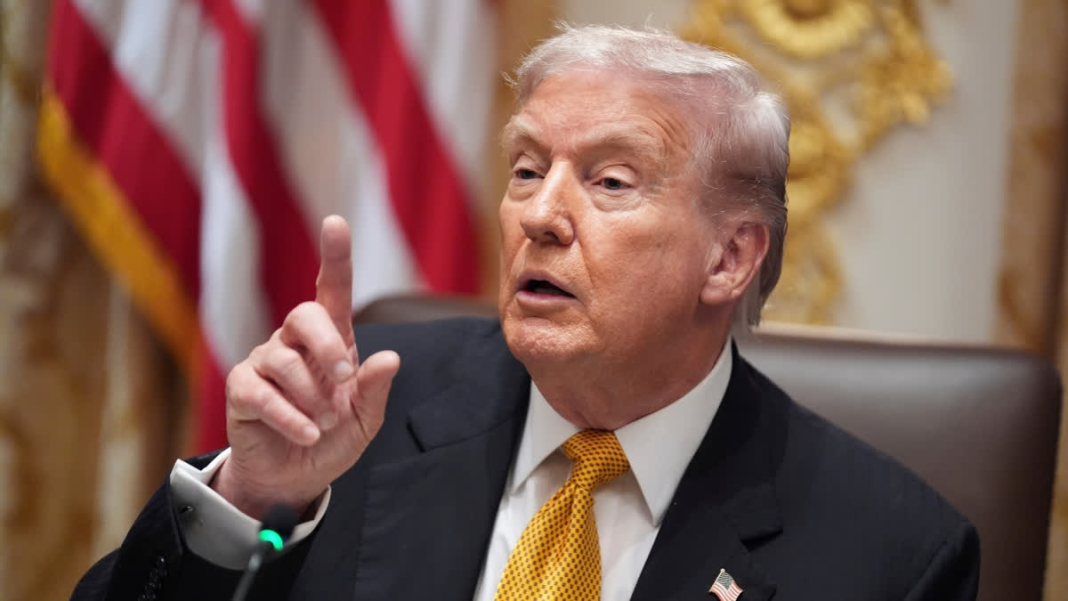
U.S. President Donald Trump triggered a fresh political storm after sharing a highly misleading social media post attacking journalist Don Lemon. The repost, shared on Trump’s platform Truth Social, accused Lemon of criminal behavior and suggested he should face decades in prison, despite no charges being filed and key claims in the post being incorrect.

The post quickly spread across social media, drawing attention for its aggressive tone and factual mistakes. Even the original author later admitted the information was wrong, yet the message remained amplified. The incident added fuel to an already tense political environment, where journalists, protests, and immigration issues are increasingly colliding.

Trump Amplifies False Claims Against Don Lemon

The message reposted by Trump originally appeared on X and claimed that a group of elderly women protesting at an abortion clinic had been sentenced to 40 years in prison under the federal FACE Act. The post then argued that Don Lemon deserved the same punishment for livestreaming a protest inside a church in Minneapolis.

Exxon CEO Darren Woods openly challenges Trump’s Venezuela push in rare White House clash

Soon after the repost gained traction, the original poster admitted the claim was incorrect. The sentence was not 40 years but 40 months, and the mistake was described as a typo. Despite this correction, Trump’s repost remained visible, continuing to circulate false information.

The claim appeared to loosely reference anti-abortion activist Lauren Handy, who was sentenced in 2024 for blocking access to abortion clinics. Handy, who is in her early thirties, was later found to be in possession of fetal remains. Trump had previously pardoned several activists convicted under the same law, making the reposted demand for harsh punishment against Lemon appear contradictory.

The Minneapolis Church Protest and Lemon’s Role

The backlash against Lemon began after he livestreamed an anti-ICE protest at Cities Church in Minneapolis. Protesters entered the church during a service, saying their action was meant to call attention to the role of a pastor who also works with Immigration and Customs Enforcement.

“Pure gaslighting”: Kamala Harris blasts Trump administration over fatal ICE shooting in Minneapolis

Lemon later explained that he was present only as a journalist. He said he was following protesters to report on events and did not organize or lead the protest. According to Lemon, he did not know the protest would take place inside a church until it happened. Once the disruption began, he documented what was unfolding and spoke with people involved, including church members and protesters.

Despite this explanation, He supporters accused Lemon of being an agitator. The criticism intensified when Harmeet Dhillon, the assistant attorney general for civil rights, warned Lemon publicly that he was “on notice.” Dhillon later spoke with far-right influencer Benny Johnson, suggesting the Ku Klux Klan Act could potentially be used in such cases.

The Ku Klux Klan Act, officially known as the Enforcement Act of 1871, was designed to protect civil rights and prevent intimidation, particularly after the Civil War. No charges have been filed against Lemon, and no formal legal action has been announced.

Protests, Public Reaction, and Official Responses

The protest Lemon covered was part of a broader wave of demonstrations in Minneapolis following the shooting death of Renee Nicole Good, a 37-year-old mother of three who was killed earlier this month by ICE agent Jonathan Ross. The incident sparked ongoing protests and renewed debate over immigration enforcement practices.

In a video response, Lemon rejected claims that he led or coordinated the protest. He stated that he had no connection to the organizing group and was simply documenting events as they occurred. He described the accusations from pro-Trump figures as exaggerated and disconnected from reality.

Insurrection Act back in focus as Trump signals military option amid Minnesota
protests

During the livestream, Lemon reminded viewers that the First Amendment protects the right to protest, even when demonstrations make people uncomfortable. He also responded to criticism from the church’s pastor, who called the protest “shameful,” by explaining that protests have long been a part of democratic expression.

News outlet The Daily Beast reported on the controversy and contacted both the Department of Justice and the White House for comment. At the time of reporting, no official responses had been issued.


Samruddhi Kulkarni
Samruddhi Kulkarni
Samruddhi Kulkarni is a cybersecurity and artificial intelligence specialist who reports on emerging cyber threats, advanced AI systems, and data-driven risk trends shaping the digital world.

TOP 10 TRENDING ON NEWSINTERPRETATION

Cyber Attacks on Space Infrastructure: Satellites, GPS and the Ground Systems Behind Them

From the Viasat KA-SAT hack to GPS jamming over the Baltic, a research guide to how attackers target satellites, navigation signals and ground stations, and why it matters on Earth.

How AI Agents Are Used in Cyber Attacks: From Assisted Hacking to AI-Orchestrated Espionage

Attackers now use AI agents to scan networks, write exploits and run extortion campaigns. A research guide to documented cases, including the first reported AI-orchestrated espionage campaign, and what defenders should do.

Cyber Attacks on AI and LLMs: How Attackers Target Large Language Models

Prompt injection, data poisoning, model theft and jailbreaks: a research guide to how attackers target AI systems and large language models, with real cases and defences.

French Supermarket Refrigeration Cyberattack: How Hacking the Cold Chain Can Endanger Lives

In October 2026 attackers heated refrigeration cabinets in hundreds of French supermarkets to as much as 50°C. No one was hurt, but the attack shows how hacking the cold chain can endanger lives through fire, food poisoning and spoiled medicines.

Cyberattacks on Nuclear Facilities: Stuxnet, Kudankulam and the Limits of Air Gaps

Stuxnet, the Davis-Besse worm and malware at India’s Kudankulam plant: what they show about cyber risk at nuclear facilities and the limits of air gaps.

Triton: When Hackers Target the Safety Systems That Prevent Industrial Disasters

The 2017 Triton attack targeted the safety systems that prevent industrial disasters. What happened, who was charged, and how plants protect their last line of defence.

Cybersecurity Risks in Smart Cities: When Connected Infrastructure Fails

How connecting traffic control, emergency alerts and utilities concentrates cyber risk in cities, what the Dallas and Atlanta incidents showed, and what governments recommend.

Weaponized Drones: Hijacking, GPS Spoofing and Emerging Cyber Warfare Risks

How drones can be hijacked, jammed or misled by GPS spoofing, what researchers have demonstrated, and why governments treat drone fleets as a security risk.

Ransomware Attacks on Hospitals: How Healthcare Cyberattacks Put Patients at Risk

How ransomware against hospitals and their suppliers delays care and endangers patients, what the Düsseldorf and WannaCry cases show, and what research says about deaths.

Operational blunder exposes massive Russian cyber espionage attack on Ukrainian prosecutors

A major cyberattack has compromised the email accounts of...

Cyber Attacks on Space Infrastructure: Satellites, GPS and the Ground Systems Behind Them

From the Viasat KA-SAT hack to GPS jamming over the Baltic, a research guide to how attackers target satellites, navigation signals and ground stations, and why it matters on Earth.

French Supermarket Refrigeration Cyberattack: How Hacking the Cold Chain Can Endanger Lives

In October 2026 attackers heated refrigeration cabinets in hundreds of French supermarkets to as much as 50°C. No one was hurt, but the attack shows how hacking the cold chain can endanger lives through fire, food poisoning and spoiled medicines.

Cyberattacks on Nuclear Facilities: Stuxnet, Kudankulam and the Limits of Air Gaps

Stuxnet, the Davis-Besse worm and malware at India’s Kudankulam plant: what they show about cyber risk at nuclear facilities and the limits of air gaps.

Triton: When Hackers Target the Safety Systems That Prevent Industrial Disasters

The 2017 Triton attack targeted the safety systems that prevent industrial disasters. What happened, who was charged, and how plants protect their last line of defence.

Cybersecurity Risks in Smart Cities: When Connected Infrastructure Fails

How connecting traffic control, emergency alerts and utilities concentrates cyber risk in cities, what the Dallas and Atlanta incidents showed, and what governments recommend.

Ransomware Attacks on Hospitals: How Healthcare Cyberattacks Put Patients at Risk

How ransomware against hospitals and their suppliers delays care and endangers patients, what the Düsseldorf and WannaCry cases show, and what research says about deaths.

FBI warns of AVrecon malware targeting outdated routers linked to proxy based cybercrime

A serious cybersecurity warning has been issued regarding commonly...

Related Articles

Popular Categories
