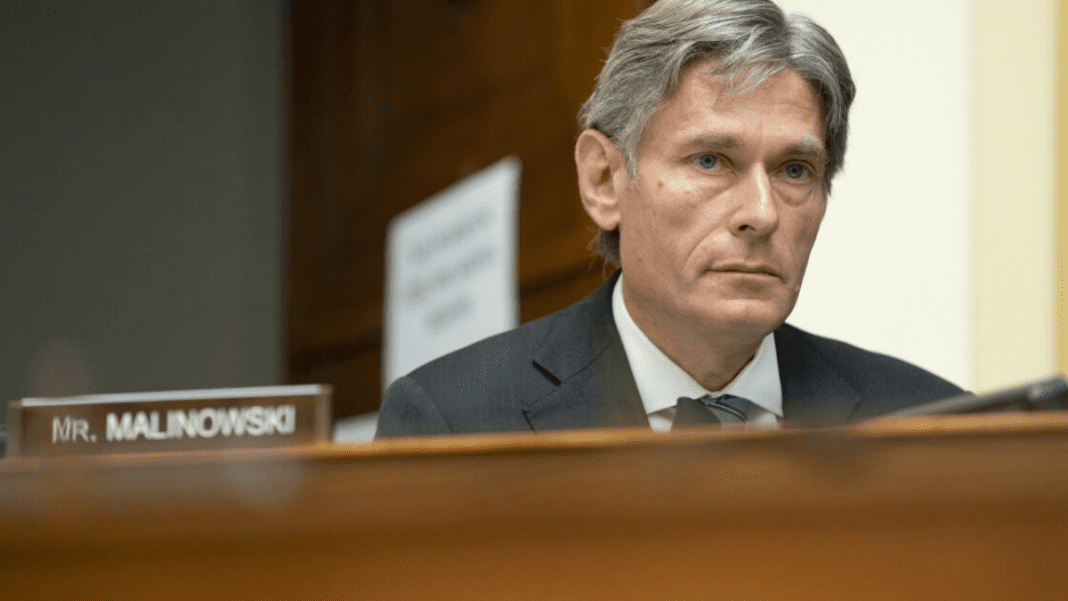

A closely watched primary election has taken an unexpected turn. Tom Malinowski, a former congressman, has endorsed Analilia Mejia, the candidate who defeated him in a tight race. The move comes after a high-spending campaign by AIPAC played a key role in the primary contest. This unexpected support from Tom Malinowski has surprised many.
This sudden alliance has drawn attention because of the differences in their political views, especially on Israel. Yet, both leaders are now focusing on unity ahead of an important special election.
Tom Malinowski’s endorsement is seen as a strategic move that could influence the upcoming elections.
A costly primary battle and unexpected outcome
The primary election in New Jersey’s 11th Congressional District was intense and competitive. AIPAC spent around $2.3 million on advertisements opposing Tom Malinowski.
Tom Malinowski’s position in the race has shifted dramatically with this endorsement.
Although Malinowski has described himself as “pro-Israel,” he supported placing conditions on military aid. This position crossed a key line for the lobbying group and became a major issue during the campaign.
However, critics argued that the heavy spending may have had the opposite effect. Instead of helping a preferred candidate, it may have boosted Analilia Mejia, who is backed by progressive leaders such as Bernie Sanders.
Some analysts believe Tom Malinowski’s endorsement could change the dynamics of the campaign.
Mejia has taken a stronger stance on the Israel-Gaza conflict. Unlike Malinowski, she has described Israel’s actions in Gaza as a “genocide,” placing her further from AIPAC’s traditional policy positions.
Critics argue that Tom Malinowski’s view on the Israel-Gaza conflict differs significantly from Mejia’s.
After the February primary, AIPAC rejected claims that its campaign contributed to Mejia’s victory. A spokesperson, Patrick Dorton, stated that the special election is temporary and that the real contest will be the June primary for a full congressional term.
Still, political observers noted that the outcome raised questions about the impact of large-scale political spending and whether it can sometimes lead to unintended results.
Former rivals unite ahead of special election
In a surprising shift, Tom Malinowski has now endorsed Analilia Mejia. The endorsement came through a video released just days before the special election. This unexpected alliance highlights how Tom Malinowski’s support may reshape the race.
In the video, both leaders appeared together, sitting side by side and speaking in a calm and friendly tone. Malinowski acknowledged that they had recently been rivals but said they now stand united.
Their message focused on a shared goal: helping Democrats “take back the House.” Notably, neither mentioned Israel or AIPAC in the video, even though both had criticized the group during their primary race.
The endorsement is significant because Malinowski remains popular in the district. His support could influence voters and strengthen Mejia’s campaign. As a well-known figure, Tom Malinowski’s backing of Mejia could attract more voters to her campaign.
At the same time, this alliance may complicate AIPAC’s plans for the June primary. If the group aims to challenge Mejia again, Malinowski’s backing could make that effort more difficult. The Republican candidate now faces the challenge of countering Tom Malinowski’s influence in the district.
New endorsements and outreach to the community
Analilia Mejia has also received support from J Street, a liberal pro-Israel organization. This group supports candidates who favor placing conditions on military aid to Israel.
The group’s president, Jeremy Ben-Ami, had earlier criticized AIPAC’s role in the primary. He also wrote positively about Malinowski, although he did not mention Mejia at that time.
After receiving the endorsement, Mejia said she looks forward to working together to fight antisemitism, bigotry, and hate. Her statement aimed to show a willingness to engage with different communities.
As part of her campaign, Mejia has been actively reaching out to voters. She recently attended an event at Temple Ner Tamid, a Reform synagogue in Bloomfield, New Jersey. There, she spoke with a rabbi about issues important to the Jewish community, including Israel and synagogue security.
The Republican candidate, Joe Hathaway, also visited the same congregation earlier, showing that outreach to local communities is a key part of the race.
After the event, Mejia said she is running for Congress to give every person in the district a voice. She emphasized the importance of listening to people from all backgrounds and addressing their concerns.
Mejia’s campaign has gained momentum, thanks in part to Tom Malinowski’s recent endorsement.
This series of endorsements, public appearances, and shifting alliances has reshaped the political landscape in the district. What began as a competitive primary has now turned into a broader effort to unify voters ahead of the upcoming election, with Tom Malinowski playing a pivotal role.