

Taiwan Cracks Down on Chinese Hacker Group in Shocking Data Trafficking Case

Hackers Linked to Data Trafficking Rings

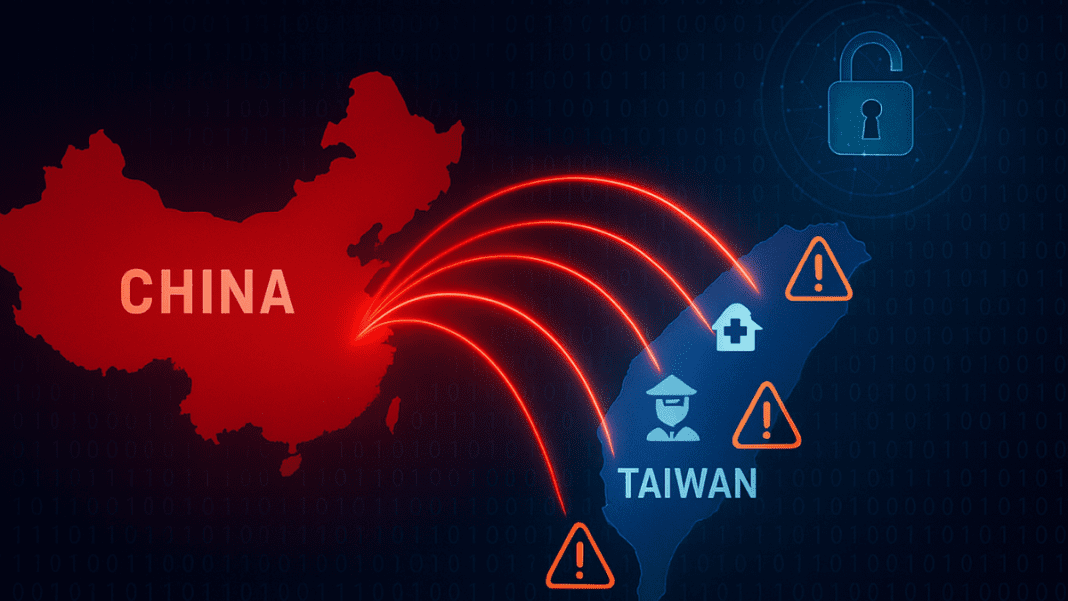
Taiwanese authorities have uncovered a shocking case involving a Chinese hacker group accused of working with data trafficking networks. The group, known as “CrazyHunter,” was traced after carrying out ransomware attacks in Taiwan. Officials say the hackers sold stolen personal data to criminal groups tied to human trafficking rings in both Taiwan and China.

Investigators revealed that the group launched its cyberattacks between February and March this year. Their targets included hospitals, universities, and companies across Taiwan. In each case, the hackers broke into computer systems, locked sensitive files, and demanded money in exchange for restoring access. Victims were left with serious disruptions to their operations and were forced to report the crimes to authorities.

Hospitals were among the most affected. Major medical institutions were hit, causing threats to patient safety and daily healthcare services. Investigators explained that the hackers demanded large ransom payments in exchange for unlocking hospital records and patient files. Companies and schools also reported attacks that put their financial and personal records at risk.

Raids and Arrests in Taiwan

Following months of investigation, prosecutors traced the stolen data back to members of the trafficking networks. Two suspects in Taiwan were found to be heavily involved in the trade of stolen information. Authorities said the pair had not only received stolen records but also helped distribute them further. They were believed to be working with partners abroad, including members in China.

From May until this month, investigators carried out three separate raids across Taiwan. During the raids, police found evidence of cryptocurrency transactions and electronic files directly connected to the hacker group. These records showed that the stolen data had been sold in bulk, with transactions made to criminal networks that profit from personal information.

Cyberattack Catastrophe: How Hackers Can Endanger Human Lives ?

The two suspects arrested in Taiwan were released on bail of 30,000 New Taiwan Dollars each. However, both have been placed under strict travel bans. They are now facing charges of computer misuse, extortion, and violations of the Personal Data Protection Act. Authorities continue to investigate other suspects linked to the case, including additional members of the Chinese hacker group and others believed to be running the trafficking network.

Investigators also confirmed that the stolen data was not only shared locally but also passed through international criminal platforms. These platforms are often used on the dark web, where hackers and criminals trade stolen information for money. The case highlighted how such data is used by trafficking groups to target vulnerable people.

Rising Cyberattacks from China

Officials said this is not the only case. Taiwan has seen more ransomware attacks from China. Hospitals, schools, and companies are common targets.
Hackers steal personal and financial data. These attacks create big security risks.

Taiwan’s Investigation Bureau confirmed that the scale of the latest case shows how data theft is closely tied to larger criminal operations. The fact that personal data was sold to human trafficking groups makes this discovery even more alarming. Officials stressed that protecting critical systems like hospitals and universities is now more important than ever.

US China tensions deepen as Google discloses hacking of Southeast Asian diplomatic personnel

Taiwan’s Ministry of External Affairs stated that it is working to strengthen cybersecurity measures and share intelligence with partner nations. The ministry said that cooperation is key to stopping cyberattacks launched by authoritarian regimes.

The case comes at a time of heightened political and economic tension between Taiwan and China. China continues to push its reunification agenda, while Taiwan maintains its independence. Experts say these tensions often extend into the digital world, where cyberattacks are used as tools of disruption and intimidation.

Renuka Bangale
Renuka Bangale
Renuka is a distinguished Chartered Accountant and a Certified Digital Threats Analyst from Riskpro, renowned for her expertise in cybersecurity. With a deep understanding of cybercrimes, malware, cyber warfare, and espionage, she has established herself as an authority in the field. Renuka combines her financial acumen with advanced knowledge of digital threats to provide unparalleled insights into the evolving landscape of information security. Her analytical prowess enables her to dissect complex cyber incidents, offering clarity on risks and mitigation strategies. As a key contributor to Newsinterpretation’s information security category, Renuka delivers authoritative articles that educate and inform readers about emerging threats and best practices.

TOP 10 TRENDING ON NEWSINTERPRETATION

Cyber Attacks on Space Infrastructure: Satellites, GPS and the Ground Systems Behind Them

From the Viasat KA-SAT hack to GPS jamming over the Baltic, a research guide to how attackers target satellites, navigation signals and ground stations, and why it matters on Earth.

How AI Agents Are Used in Cyber Attacks: From Assisted Hacking to AI-Orchestrated Espionage

Attackers now use AI agents to scan networks, write exploits and run extortion campaigns. A research guide to documented cases, including the first reported AI-orchestrated espionage campaign, and what defenders should do.

Cyber Attacks on AI and LLMs: How Attackers Target Large Language Models

Prompt injection, data poisoning, model theft and jailbreaks: a research guide to how attackers target AI systems and large language models, with real cases and defences.

French Supermarket Refrigeration Cyberattack: How Hacking the Cold Chain Can Endanger Lives

In October 2026 attackers heated refrigeration cabinets in hundreds of French supermarkets to as much as 50°C. No one was hurt, but the attack shows how hacking the cold chain can endanger lives through fire, food poisoning and spoiled medicines.

Cyberattacks on Nuclear Facilities: Stuxnet, Kudankulam and the Limits of Air Gaps

Stuxnet, the Davis-Besse worm and malware at India’s Kudankulam plant: what they show about cyber risk at nuclear facilities and the limits of air gaps.

Triton: When Hackers Target the Safety Systems That Prevent Industrial Disasters

The 2017 Triton attack targeted the safety systems that prevent industrial disasters. What happened, who was charged, and how plants protect their last line of defence.

Cybersecurity Risks in Smart Cities: When Connected Infrastructure Fails

How connecting traffic control, emergency alerts and utilities concentrates cyber risk in cities, what the Dallas and Atlanta incidents showed, and what governments recommend.

Weaponized Drones: Hijacking, GPS Spoofing and Emerging Cyber Warfare Risks

How drones can be hijacked, jammed or misled by GPS spoofing, what researchers have demonstrated, and why governments treat drone fleets as a security risk.

Ransomware Attacks on Hospitals: How Healthcare Cyberattacks Put Patients at Risk

How ransomware against hospitals and their suppliers delays care and endangers patients, what the Düsseldorf and WannaCry cases show, and what research says about deaths.

Operational blunder exposes massive Russian cyber espionage attack on Ukrainian prosecutors

A major cyberattack has compromised the email accounts of...

Cyber Attacks on Space Infrastructure: Satellites, GPS and the Ground Systems Behind Them

From the Viasat KA-SAT hack to GPS jamming over the Baltic, a research guide to how attackers target satellites, navigation signals and ground stations, and why it matters on Earth.

French Supermarket Refrigeration Cyberattack: How Hacking the Cold Chain Can Endanger Lives

In October 2026 attackers heated refrigeration cabinets in hundreds of French supermarkets to as much as 50°C. No one was hurt, but the attack shows how hacking the cold chain can endanger lives through fire, food poisoning and spoiled medicines.

Cyberattacks on Nuclear Facilities: Stuxnet, Kudankulam and the Limits of Air Gaps

Stuxnet, the Davis-Besse worm and malware at India’s Kudankulam plant: what they show about cyber risk at nuclear facilities and the limits of air gaps.

Triton: When Hackers Target the Safety Systems That Prevent Industrial Disasters

The 2017 Triton attack targeted the safety systems that prevent industrial disasters. What happened, who was charged, and how plants protect their last line of defence.

Cybersecurity Risks in Smart Cities: When Connected Infrastructure Fails

How connecting traffic control, emergency alerts and utilities concentrates cyber risk in cities, what the Dallas and Atlanta incidents showed, and what governments recommend.

Ransomware Attacks on Hospitals: How Healthcare Cyberattacks Put Patients at Risk

How ransomware against hospitals and their suppliers delays care and endangers patients, what the Düsseldorf and WannaCry cases show, and what research says about deaths.

FBI warns of AVrecon malware targeting outdated routers linked to proxy based cybercrime

A serious cybersecurity warning has been issued regarding commonly...

Related Articles

Popular Categories
