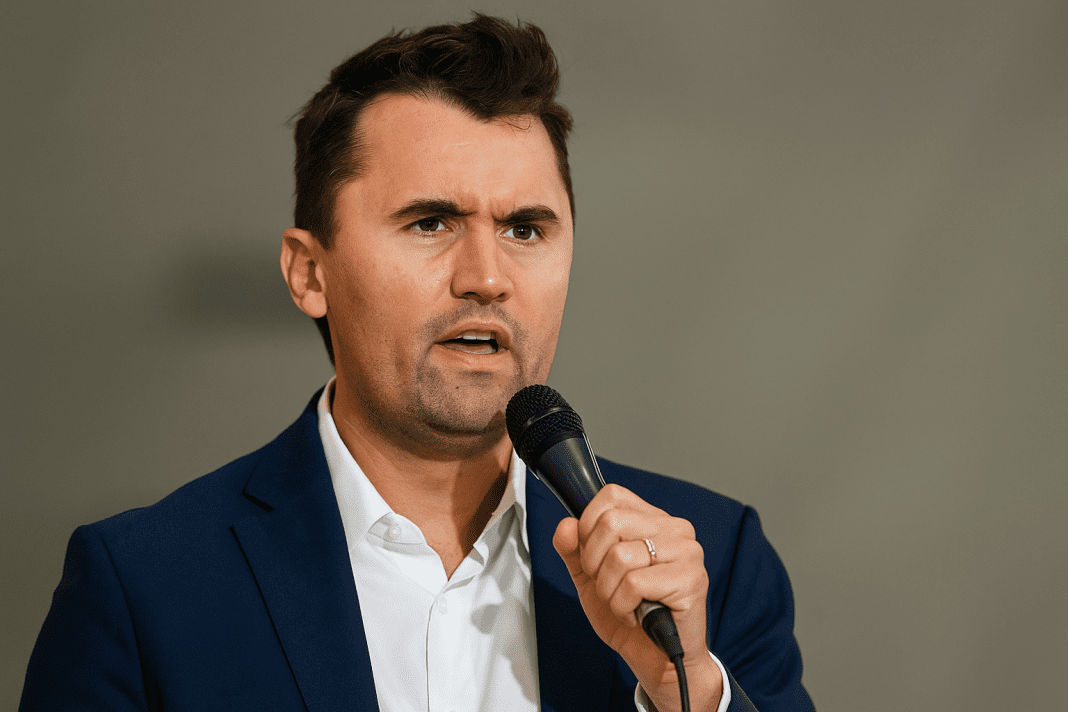

The United States government has cancelled at least six visas after foreigners posted online messages mocking or celebrating the death of Charlie Kirk, a well-known conservative activist and close ally of former President Donald Trump.
In a statement shared on X (formerly Twitter), the U.S. State Department said it had revoked the visas of six individuals from different countries, adding that more such cases might follow. Officials explained their reasoning in strong words:
“The United States has no obligation to host foreigners who wish death on Americans.”
According to the department, the action was part of a broader effort to stop hate-filled online messages targeting Kirk after he was shot dead last month during a campus event in Utah. The government said it was reviewing comments made by visa holders who had praised or mocked the tragedy.
Screenshots released by the State Department showed examples of posts from users identified as Argentine, Brazilian, German, Mexican, Paraguayan, and South African nationals. Their names were not shared publicly, but the posts appeared to include messages that insulted or ridiculed Kirk soon after the shooting.
South African Music Executive Among Those Impacted
One of the people confirmed to have lost a U.S. visa is Nhlamulo Baloyi, a 35-year-old music executive from Sandton, South Africa. Baloyi said in an interview that he learned about the decision only after reading the government’s social-media post.
He explained that his business visa, valid until 2032, was suddenly revoked without prior notice. Baloyi said U.S. officials did not contact him directly or explain the exact reason. He later discovered that the decision was likely linked to a comment he made online in which he criticised Kirk’s actions and said the activist “would not be remembered as a hero.”
Baloyi described the visa cancellation as unfair and shocking. He said he had never lived in the United States and was not planning to travel there soon, but he felt the move violated his right to express his opinion.
“This goes against everything America says it stands for,” he said during a video interview. “I was commenting on social issues, not supporting violence.”
Baloyi added that he condemned all political violence and that his post had been meant to highlight double standards in public discussions about race.
Global Reactions and Growing Debate Over Speech and Power
Another person reportedly mentioned in the State Department’s announcement was a Paraguayan journalist, believed to be Kike Gamarra, who had earlier taken part in a television interview where he used a strong phrase to describe Kirk. In that interview, Gamarra said Kirk had “died by his own rules.”
When contacted by reporters, Gamarra said he did not currently hold a U.S. visa and called the government’s post “arbitrary and dangerous.” He said it sent a worrying message about the state of democracy and free speech in the United States.
The State Department did not respond to requests for additional details on individual cases. However, the timing of the visa cancellations drew attention because it came on the same day President Trump posthumously awarded Charlie Kirk the Presidential Medal of Freedom, the nation’s highest civilian honour.
The move appears to be part of a larger clampdown on online comments following the killing of Kirk, who, while popular among conservative supporters, was also a divisive figure. His speeches often included strong opinions about politics, religion, race, and gender.
After his death, several organisations and employers in the U.S. reportedly fired or suspended staff who had posted jokes or offensive remarks about the incident. According to The Washington Post, even the Pentagon reviewed nearly 300 Defence Department employees for social-media comments made after the shooting.
Senior officials have also encouraged citizens to report foreign nationals who post violent or hateful content online. In one recent message, Deputy Secretary of State Christopher Landau urged Americans to flag such posts so authorities could take action. Hundreds of users responded to the call, sharing examples they considered inappropriate or threatening.
State Department Says Free Speech Has Limits for Visa Holders
Critics, however, argue that such measures risk turning into censorship. Legal experts and free-speech advocates point to earlier cases in which the U.S. government tried to deport foreign students for their political opinions. In one instance, a federal judge ruled the deportations illegal, describing them as a “serious abuse of power” and an attack on the First Amendment, which protects freedom of expression.
The debate over where to draw the line between security and speech has grown louder since Kirk’s death. Supporters of the administration say that visa holders are guests of the United States and must respect its laws and values. Opponents counter that punishing speech, even offensive speech, sets a dangerous precedent and undermines the principles America claims to defend.
Newsom recalls son’s admiration for Kirk as debate over masculinity resurfaces
As of now, the U.S. State Department has not named the six people whose visas were revoked, nor has it said whether more revocations will follow. What is clear is that the issue has reignited an emotional discussion about free speech, accountability, and the boundaries of power in one of the world’s most vocal democracies.