

Victor Manuel Rocha : Unveiling Decades of Deceptive Espionage

Victor Manuel Rocha, a former U.S. Department of State employee, recently made headlines for his shocking admission: he had secretly acted as an agent for the government of the Republic of Cuba. This revelation came after decades of covert activity, during which Rocha held positions of trust within the U.S. government.

Decades of Covert Activity by Victor Manuel Rocha

Victor Manuel Rocha’s clandestine mission began in 1973, and it continued until his arrest. During this time, he supported Cuba’s intelligence-gathering efforts against the United States. What makes this betrayal particularly egregious is that Rocha simultaneously held key roles within the U.S. government. He served on the National Security Council and even held the prestigious position of U.S. Ambassador to Bolivia from 2000 to 2002. All the while, he was secretly working for a foreign power, undermining the very country he had sworn to serve.

Rocha’s covert activities were not limited to his time in high-profile positions. Even after leaving government service, he remained dedicated to advancing Cuban interests, demonstrating a steadfast commitment to his clandestine mission. This prolonged engagement underscores the depth of his betrayal and the lengths to which he was willing to go to serve his foreign handlers.

Guilty Plea and Sentencing

In a dramatic courtroom scene, Victor Manuel Rocha pleaded guilty to charges related to acting as an agent of a foreign government. The federal judge wasted no time in imposing the maximum penalty: 15 years in prison. Rocha’s decades-long deception had finally caught up with him. His willingness to cooperate, as stipulated in his plea agreement, did little to mitigate the gravity of his actions. The sentence serves as a stern warning to others who might contemplate similar treachery within U.S. borders.

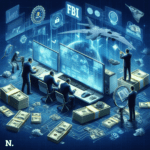
Rocha’s guilty plea and subsequent sentencing mark the culmination of years of investigative efforts by law enforcement agencies. The meticulous work of the FBI and other agencies involved in uncovering Rocha’s covert activities highlights the dedication of those tasked with protecting national security. Their tireless efforts serve as a testament to the unwavering commitment to upholding the rule of law and safeguarding the interests of the United States.

Cooperation and Consequences

As part of his plea deal, Rocha must now cooperate with the United States. This cooperation includes assisting with any damage assessment related to his work on behalf of the Republic of Cuba. But that’s not all. Rocha must also forfeit all future retirement benefits owed to him by the United States based on his former State Department employment. Additionally, any profits he might receive from publications related to his criminal conduct or U.S. Government service will be assigned to the United States. These measures underscore the severity of his actions and the need to hold him accountable.

National Security Implications

Beyond Victor Manuel Rocha’s personal fate lies a broader concern: national security. His case highlights the persistent threat posed by hostile intelligence services. The fact that Rocha operated undetected for four decades underscores the challenges faced by law enforcement agencies. The FBI, in particular, played a crucial role in exposing his covert activities. As Executive Assistant Director Larissa L. Knapp of the FBI’s National Security Branch aptly put it, Victor Manuel Rocha’s betrayal serves as a notice to adversaries: the FBI will relentlessly pursue those who compromise U.S. interests.

Conclusion

The case of Victor Manuel Rocha serves as a sobering reminder of the insidious threat posed by espionage within the highest echelons of government. Rocha’s decades-long deception, while shocking, underscores the importance of vigilance and diligence in safeguarding national security. His sentencing sends a clear message: the United States will not tolerate treachery or subversion from within. Let his downfall stand as a warning to others who may contemplate similar acts of betrayal.
T U Deshmukh
T U Deshmukh
T U Deshmukh is the leading voice on the subject of Jobs, AI, Data and layoffs and she regularly contributes a column on Jobs for Newsinterpretation.

TOP 10 TRENDING ON NEWSINTERPRETATION

Cyber Attacks on Space Infrastructure: Satellites, GPS and the Ground Systems Behind Them

From the Viasat KA-SAT hack to GPS jamming over the Baltic, a research guide to how attackers target satellites, navigation signals and ground stations, and why it matters on Earth.

How AI Agents Are Used in Cyber Attacks: From Assisted Hacking to AI-Orchestrated Espionage

Attackers now use AI agents to scan networks, write exploits and run extortion campaigns. A research guide to documented cases, including the first reported AI-orchestrated espionage campaign, and what defenders should do.

Cyber Attacks on AI and LLMs: How Attackers Target Large Language Models

Prompt injection, data poisoning, model theft and jailbreaks: a research guide to how attackers target AI systems and large language models, with real cases and defences.

French Supermarket Refrigeration Cyberattack: How Hacking the Cold Chain Can Endanger Lives

In October 2026 attackers heated refrigeration cabinets in hundreds of French supermarkets to as much as 50°C. No one was hurt, but the attack shows how hacking the cold chain can endanger lives through fire, food poisoning and spoiled medicines.

Cyberattacks on Nuclear Facilities: Stuxnet, Kudankulam and the Limits of Air Gaps

Stuxnet, the Davis-Besse worm and malware at India’s Kudankulam plant: what they show about cyber risk at nuclear facilities and the limits of air gaps.

Triton: When Hackers Target the Safety Systems That Prevent Industrial Disasters

The 2017 Triton attack targeted the safety systems that prevent industrial disasters. What happened, who was charged, and how plants protect their last line of defence.

Cybersecurity Risks in Smart Cities: When Connected Infrastructure Fails

How connecting traffic control, emergency alerts and utilities concentrates cyber risk in cities, what the Dallas and Atlanta incidents showed, and what governments recommend.

Weaponized Drones: Hijacking, GPS Spoofing and Emerging Cyber Warfare Risks

How drones can be hijacked, jammed or misled by GPS spoofing, what researchers have demonstrated, and why governments treat drone fleets as a security risk.

Ransomware Attacks on Hospitals: How Healthcare Cyberattacks Put Patients at Risk

How ransomware against hospitals and their suppliers delays care and endangers patients, what the Düsseldorf and WannaCry cases show, and what research says about deaths.

Operational blunder exposes massive Russian cyber espionage attack on Ukrainian prosecutors

A major cyberattack has compromised the email accounts of...

Cyber Attacks on Space Infrastructure: Satellites, GPS and the Ground Systems Behind Them

From the Viasat KA-SAT hack to GPS jamming over the Baltic, a research guide to how attackers target satellites, navigation signals and ground stations, and why it matters on Earth.

French Supermarket Refrigeration Cyberattack: How Hacking the Cold Chain Can Endanger Lives

In October 2026 attackers heated refrigeration cabinets in hundreds of French supermarkets to as much as 50°C. No one was hurt, but the attack shows how hacking the cold chain can endanger lives through fire, food poisoning and spoiled medicines.

Cyberattacks on Nuclear Facilities: Stuxnet, Kudankulam and the Limits of Air Gaps

Stuxnet, the Davis-Besse worm and malware at India’s Kudankulam plant: what they show about cyber risk at nuclear facilities and the limits of air gaps.

Triton: When Hackers Target the Safety Systems That Prevent Industrial Disasters

The 2017 Triton attack targeted the safety systems that prevent industrial disasters. What happened, who was charged, and how plants protect their last line of defence.

Cybersecurity Risks in Smart Cities: When Connected Infrastructure Fails

How connecting traffic control, emergency alerts and utilities concentrates cyber risk in cities, what the Dallas and Atlanta incidents showed, and what governments recommend.

Ransomware Attacks on Hospitals: How Healthcare Cyberattacks Put Patients at Risk

How ransomware against hospitals and their suppliers delays care and endangers patients, what the Düsseldorf and WannaCry cases show, and what research says about deaths.

FBI warns of AVrecon malware targeting outdated routers linked to proxy based cybercrime

A serious cybersecurity warning has been issued regarding commonly...

Related Articles

Popular Categories
