

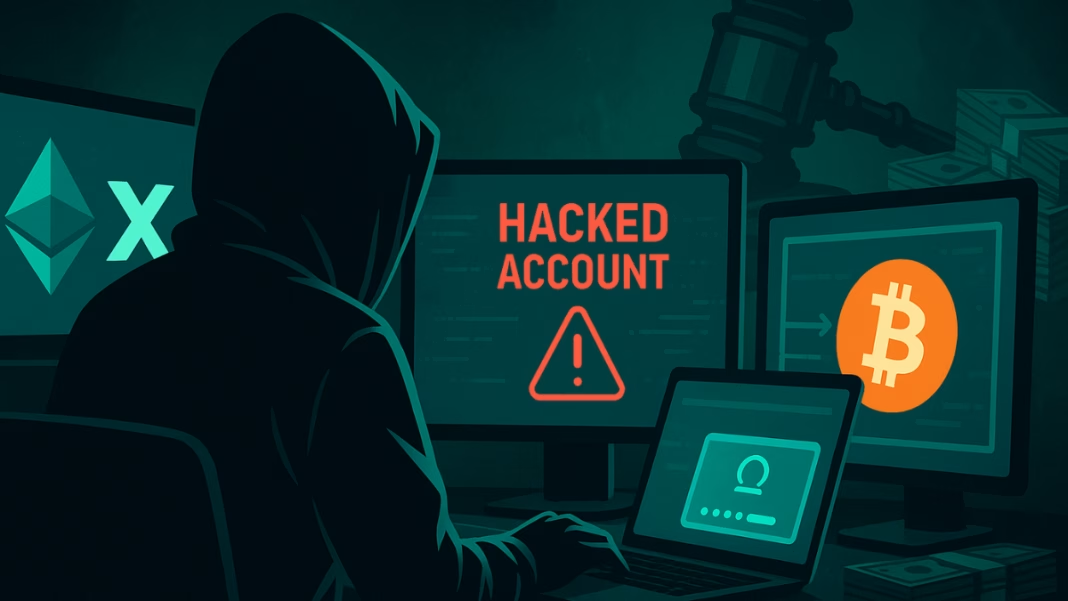
🌐 Teen Hacker’s $37M Crypto Crime Spree Exposed: Inside the SIM Swap That Shook the Blockchain

Teen Sentenced for Massive Bitcoin Theft

A Canadian teenager has been sentenced after being found guilty of stealing $37 million worth of cryptocurrency and hacking into several popular social media accounts. The digital heist, which took place in 2020, shocked many and raised alarm about the growing threat of cybercrime.

The crime began when the teen used a method called SIM swapping. This trick allowed him to take control of a crypto investor’s mobile number by fooling the phone company. Once he had access to the phone number, he could bypass security features like two-factor authentication. This let him break into the investor’s crypto wallets and steal a large amount of Bitcoin and Bitcoin Cash.

At the time, the stolen cryptocurrency was worth about $37 million. After the theft, the teen tried to hide his tracks by breaking the stolen funds into hundreds of smaller transactions. These transactions were then sent through regular crypto exchanges, making it harder for anyone to trace the money. But his actions didn’t stop there.

Hacking Spree Uncovered Through Online Clues

As investigators looked deeper, they discovered more crimes linked to the same teenager. He had also been involved in phishing scams, which are fake messages or websites made to trick people into giving away private information like passwords. Several of these scams were linked to hacked accounts on X, the platform formerly known as Twitter.

In one major discovery, the teen was found to be offering access to an internal X control panel that could be used to take over anyone’s account. This panel was secretly sold online in 2022 for 250 Ethereum, a type of cryptocurrency.

Once sold, the buyers used it to hack into more than 10 popular accounts. These hacked accounts were then used to post phishing links, tricking followers into handing over valuable digital assets. Millions of dollars were stolen through this method.

💻 CoinDCX Employee Login Breach Triggered ₹379 Cr Crypto Storm — Bengaluru Techie Nabbed

The hacker tried to remain hidden by using fake ID documents at first. But later, he made a mistake by submitting his real information on one of the platforms he used to sell illegal access. He withdrew the money from the sale using a tool called Tornado Cash, which is designed to make crypto transfers hard to trace. Then he sent the funds to a crypto gambling site account registered under his name.

Investigators followed the trail using blockchain data. They were able to link the wallet he used to both the X account hacks and the original $37 million Bitcoin theft. Some of the victims named in the case included well-known digital artists and NFT communities who suffered major losses due to the hacks.

Jail Time and Heavy Fines Ordered by the Court

The teen was formally charged by police in Hamilton, Ontario, in November 2021. At that time, he was still underage. Because of this, his identity was kept hidden, and no photo was released. Many experts believe this secrecy may have helped him continue committing cybercrimes even after being identified.

Now, he has been sentenced to 12 months and 1 day in prison. After that, he will be placed under supervised release for three years for each of the crimes, although these sentences will run at the same time. The court has also ordered him to pay a $400 special court fee, more than $248,000 in restitution to his victims, and an additional $60,000 as a fine.

Authorities were able to recover about $5.4 million in cryptocurrency during their investigation. However, over $31 million is still missing. It is not clear whether this money will ever be recovered.

Cases like this are becoming more common. Cybercrime researchers have reported that SIM swapping attacks increased by more than 1,000 percent in 2024. Phishing scams are also becoming more advanced, often using tools powered by artificial intelligence to trick people more easily. This case stands out because of the teen’s age, the amount of money stolen, and the widespread damage caused by his actions.


Renuka Bangale
Renuka Bangale
Renuka is a distinguished Chartered Accountant and a Certified Digital Threats Analyst from Riskpro, renowned for her expertise in cybersecurity. With a deep understanding of cybercrimes, malware, cyber warfare, and espionage, she has established herself as an authority in the field. Renuka combines her financial acumen with advanced knowledge of digital threats to provide unparalleled insights into the evolving landscape of information security. Her analytical prowess enables her to dissect complex cyber incidents, offering clarity on risks and mitigation strategies. As a key contributor to Newsinterpretation’s information security category, Renuka delivers authoritative articles that educate and inform readers about emerging threats and best practices.

TOP 10 TRENDING ON NEWSINTERPRETATION

Cyber Attacks on Space Infrastructure: Satellites, GPS and the Ground Systems Behind Them

From the Viasat KA-SAT hack to GPS jamming over the Baltic, a research guide to how attackers target satellites, navigation signals and ground stations, and why it matters on Earth.

How AI Agents Are Used in Cyber Attacks: From Assisted Hacking to AI-Orchestrated Espionage

Attackers now use AI agents to scan networks, write exploits and run extortion campaigns. A research guide to documented cases, including the first reported AI-orchestrated espionage campaign, and what defenders should do.

Cyber Attacks on AI and LLMs: How Attackers Target Large Language Models

Prompt injection, data poisoning, model theft and jailbreaks: a research guide to how attackers target AI systems and large language models, with real cases and defences.

French Supermarket Refrigeration Cyberattack: How Hacking the Cold Chain Can Endanger Lives

In October 2026 attackers heated refrigeration cabinets in hundreds of French supermarkets to as much as 50°C. No one was hurt, but the attack shows how hacking the cold chain can endanger lives through fire, food poisoning and spoiled medicines.

Cyberattacks on Nuclear Facilities: Stuxnet, Kudankulam and the Limits of Air Gaps

Stuxnet, the Davis-Besse worm and malware at India’s Kudankulam plant: what they show about cyber risk at nuclear facilities and the limits of air gaps.

Triton: When Hackers Target the Safety Systems That Prevent Industrial Disasters

The 2017 Triton attack targeted the safety systems that prevent industrial disasters. What happened, who was charged, and how plants protect their last line of defence.

Cybersecurity Risks in Smart Cities: When Connected Infrastructure Fails

How connecting traffic control, emergency alerts and utilities concentrates cyber risk in cities, what the Dallas and Atlanta incidents showed, and what governments recommend.

Weaponized Drones: Hijacking, GPS Spoofing and Emerging Cyber Warfare Risks

How drones can be hijacked, jammed or misled by GPS spoofing, what researchers have demonstrated, and why governments treat drone fleets as a security risk.

Ransomware Attacks on Hospitals: How Healthcare Cyberattacks Put Patients at Risk

How ransomware against hospitals and their suppliers delays care and endangers patients, what the Düsseldorf and WannaCry cases show, and what research says about deaths.

Operational blunder exposes massive Russian cyber espionage attack on Ukrainian prosecutors

A major cyberattack has compromised the email accounts of...

Cyber Attacks on Space Infrastructure: Satellites, GPS and the Ground Systems Behind Them

From the Viasat KA-SAT hack to GPS jamming over the Baltic, a research guide to how attackers target satellites, navigation signals and ground stations, and why it matters on Earth.

French Supermarket Refrigeration Cyberattack: How Hacking the Cold Chain Can Endanger Lives

In October 2026 attackers heated refrigeration cabinets in hundreds of French supermarkets to as much as 50°C. No one was hurt, but the attack shows how hacking the cold chain can endanger lives through fire, food poisoning and spoiled medicines.

Cyberattacks on Nuclear Facilities: Stuxnet, Kudankulam and the Limits of Air Gaps

Stuxnet, the Davis-Besse worm and malware at India’s Kudankulam plant: what they show about cyber risk at nuclear facilities and the limits of air gaps.

Triton: When Hackers Target the Safety Systems That Prevent Industrial Disasters

The 2017 Triton attack targeted the safety systems that prevent industrial disasters. What happened, who was charged, and how plants protect their last line of defence.

Cybersecurity Risks in Smart Cities: When Connected Infrastructure Fails

How connecting traffic control, emergency alerts and utilities concentrates cyber risk in cities, what the Dallas and Atlanta incidents showed, and what governments recommend.

Ransomware Attacks on Hospitals: How Healthcare Cyberattacks Put Patients at Risk

How ransomware against hospitals and their suppliers delays care and endangers patients, what the Düsseldorf and WannaCry cases show, and what research says about deaths.

FBI warns of AVrecon malware targeting outdated routers linked to proxy based cybercrime

A serious cybersecurity warning has been issued regarding commonly...

Related Articles

Popular Categories
