

Trump’s new money machine — small banks Dominari and Yorkville drive family’s crypto expansion

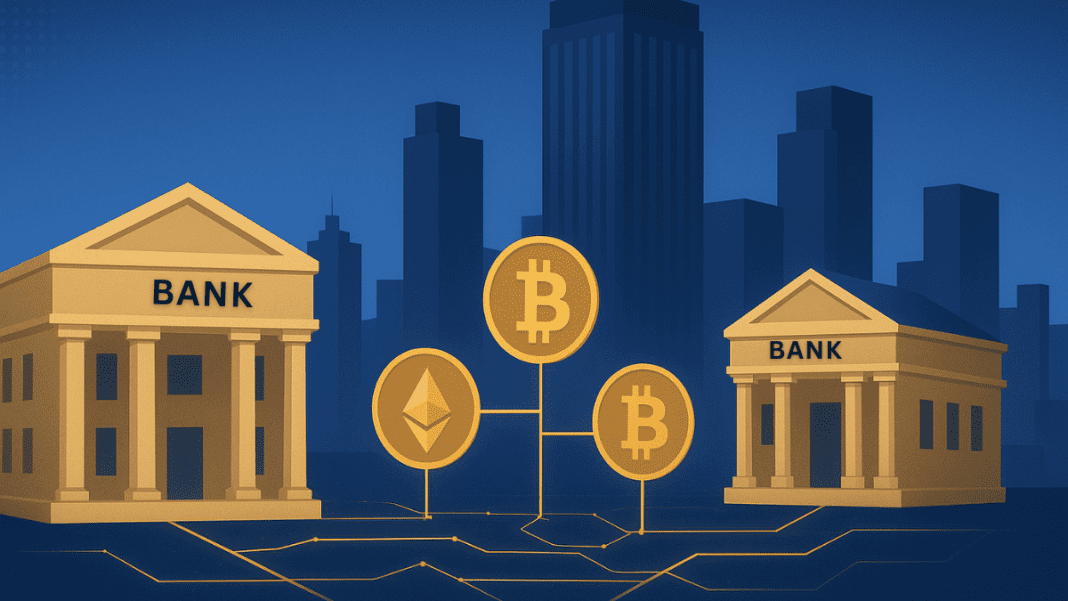
In the United States, two little-known banks have quietly become major players in building what some call Donald Trump’s “crypto empire”. These boutique financial firms — Dominari Holdings and Yorkville Advisors — are not big Wall Street giants. Yet, they are helping Trump’s family push deeper into the fast-growing world of cryptocurrency.

According to reports from the Financial Times and coverage by WION News, these firms have helped structure and raise billions of dollars in crypto-related deals tied to businesses connected with the Trump family. The goal appears to be building a powerful network of digital asset ventures, with the Trump name attached.

Unlike massive banks such as JPMorgan or Citibank, boutique banks are small and flexible. They focus on specific financial niches and can move quickly. Dominari Holdings, for example, operates right out of Trump Tower in Manhattan, while Yorkville Advisors is based in a modest office in New Jersey. Together, they have become central to a wave of crypto investments and fundraising efforts linked to Trump’s circle.

These banks may not have thousands of employees or global offices, but their work has a big impact. They help manage and channel funds into crypto-related projects, a move that gives the Trump family growing influence in a booming yet risky sector.

The Trump Family’s Digital Push

Eric Trump and Donald Trump Jr. are reportedly taking the lead in expanding the family’s digital finance ventures. Their approach shows a clear interest in blockchain technology, crypto assets, and the new financial tools shaping the digital economy.

Obama attacks Trump family’s crypto riches — says “White House became a crypto exchange”

By choosing boutique banks instead of major institutions, the Trumps seem to prefer working with smaller partners who can act faster and more personally. Eric Trump has been quoted saying that smaller firms offer a “warmer feeling” and are easier to work with than the big, traditional banks.

Through these partnerships, the Trump family’s network has reportedly helped raise up to $2.5 billion in digital asset-related funding. This includes investments, fundraising, and other financial services for crypto businesses and blockchain projects.

Dominari Holdings, one of the key firms involved, recently shifted its focus toward crypto and digital finance. Based at Trump Tower, the company’s presence there adds symbolic weight — showing that this financial push is closely tied to the Trump brand.

Yorkville Advisors, the other main player, is known for its role in financing smaller or fast-growing companies. Its involvement highlights how even modest firms can gain influence by connecting to high-profile families and emerging industries.

This partnership between Trump-linked ventures and small financial firms marks a major step in how crypto finance is evolving in the U.S. It shows that digital money is no longer just for tech startups — it’s also attracting established business families with powerful names and networks.

Crypto, Power, and Questions

The growing relationship between Trump’s family businesses and boutique banks is drawing attention from financial experts and political watchers alike. It highlights how cryptocurrency — once seen as a fringe idea — has become part of mainstream finance and politics.

Chinese Tycoon Pours $100 Million Into Trump Family Crypto Empire — Ethics Watchdogs Sound Alarm

Working with smaller financial institutions allows for flexibility. However, it also raises questions about transparency and regulation. Boutique banks operate under the same legal framework as other banks, but their smaller size and niche focus sometimes make oversight more complex.

Crypto markets themselves remain volatile and are often less regulated than traditional banking. That can create risks for investors and institutions involved. Some analysts believe that using boutique banks gives Trump-linked ventures an advantage in moving quickly within the crypto space — though it can also make their operations harder to track.

The Financial Times report suggests that the Trump family’s interest in crypto is part of a larger effort to build a strong position in alternative finance. This includes exploring areas where blockchain and tokenized assets can grow beyond traditional financial systems.

The partnership between the Trumps, Dominari Holdings, and Yorkville Advisors shows how the lines between politics, business, and new technology continue to blur. For now, these boutique firms are quietly helping to shape what could become one of the most talked-about financial stories in the U.S.

T U Deshmukh
T U Deshmukh
T U Deshmukh is the leading voice on the subject of Jobs, AI, Data and layoffs and she regularly contributes a column on Jobs for Newsinterpretation.

TOP 10 TRENDING ON NEWSINTERPRETATION

Cyber Attacks on Space Infrastructure: Satellites, GPS and the Ground Systems Behind Them

From the Viasat KA-SAT hack to GPS jamming over the Baltic, a research guide to how attackers target satellites, navigation signals and ground stations, and why it matters on Earth.

How AI Agents Are Used in Cyber Attacks: From Assisted Hacking to AI-Orchestrated Espionage

Attackers now use AI agents to scan networks, write exploits and run extortion campaigns. A research guide to documented cases, including the first reported AI-orchestrated espionage campaign, and what defenders should do.

Cyber Attacks on AI and LLMs: How Attackers Target Large Language Models

Prompt injection, data poisoning, model theft and jailbreaks: a research guide to how attackers target AI systems and large language models, with real cases and defences.

French Supermarket Refrigeration Cyberattack: How Hacking the Cold Chain Can Endanger Lives

In October 2026 attackers heated refrigeration cabinets in hundreds of French supermarkets to as much as 50°C. No one was hurt, but the attack shows how hacking the cold chain can endanger lives through fire, food poisoning and spoiled medicines.

Cyberattacks on Nuclear Facilities: Stuxnet, Kudankulam and the Limits of Air Gaps

Stuxnet, the Davis-Besse worm and malware at India’s Kudankulam plant: what they show about cyber risk at nuclear facilities and the limits of air gaps.

Triton: When Hackers Target the Safety Systems That Prevent Industrial Disasters

The 2017 Triton attack targeted the safety systems that prevent industrial disasters. What happened, who was charged, and how plants protect their last line of defence.

Cybersecurity Risks in Smart Cities: When Connected Infrastructure Fails

How connecting traffic control, emergency alerts and utilities concentrates cyber risk in cities, what the Dallas and Atlanta incidents showed, and what governments recommend.

Weaponized Drones: Hijacking, GPS Spoofing and Emerging Cyber Warfare Risks

How drones can be hijacked, jammed or misled by GPS spoofing, what researchers have demonstrated, and why governments treat drone fleets as a security risk.

Ransomware Attacks on Hospitals: How Healthcare Cyberattacks Put Patients at Risk

How ransomware against hospitals and their suppliers delays care and endangers patients, what the Düsseldorf and WannaCry cases show, and what research says about deaths.

Operational blunder exposes massive Russian cyber espionage attack on Ukrainian prosecutors

A major cyberattack has compromised the email accounts of...

Cyber Attacks on Space Infrastructure: Satellites, GPS and the Ground Systems Behind Them

From the Viasat KA-SAT hack to GPS jamming over the Baltic, a research guide to how attackers target satellites, navigation signals and ground stations, and why it matters on Earth.

French Supermarket Refrigeration Cyberattack: How Hacking the Cold Chain Can Endanger Lives

In October 2026 attackers heated refrigeration cabinets in hundreds of French supermarkets to as much as 50°C. No one was hurt, but the attack shows how hacking the cold chain can endanger lives through fire, food poisoning and spoiled medicines.

Cyberattacks on Nuclear Facilities: Stuxnet, Kudankulam and the Limits of Air Gaps

Stuxnet, the Davis-Besse worm and malware at India’s Kudankulam plant: what they show about cyber risk at nuclear facilities and the limits of air gaps.

Triton: When Hackers Target the Safety Systems That Prevent Industrial Disasters

The 2017 Triton attack targeted the safety systems that prevent industrial disasters. What happened, who was charged, and how plants protect their last line of defence.

Cybersecurity Risks in Smart Cities: When Connected Infrastructure Fails

How connecting traffic control, emergency alerts and utilities concentrates cyber risk in cities, what the Dallas and Atlanta incidents showed, and what governments recommend.

Ransomware Attacks on Hospitals: How Healthcare Cyberattacks Put Patients at Risk

How ransomware against hospitals and their suppliers delays care and endangers patients, what the Düsseldorf and WannaCry cases show, and what research says about deaths.

FBI warns of AVrecon malware targeting outdated routers linked to proxy based cybercrime

A serious cybersecurity warning has been issued regarding commonly...

Related Articles

Popular Categories
