
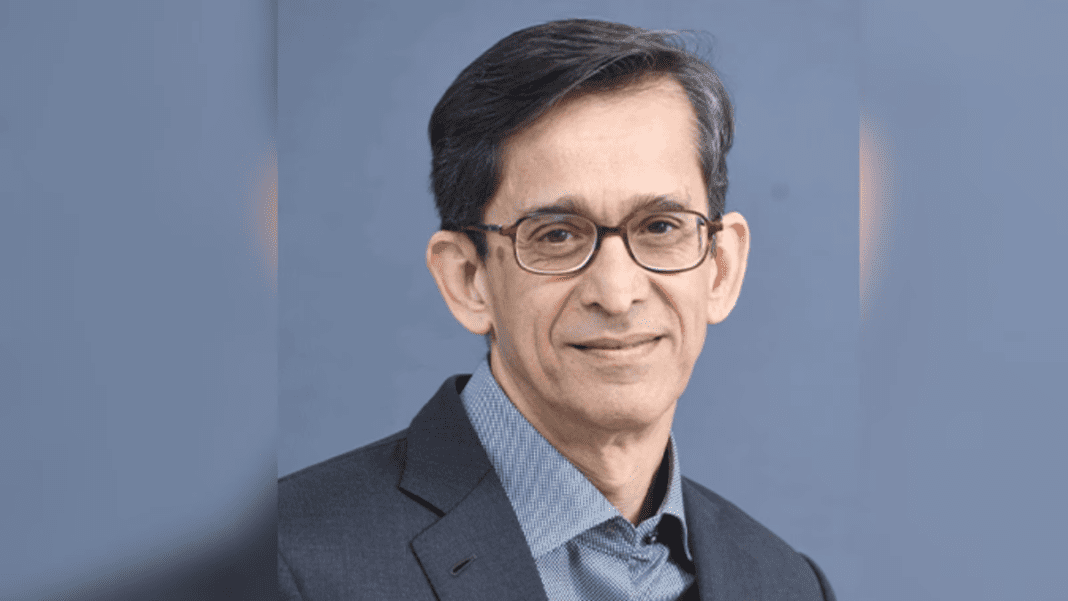
The kind-hearted billionaire Shashi Shekhar Balkrishna (S.B.) ‘Ravi’ Pandit’s smile and laughter was infectious. Gentle and soft-spoken, his demeanour was friendly, sincere and heartwarming.
News of his demise on the morning of 8th May came as a rude shock bringing to mind a flood of memories, beautiful and inspiring, from various interactions over the years.
My very first meeting with him almost two decades ago proved memorable because it touched upon a fundamental principle of journalism: accuracy and speed. After interviewing him at his KPIT office for The Times of India, he casually asked me, “So when will this appear?” When I said, “In two days,” he started laughing. He anticipated at least a week or ten days. When I told him that journalists churn out the first drafts of history in 24 and 48 hours on a routine basis, he couldn’t help laughing. That interaction was memorable.
Many years later I accidentally got the opportunity to work with him, somewhat closely, for four-and-a-half years at the public policy think tank, Pune International Centre (PIC) where he was a founder-trustee, and treasurer.
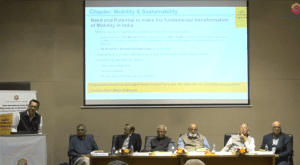
This was early 2020, a few months into the COVID-19 Pandemic which had a devastating impact on all sectors of life and industry, including the media. It was barely two years since The Hindustan Times (HT) had ambitiously launched its Pune edition where I was heading the editorial team. Like many publications, HT was forced to drastically downsize multiple editions, including Pune. I began looking for a change and approached PIC for research assignments. The leaders at PIC— Dr. Ravi Pandit being one of them—were kind and gracious and I soon entered the fascinating world of public policy research in multiple areas.
Deeply inspired by the stellar leadership and vision of PIC’s founders, Dr Raghunath Mashelkar (President) and Dr Vijay Kelkar (Vice President), Dr Ravi Pandit, like all the other founder-trustees, and members, was passionate about PIC.
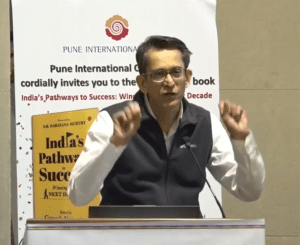
As the treasurer, he reviewed PIC’s finances minutely at our monthly meetings; asked questions, ensured that we were on track and gave approvals. These online video calls happened month after month, no matter what he was busy with. He was there at PIC’s quarterly Board meetings whenever in town; and at the think tank’s multiple events, seminars and conferences. All of this even as he had a hectic international travel schedule.
A Gold Medallist Chartered Accountant, Dr Pandit had a Master’s degree in Management from MIT Sloan School of Management. He was Chairman, KPIT Technologies and alongside, was passionate about developing hydrogen fuel cell technology in collaboration with National Chemical Laboratory. In December 2021, his other firm Sentinent Labs created history by demonstrating a bus running on India’s first indigenously developed hydrogen fuel cell technology.
In 2021, a new sense of excitement and energy gripped PIC when the Maharashtra Government allotted about seven acres land to the PIC to establish its own campus at Pashan. Dr Pandit was deeply involved in every step of the process till a beautiful campus with multiple facilities came up in two years’ time. For more than a decade, PIC had been operating out of rented premises, and now it had its own campus for its multiple activities and initiatives—a fitting landmark in this city of thinkers and doers.
PIC was now unrolling its vision 2.0 with a spanking new campus and Dr. Pandit had stepped up his involvement. He was very keen on high quality, data-driven public policy research and it struck a chord when he said, “Our research should be solid and data-driven.”
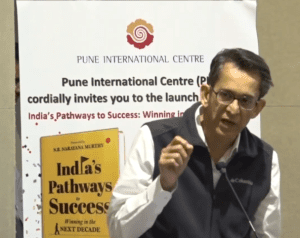
He led by example when he co-authored a chapter on The Future of Mobility and Sustainability along with Kaustubh Pathak, for PIC’s book, ‘India’s Pathways to Success: Winning in the Next Decade’ released in February 2023.
One of my last engagements with Dr Pandit was during the drafting of a Concept Note for the establishment of PIC’s Centre for Comprehensive National Security Studies under the leadership of Lt Gen Vinayak Patankar, who had led the Pune Dialogue on National Security (PDNS) research vertical for many years. Working for the PDNS closely with Gen Patankar and a number of other stalwarts was another high point for me at the PIC.
On another front, Dr Pandit was simultaneously engaged with a PIC team that was drafting an EV (Electric Vehicles) policy for the Maharashtra Government. This was being done under the Centre for Sustainable Energy and Mobility research vertical, previously the EECC (Energy, Environment and Climate Change) research track led by Prof Amitav Malik.
Dr Pandit was an extraordinarily busy man, giving his services for public welfare and national development through multiple organisations, institutions and initiatives. He did all of this silently—whether it was at the reputed Jnana Prabhodini institution for education and leadership development; Janwani Foundation or the multiple charities that he nurtured and visited personally with his wife, Nirmala. Poor garbage management pained him deeply and that was the focus of his work at Janwani Foundation.
All this work Dr Pandit did silently, through his 70s, even as he was leading his business enterprises. Through all of this, he touched and inspired innumerable lives, directly and indirectly.
We will always remember you, Dr Pandit, with gratitude.
(The author is a senior journalist and former Director, Pune International Centre)