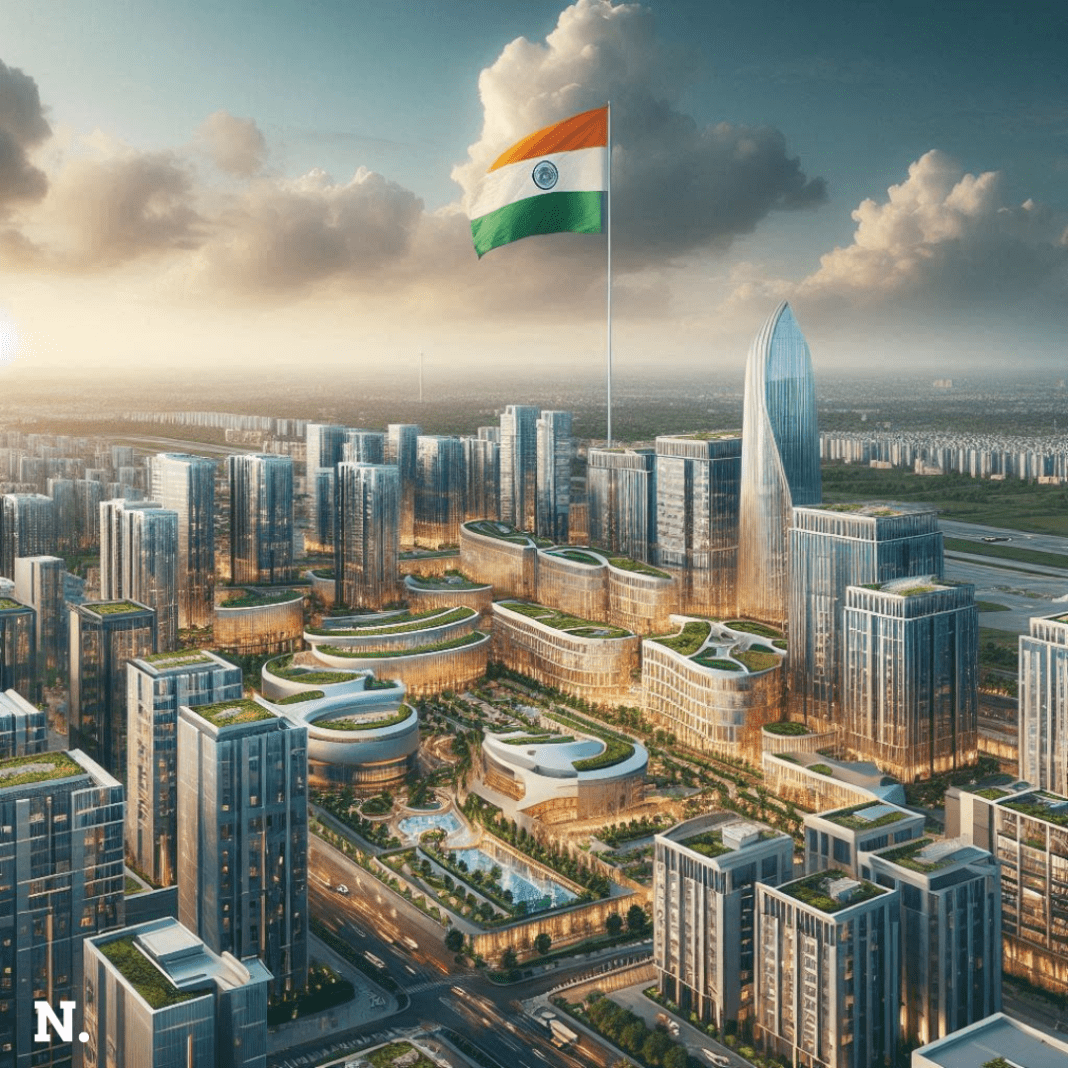

In recent years, India has witnessed a remarkable shift in urban planning with the rise of aerocities. These innovative developments are transforming airports from mere transport hubs into bustling city centers. They offer a blend of business, leisure, and residential spaces. This shift fundamentally changes how we integrate airports into our urban landscapes.
The Rise of Aerocities
Aerocities are comprehensive urban developments situated around major airports. They aim to create vibrant, self-contained communities that extend beyond the traditional role of airports. Instead of being just transit points, these areas are designed to offer a wide range of services and amenities. This includes office spaces, shopping centers, hotels, and residential areas.
The first aerocity in India was founded in 2010 close to Delhi’s Indira Gandhi International Airport. Initially developed for the Commonwealth Games, this area has since evolved significantly. It is now one of the most sought-after neighborhoods in the National Capital Region (NCR). The success of Delhi’s aerocity set a precedent for similar projects across the country.
Currently, there are nine major aerocity projects in India, spanning approximately 14,000 acres. These projects are primarily concentrated in the northern part of the country, with 22% of the area already operational. Notable examples include the aerocities in Delhi and Hyderabad, which are thriving with various commercial and residential developments.
Several significant projects are underway, including a 150-acre aerocity near Ayodhya’s Valmiki International Airport. Another major development is a 740-acre aerocity near Navi Mumbai International Airport. Furthermore, a 450-acre aerocity is being developed around Devanahalli Airport. The Uttar Pradesh government is considering a 1,500-acre project near Lucknow’s airport. This reflects the growing interest in this model of urban development.
Economic and Corporate Benefits
The expansion of aerocities is driven by economic considerations. Airports have always been mostly dependent on airline and passenger fees for funding. However, this model proved insufficient during the pandemic when passenger traffic significantly declined. This circumstance made it even more important for airports to look into alternate sources of funding.
Aerocities provide a solution by creating new commercial and business opportunities. These areas are designed to attract a diverse range of businesses. They generate income through leasing office spaces, retail outlets, and hospitality services. Airports become less reliant on passenger traffic as a result of this diversification, which also improves their financial stability.
Almost 60% of airport revenue worldwide currently comes from non-aeronautical sources. In India, major airports like Delhi and Mumbai have successfully increased their share of non-aeronautical income to around 55-60%. However, smaller airports are still working to improve their revenue from non-aeronautical sources, with figures typically ranging from 15-20%.
Aerocities also offer significant advantages for businesses, particularly multinational corporations. Moreover, the proximity to airports reduces travel time and costs for both employees and clients. In Delhi’s Aerocity, Deloitte recently leased 175,000 square feet of office space. This demonstrates the allure of these well-located commercial centers.
Hospitality and Lifestyle Enhancements
The development of aerocities is having a transformative impact on the hospitality sector. These areas are becoming prime locations for luxury hotels, serviced apartments, and long-term rentals. The growth in hospitality offerings reflects the increasing demand for high-quality accommodations in these strategically situated urban zones.
In Delhi’s GMR Aerocity, there are already more than 15 premium hotels, providing around 4,000 branded rooms. Plans are underway to expand this number further. Additional hotels and rooms are expected to be added in the coming years. Similarly, Hyderabad’s Aerocity features a 290-room Novotel hotel. It is also planning extensive co-living spaces. Bengaluru’s Aerocity is expanding with new developments. It has a pipeline of approximately 2,500 new hotel rooms.
These developments highlight the rapid growth and evolving nature of aerocities. They are not only enhancing the airport experience. They are also contributing to the broader urban fabric by integrating residential, commercial, and leisure spaces.
Aerocities are redefining the concept of urban development by transforming airports into thriving city centers. This shift is reshaping how we live and work. It offers a new perspective on the role of airports in our daily lives.