

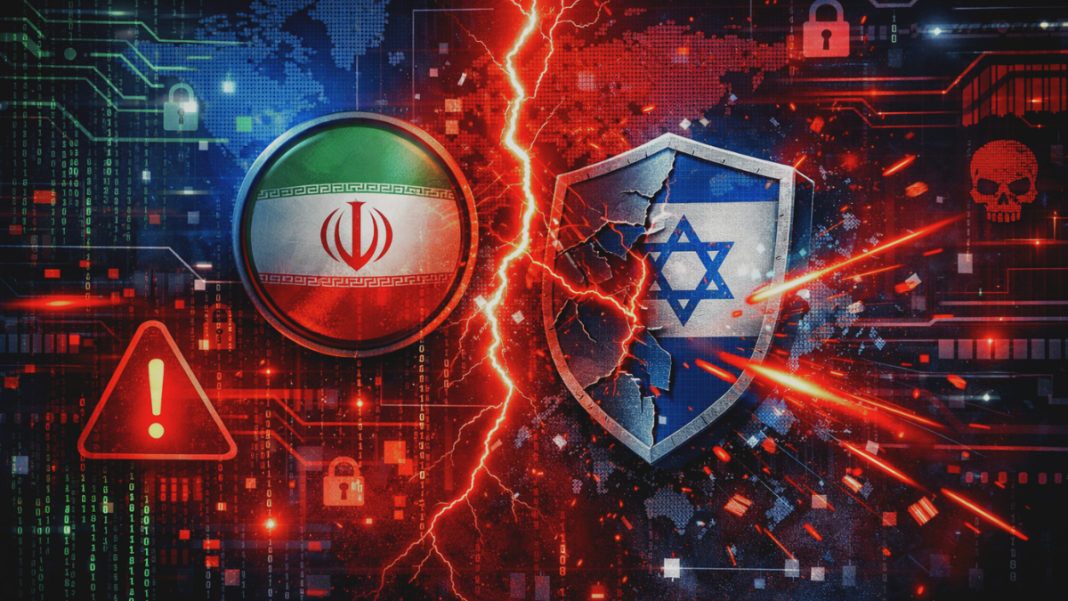
Iran-linked hackers targeted Israeli law firms, logistics and infrastructure in 2025 cyber surge

A media report has highlighted new claims about cyber warfare between Iran and Israel. According to a Hebrew-language technology outlet, Iranian hackers have carried out some of the strongest cyberattacks against Israeli digital systems. The report says these attacks have placed Iran at the forefront of cyber operations targeting Israel during the reported period.

The claims focus on cyber activities rather than physical conflict. They describe how digital attacks have been used to disrupt systems, gather information, and affect public confidence. The report presents cyber warfare as a major part of ongoing regional tensions.

Ongoing Cyber Conflict Over Several Years

The report states that cyber warfare between Iran and Israel began years ago and has been ongoing for at least three years. During this time, both sides have reportedly been involved in repeated cyber operations aimed at weakening each other’s digital capabilities.

These operations are described as including sabotage attacks, where computer systems are damaged or disrupted, and espionage activities, where sensitive data is accessed without permission. The report also mentions cyber efforts aimed at influencing public opinion by spreading messages or creating confusion online.

According to the outlet, this cyber confrontation has developed steadily and has become more organized over time. Unlike traditional warfare, these attacks often happen without visible signs but can still cause serious disruption. Businesses, service providers, and digital networks are often affected.

Iran-linked espionage probe rocks Israel as suspect photographed near Naftali Bennett’s home

The report notes that many cyber incidents remain unseen by the public until their impact becomes noticeable. Disruptions to systems, data leaks, and operational delays are described as common results of such attacks. The outlet presents cyber warfare as a silent but effective method used alongside broader political and security tensions.

Increase in Cyberattacks During June Conflict

The report highlights a sharp rise in cyberattacks during a 12-day war in June. During this period, Iranian cyber operations against Israeli targets reportedly increased significantly. The outlet claims that hackers were quick to adjust their tactics and methods in response to digital defenses.

This ability to adapt is described as a key reason behind the reported success of the attacks. The report says that hostile hackers rapidly changed their operational approaches in cyberspace to continue targeting systems.

June is described as a month with a noticeable surge in cyber incidents. The outlet claims that by the end of 2025, it could be acknowledged that Iran ranked first among countries delivering cyber blows to Israel during the year.

This claim is presented as notable because Israel is often described as a leader in technology and cybersecurity. The report challenges that image by pointing to the volume and impact of the alleged attacks.

Iran-linked hackers weaponize doxxing and bounties in escalating cyber war on Israelis

The outlet also states that small and medium-sized companies were heavily targeted during this period. These businesses are often more vulnerable because they may not have strong cyber protection systems.

Businesses Targeted and Hacking Groups Named

According to the report, a wide range of Israeli businesses and service providers were targeted. Law firms were reportedly attacked, raising concerns about access to sensitive legal information. Construction companies were also targeted, potentially affecting planning and project systems.

Human resources providers were among those affected. These companies often hold personal data, making them attractive targets for cyberattacks. Logistics service suppliers were also targeted, which could disrupt supply chains and deliveries.

The report further states that customs clearance companies and communications infrastructure firms were taken over by hackers. These sectors play key roles in trade and connectivity, making them critical targets.

The outlet names several hacking groups it says were responsible for the most significant cyber blows. These groups include MoodyWater, Charming Kitten, DarkBit, Phoenix Cyber Storm, and Hanzala. Among them, Hanzala is described as standing out due to its level of activity.

The report presents these groups as operating amid a large wave of cyberattacks, contributing to the overall impact on Israeli digital systems during the reported period.


T U Deshmukh
T U Deshmukh
T U Deshmukh is the leading voice on the subject of Jobs, AI, Data and layoffs and she regularly contributes a column on Jobs for Newsinterpretation.

TOP 10 TRENDING ON NEWSINTERPRETATION

Cyber Attacks on Space Infrastructure: Satellites, GPS and the Ground Systems Behind Them

From the Viasat KA-SAT hack to GPS jamming over the Baltic, a research guide to how attackers target satellites, navigation signals and ground stations, and why it matters on Earth.

How AI Agents Are Used in Cyber Attacks: From Assisted Hacking to AI-Orchestrated Espionage

Attackers now use AI agents to scan networks, write exploits and run extortion campaigns. A research guide to documented cases, including the first reported AI-orchestrated espionage campaign, and what defenders should do.

Cyber Attacks on AI and LLMs: How Attackers Target Large Language Models

Prompt injection, data poisoning, model theft and jailbreaks: a research guide to how attackers target AI systems and large language models, with real cases and defences.

French Supermarket Refrigeration Cyberattack: How Hacking the Cold Chain Can Endanger Lives

In October 2026 attackers heated refrigeration cabinets in hundreds of French supermarkets to as much as 50°C. No one was hurt, but the attack shows how hacking the cold chain can endanger lives through fire, food poisoning and spoiled medicines.

Cyberattacks on Nuclear Facilities: Stuxnet, Kudankulam and the Limits of Air Gaps

Stuxnet, the Davis-Besse worm and malware at India’s Kudankulam plant: what they show about cyber risk at nuclear facilities and the limits of air gaps.

Triton: When Hackers Target the Safety Systems That Prevent Industrial Disasters

The 2017 Triton attack targeted the safety systems that prevent industrial disasters. What happened, who was charged, and how plants protect their last line of defence.

Cybersecurity Risks in Smart Cities: When Connected Infrastructure Fails

How connecting traffic control, emergency alerts and utilities concentrates cyber risk in cities, what the Dallas and Atlanta incidents showed, and what governments recommend.

Weaponized Drones: Hijacking, GPS Spoofing and Emerging Cyber Warfare Risks

How drones can be hijacked, jammed or misled by GPS spoofing, what researchers have demonstrated, and why governments treat drone fleets as a security risk.

Ransomware Attacks on Hospitals: How Healthcare Cyberattacks Put Patients at Risk

How ransomware against hospitals and their suppliers delays care and endangers patients, what the Düsseldorf and WannaCry cases show, and what research says about deaths.

Operational blunder exposes massive Russian cyber espionage attack on Ukrainian prosecutors

A major cyberattack has compromised the email accounts of...

Cyber Attacks on Space Infrastructure: Satellites, GPS and the Ground Systems Behind Them

From the Viasat KA-SAT hack to GPS jamming over the Baltic, a research guide to how attackers target satellites, navigation signals and ground stations, and why it matters on Earth.

French Supermarket Refrigeration Cyberattack: How Hacking the Cold Chain Can Endanger Lives

In October 2026 attackers heated refrigeration cabinets in hundreds of French supermarkets to as much as 50°C. No one was hurt, but the attack shows how hacking the cold chain can endanger lives through fire, food poisoning and spoiled medicines.

Cyberattacks on Nuclear Facilities: Stuxnet, Kudankulam and the Limits of Air Gaps

Stuxnet, the Davis-Besse worm and malware at India’s Kudankulam plant: what they show about cyber risk at nuclear facilities and the limits of air gaps.

Triton: When Hackers Target the Safety Systems That Prevent Industrial Disasters

The 2017 Triton attack targeted the safety systems that prevent industrial disasters. What happened, who was charged, and how plants protect their last line of defence.

Cybersecurity Risks in Smart Cities: When Connected Infrastructure Fails

How connecting traffic control, emergency alerts and utilities concentrates cyber risk in cities, what the Dallas and Atlanta incidents showed, and what governments recommend.

Ransomware Attacks on Hospitals: How Healthcare Cyberattacks Put Patients at Risk

How ransomware against hospitals and their suppliers delays care and endangers patients, what the Düsseldorf and WannaCry cases show, and what research says about deaths.

FBI warns of AVrecon malware targeting outdated routers linked to proxy based cybercrime

A serious cybersecurity warning has been issued regarding commonly...

Related Articles

Popular Categories
