

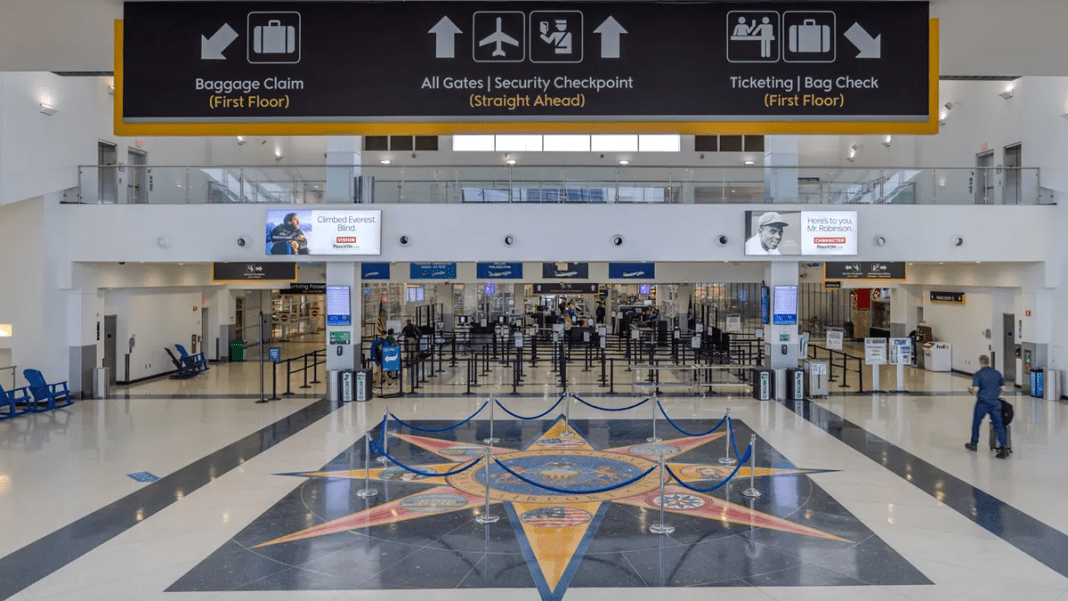
4 airports in US and Canada hit by hackers targeting PA systems and flight information

In a shocking turn of events, hackers took control of public address systems at four major airports across the United States and Canada. Passengers were left confused and scared as loud, unusual messages played over the speakers, while flight information screens displayed unexpected content. The attack caused brief disruptions, but officials acted quickly to restore normal operations.

The incident marks one of the first known cyberattacks targeting airport public announcement systems. It shows that even systems meant to provide safety and guidance to travelers can be vulnerable to hackers.

How the Attack Happened

The attack started when hackers gained access to the airports’ communication systems. Three airports in Canada and one in the U.S. were affected. At Harrisburg International Airport in Pennsylvania, the messages over the loudspeakers included repeated slogans in support of Palestine and warnings that alarmed passengers. Some of the messages even targeted U.S. President Donald Trump and Israeli Prime Minister Benjamin Netanyahu, while referencing violent threats that created fear among travelers.

Meanwhile, in Canada, messages appeared on flight information screens at Kelowna, Victoria, and Windsor airports. These messages included political slogans and other statements meant to grab attention. In some cases, the hackers left digital signatures such as “Hacked by Mutarrif Siberislam” to show they were responsible for the attack.

U.S. Reels After Student Data Hack — 20-Year-Old Sentenced in $14 Million PowerSchool Case

Airport IT staff worked quickly to regain control of the systems. The loudspeaker messages were stopped, and flight information screens returned to normal within a short time. Despite the quick response, the incident revealed vulnerabilities in airport systems that are usually considered highly secure.

Who Was Behind the Hack

The group behind the attack reportedly called themselves Siberislam, a relatively unknown hacking collective based in Turkey. The messages suggested political motivations, as the hackers expressed strong opinions about the Middle East conflict and targeted leaders like Donald Trump and Benjamin Netanyahu.

Cybersecurity experts said the attack was sophisticated but did not appear to interfere with flights directly. Passengers experienced confusion and fear, but airport operations continued after the systems were restored. The experts noted that hacking public address and flight information systems is a serious concern because it can create panic, even if no physical harm occurs.

The hackers’ ability to access multiple airports’ systems shows how critical infrastructure can be vulnerable to cyberattacks. While the motives seemed political, the incident primarily disrupted public safety and airport communications.

Immediate Impact and Response

Authorities acted swiftly to control the situation. At all affected airports, staff restored normal operations and ensured flights were not delayed unnecessarily. Passengers were able to continue their journeys safely, but many reported feeling anxious due to the strange messages and the sudden, loud announcements.

China or North Korea? South Korea rattled after white hat hackers uncover major government cyberattack

Investigators confirmed that the hacking affected only non-critical systems, meaning it did not impact airplanes’ navigation or safety systems. The focus was mainly on loudspeakers and flight display boards. Security teams reviewed the systems to prevent further attacks and remove unauthorized access.

The attack also drew attention from airport security teams across North America. Officials are working to understand how the hackers bypassed security measures so easily. While the disruption was brief, it served as a reminder that even highly secure facilities can be targeted digitally.

Passengers, meanwhile, shared their experiences on social media, describing confusion, surprise, and alarm at hearing unusual messages over the airport speakers. Many commented on the unusual nature of the incident, as it is rare for airports to be targeted in such a way.

The rapid response from airport IT staff ensured that the disruption did not spread or cause flight delays. Authorities confirmed that flights resumed their schedules quickly, and no passengers or staff were harmed.

The incident at the four airports in the U.S. and Canada is one of the first of its kind. It highlights the importance of cybersecurity in transportation systems and the need for constant monitoring of public infrastructure.

T U Deshmukh
T U Deshmukh
T U Deshmukh is the leading voice on the subject of Jobs, AI, Data and layoffs and she regularly contributes a column on Jobs for Newsinterpretation.

TOP 10 TRENDING ON NEWSINTERPRETATION

Cyber Attacks on Space Infrastructure: Satellites, GPS and the Ground Systems Behind Them

From the Viasat KA-SAT hack to GPS jamming over the Baltic, a research guide to how attackers target satellites, navigation signals and ground stations, and why it matters on Earth.

How AI Agents Are Used in Cyber Attacks: From Assisted Hacking to AI-Orchestrated Espionage

Attackers now use AI agents to scan networks, write exploits and run extortion campaigns. A research guide to documented cases, including the first reported AI-orchestrated espionage campaign, and what defenders should do.

Cyber Attacks on AI and LLMs: How Attackers Target Large Language Models

Prompt injection, data poisoning, model theft and jailbreaks: a research guide to how attackers target AI systems and large language models, with real cases and defences.

French Supermarket Refrigeration Cyberattack: How Hacking the Cold Chain Can Endanger Lives

In October 2026 attackers heated refrigeration cabinets in hundreds of French supermarkets to as much as 50°C. No one was hurt, but the attack shows how hacking the cold chain can endanger lives through fire, food poisoning and spoiled medicines.

Cyberattacks on Nuclear Facilities: Stuxnet, Kudankulam and the Limits of Air Gaps

Stuxnet, the Davis-Besse worm and malware at India’s Kudankulam plant: what they show about cyber risk at nuclear facilities and the limits of air gaps.

Triton: When Hackers Target the Safety Systems That Prevent Industrial Disasters

The 2017 Triton attack targeted the safety systems that prevent industrial disasters. What happened, who was charged, and how plants protect their last line of defence.

Cybersecurity Risks in Smart Cities: When Connected Infrastructure Fails

How connecting traffic control, emergency alerts and utilities concentrates cyber risk in cities, what the Dallas and Atlanta incidents showed, and what governments recommend.

Weaponized Drones: Hijacking, GPS Spoofing and Emerging Cyber Warfare Risks

How drones can be hijacked, jammed or misled by GPS spoofing, what researchers have demonstrated, and why governments treat drone fleets as a security risk.

Ransomware Attacks on Hospitals: How Healthcare Cyberattacks Put Patients at Risk

How ransomware against hospitals and their suppliers delays care and endangers patients, what the Düsseldorf and WannaCry cases show, and what research says about deaths.

Operational blunder exposes massive Russian cyber espionage attack on Ukrainian prosecutors

A major cyberattack has compromised the email accounts of...

Cyber Attacks on Space Infrastructure: Satellites, GPS and the Ground Systems Behind Them

From the Viasat KA-SAT hack to GPS jamming over the Baltic, a research guide to how attackers target satellites, navigation signals and ground stations, and why it matters on Earth.

French Supermarket Refrigeration Cyberattack: How Hacking the Cold Chain Can Endanger Lives

In October 2026 attackers heated refrigeration cabinets in hundreds of French supermarkets to as much as 50°C. No one was hurt, but the attack shows how hacking the cold chain can endanger lives through fire, food poisoning and spoiled medicines.

Cyberattacks on Nuclear Facilities: Stuxnet, Kudankulam and the Limits of Air Gaps

Stuxnet, the Davis-Besse worm and malware at India’s Kudankulam plant: what they show about cyber risk at nuclear facilities and the limits of air gaps.

Triton: When Hackers Target the Safety Systems That Prevent Industrial Disasters

The 2017 Triton attack targeted the safety systems that prevent industrial disasters. What happened, who was charged, and how plants protect their last line of defence.

Cybersecurity Risks in Smart Cities: When Connected Infrastructure Fails

How connecting traffic control, emergency alerts and utilities concentrates cyber risk in cities, what the Dallas and Atlanta incidents showed, and what governments recommend.

Ransomware Attacks on Hospitals: How Healthcare Cyberattacks Put Patients at Risk

How ransomware against hospitals and their suppliers delays care and endangers patients, what the Düsseldorf and WannaCry cases show, and what research says about deaths.

FBI warns of AVrecon malware targeting outdated routers linked to proxy based cybercrime

A serious cybersecurity warning has been issued regarding commonly...

Related Articles

Popular Categories
