

Iran-linked hackers weaponize doxxing and bounties in escalating cyber war on Israelis

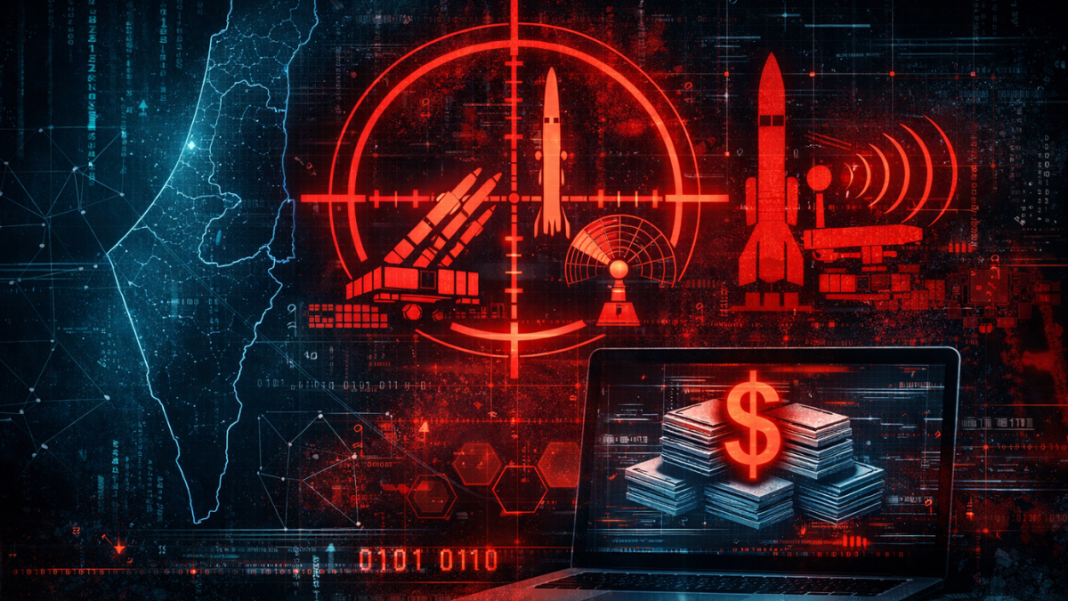
An Iran-linked hacker group has launched an online campaign offering cash rewards for information about Israelis it claims are involved in developing Israel’s air defense systems. The campaign includes threats, public exposure of personal details, and intimidating language designed to spread fear. The activity has drawn attention due to its scale, tone, and repeated targeting of civilians linked to defense, media, and academic fields.

The group announced bounties for information on engineers and technicians allegedly connected to the Patriot, Arrow, and David’s Sling air defense systems. These systems are widely known as part of Israel’s missile defense network. The campaign has been shared widely online and is described as part of an ongoing effort rather than a single incident.

Bounties, doxxing, and direct threats

The hackers offered bounties of up to $30,000 for information on more than a dozen Israelis described as air defense developers. Alongside these offers, the group published personal data online. This included photos, professional credentials, email addresses, phone numbers, and general location details. While not all of the information has been independently verified, it has circulated widely on Arab media outlets and Telegram channels, including accounts linked to militant groups.

Each individual profile is paired with threatening and often personal messages. Some messages warn that the listed individuals are being monitored, while others claim that emails and phone numbers are under surveillance. Several messages directly reference family members, including children, using language meant to intimidate and cause fear.

Stanford experiment shows AI hacker ARTEMIS outperforms highly paid human cybersecurity experts

The design of the website adds to the threatening tone. When a cursor is placed over a person’s image, a crosshair appears. Large banners warn that those listed are “marked” and that they cannot move freely at work or at home. The group claims that anonymity is an illusion and that safety can no longer be guaranteed.

These actions are part of what the hackers call the “RedWanted” campaign. According to the group, lists of Israelis have been published almost every Saturday since October 18. Some individuals are labeled as “wanted”, while others are described using more extreme terms. In several cases, bounties of $10,000 were offered for information that could lead to a person’s location or capture.

Expanding lists and psychological pressure

The campaign targeting air defense developers is part of a much larger database released by the hackers. Nearly 200 Israelis have been listed so far. The group claims these individuals are linked to weapons programs, military units, journalism, or academic research.

Each entry includes a unique message, many of them long and hostile. At the top of the website, a banner warns that Israel should expect harsh punishment. Repeated phrases such as “the hunt has begun” are used to signal that the campaign is active and ongoing.

Cyber warfare reaches the high seas as IRGC-linked hackers target Greek shipowner Altomare

The group also released a video connected to the campaign. In the video, some targets are shown alongside what appear to be bomb-making materials and are described as having been “killed”. These claims have not been independently confirmed, but the content adds to the atmosphere of intimidation created by the campaign.

Past cyber activity and international findings

Security analysts have linked the hacker group to Iran’s intelligence services, stating it has been active since late 2023 and has targeted Israeli systems for around two years.

In January 2025, the group carried out a cyberattack on kindergartens in Israel. The attack disrupted public address systems in about 20 locations, causing alarm among staff and families.

On August 22, 2025, the hackers breached multiple Israeli organizations, including research institutes, businesses, media outlets, technology firms, and service providers.

In September 2025, Canada’s Rapid Response Mechanism reported a “hack and leak” operation by the same group targeting journalists working for an Iran-focused media outlet. The leaked material included personal identification documents and private content and was published online in a format similar to the Israeli campaign. Canadian officials also noted that the leaked information was amplified across social media and several AI-powered chat platforms.

These incidents show how cyber operations are being used not only to access systems, but also to intimidate individuals through exposure, threats, and sustained online pressure.

T U Deshmukh
T U Deshmukh
T U Deshmukh is the leading voice on the subject of Jobs, AI, Data and layoffs and she regularly contributes a column on Jobs for Newsinterpretation.

TOP 10 TRENDING ON NEWSINTERPRETATION

Cyber Attacks on Space Infrastructure: Satellites, GPS and the Ground Systems Behind Them

From the Viasat KA-SAT hack to GPS jamming over the Baltic, a research guide to how attackers target satellites, navigation signals and ground stations, and why it matters on Earth.

How AI Agents Are Used in Cyber Attacks: From Assisted Hacking to AI-Orchestrated Espionage

Attackers now use AI agents to scan networks, write exploits and run extortion campaigns. A research guide to documented cases, including the first reported AI-orchestrated espionage campaign, and what defenders should do.

Cyber Attacks on AI and LLMs: How Attackers Target Large Language Models

Prompt injection, data poisoning, model theft and jailbreaks: a research guide to how attackers target AI systems and large language models, with real cases and defences.

French Supermarket Refrigeration Cyberattack: How Hacking the Cold Chain Can Endanger Lives

In October 2026 attackers heated refrigeration cabinets in hundreds of French supermarkets to as much as 50°C. No one was hurt, but the attack shows how hacking the cold chain can endanger lives through fire, food poisoning and spoiled medicines.

Cyberattacks on Nuclear Facilities: Stuxnet, Kudankulam and the Limits of Air Gaps

Stuxnet, the Davis-Besse worm and malware at India’s Kudankulam plant: what they show about cyber risk at nuclear facilities and the limits of air gaps.

Triton: When Hackers Target the Safety Systems That Prevent Industrial Disasters

The 2017 Triton attack targeted the safety systems that prevent industrial disasters. What happened, who was charged, and how plants protect their last line of defence.

Cybersecurity Risks in Smart Cities: When Connected Infrastructure Fails

How connecting traffic control, emergency alerts and utilities concentrates cyber risk in cities, what the Dallas and Atlanta incidents showed, and what governments recommend.

Weaponized Drones: Hijacking, GPS Spoofing and Emerging Cyber Warfare Risks

How drones can be hijacked, jammed or misled by GPS spoofing, what researchers have demonstrated, and why governments treat drone fleets as a security risk.

Ransomware Attacks on Hospitals: How Healthcare Cyberattacks Put Patients at Risk

How ransomware against hospitals and their suppliers delays care and endangers patients, what the Düsseldorf and WannaCry cases show, and what research says about deaths.

Operational blunder exposes massive Russian cyber espionage attack on Ukrainian prosecutors

A major cyberattack has compromised the email accounts of...

Cyber Attacks on Space Infrastructure: Satellites, GPS and the Ground Systems Behind Them

From the Viasat KA-SAT hack to GPS jamming over the Baltic, a research guide to how attackers target satellites, navigation signals and ground stations, and why it matters on Earth.

French Supermarket Refrigeration Cyberattack: How Hacking the Cold Chain Can Endanger Lives

In October 2026 attackers heated refrigeration cabinets in hundreds of French supermarkets to as much as 50°C. No one was hurt, but the attack shows how hacking the cold chain can endanger lives through fire, food poisoning and spoiled medicines.

Cyberattacks on Nuclear Facilities: Stuxnet, Kudankulam and the Limits of Air Gaps

Stuxnet, the Davis-Besse worm and malware at India’s Kudankulam plant: what they show about cyber risk at nuclear facilities and the limits of air gaps.

Triton: When Hackers Target the Safety Systems That Prevent Industrial Disasters

The 2017 Triton attack targeted the safety systems that prevent industrial disasters. What happened, who was charged, and how plants protect their last line of defence.

Cybersecurity Risks in Smart Cities: When Connected Infrastructure Fails

How connecting traffic control, emergency alerts and utilities concentrates cyber risk in cities, what the Dallas and Atlanta incidents showed, and what governments recommend.

Ransomware Attacks on Hospitals: How Healthcare Cyberattacks Put Patients at Risk

How ransomware against hospitals and their suppliers delays care and endangers patients, what the Düsseldorf and WannaCry cases show, and what research says about deaths.

FBI warns of AVrecon malware targeting outdated routers linked to proxy based cybercrime

A serious cybersecurity warning has been issued regarding commonly...

Related Articles

Popular Categories
