


“Democracy under siege”: Sanders warns Meta and Big Tech are buying U.S. elections to block AI rules

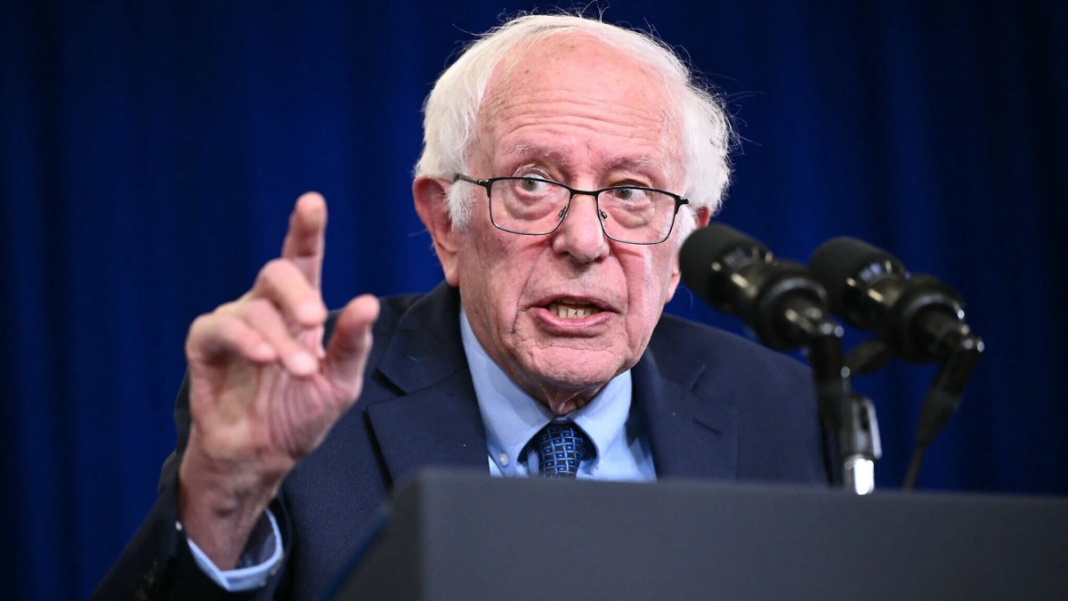
U.S. Senator Bernie Sanders has issued a strong warning about the increasing influence of wealthy tech investors in U.S. politics. According to reports, these billionaires are preparing to spend hundreds of millions of dollars in upcoming elections. Their goal is to support candidates who favor artificial intelligence (AI) development and oppose those who push for stronger rules on AI safety and transparency.

Senator Sanders said this is a clear example of how money can distort democracy. When a handful of billionaires can spend massive amounts to influence elections, it puts ordinary voters at a disadvantage. Lawmakers advocating for AI safety and accountability could face significant challenges, as pro-AI groups funded by billionaires work to support candidates aligned with their interests and defeat those who prioritize public protection.

Senator Sanders stressed that this moment highlights the urgent need to overturn Citizens United and implement public funding of elections. He said unlimited spending by billionaires “cannot be allowed” and warned that the upcoming elections are at risk of being shaped by the wealthiest investors rather than the people.

Baristas walk out after Starbucks cuts hours to the bone — Mamdani and Bernie Sanders show up, corporate hides behind PR

Super PACs Target AI Oversight Supporters

Reports reveal that super PACs backed by technology executives and major investors, many of whom are billionaires, are actively preparing for the 2026 midterms. One of the most prominent groups, called Leading the Future, has already raised more than $100 million. Its goal is to support candidates who are friendly to the tech industry and oppose those advocating for stricter AI regulations.

One of the first targets of this super PAC is New York Democratic state lawmaker Alex Bores, who sponsored legislation requiring large AI companies to disclose safety and risk information. Attack ads aimed at Bores claim that the legislation could stifle innovation and harm technological progress. In response, Bores defended the bill online, stating, “AI billionaires, go have fun… We’re standing up for New Yorkers,” emphasizing the importance of safety and transparency in AI development.

Despite these attacks, New York Governor Kathy Hochul signed Bores’ AI disclosure bill into law on the same day it faced public scrutiny. The bill requires AI companies to report safety data, marking a significant step toward accountability. This move shows that state governments are increasingly focused on ensuring AI companies operate safely, even in the face of strong industry opposition.

Sanders explodes over Trump’s shutdown, accuses Bezos and Musk of benefiting from ‘rigged’ tax breaks

Warnings Over Democracy and Influence

The growing presence of pro-AI super PACs has drawn attention to the broader issue of political influence. Senator Sanders and other critics argue that allowing a few billionaires to spend unlimited amounts on elections can undermine democratic principles. The focus on AI regulation is particularly urgent because artificial intelligence is a rapidly developing technology that impacts jobs, privacy, security, and public safety.

Experts note that the massive spending from tech-backed super PACs like Leading the Future could influence which candidates win and lose, potentially favoring those who prioritize corporate interests over public welfare. The situation highlights a clear conflict between lawmakers, like Alex Bores, who advocate for AI transparency and safety, and billionaire investors seeking minimal oversight.

As these pro-AI groups mobilize hundreds of millions of dollars ahead of the 2026 midterms, the political battle over AI policy is becoming one of the most significant and high-stakes fights in recent years. The warnings from U.S. Senator Bernie Sanders serve as a reminder that unchecked spending by billionaires in politics could determine the future of AI regulation in the United States.


Pearl Croft
Pearl Crofthttps://newsinterpretation.com
I am Pearl Croft I give “News Interpretation” an insight into the most recent news hitting the “Consumer Goods” sector in Wall Street. I have been an independent financial adviser for over 11 years in the city and in recent years turned my experience in finance and passion for journalism into a full time role. I perform analysis of Companies and publicize valuable information for shareholder community. But writing about the political developments is my hobby.

TOP 10 TRENDING ON NEWSINTERPRETATION

Cyber Attacks on Space Infrastructure: Satellites, GPS and the Ground Systems Behind Them

From the Viasat KA-SAT hack to GPS jamming over the Baltic, a research guide to how attackers target satellites, navigation signals and ground stations, and why it matters on Earth.

How AI Agents Are Used in Cyber Attacks: From Assisted Hacking to AI-Orchestrated Espionage

Attackers now use AI agents to scan networks, write exploits and run extortion campaigns. A research guide to documented cases, including the first reported AI-orchestrated espionage campaign, and what defenders should do.

Cyber Attacks on AI and LLMs: How Attackers Target Large Language Models

Prompt injection, data poisoning, model theft and jailbreaks: a research guide to how attackers target AI systems and large language models, with real cases and defences.

French Supermarket Refrigeration Cyberattack: How Hacking the Cold Chain Can Endanger Lives

In October 2026 attackers heated refrigeration cabinets in hundreds of French supermarkets to as much as 50°C. No one was hurt, but the attack shows how hacking the cold chain can endanger lives through fire, food poisoning and spoiled medicines.

Cyberattacks on Nuclear Facilities: Stuxnet, Kudankulam and the Limits of Air Gaps

Stuxnet, the Davis-Besse worm and malware at India’s Kudankulam plant: what they show about cyber risk at nuclear facilities and the limits of air gaps.

Triton: When Hackers Target the Safety Systems That Prevent Industrial Disasters

The 2017 Triton attack targeted the safety systems that prevent industrial disasters. What happened, who was charged, and how plants protect their last line of defence.

Cybersecurity Risks in Smart Cities: When Connected Infrastructure Fails

How connecting traffic control, emergency alerts and utilities concentrates cyber risk in cities, what the Dallas and Atlanta incidents showed, and what governments recommend.

Weaponized Drones: Hijacking, GPS Spoofing and Emerging Cyber Warfare Risks

How drones can be hijacked, jammed or misled by GPS spoofing, what researchers have demonstrated, and why governments treat drone fleets as a security risk.

Ransomware Attacks on Hospitals: How Healthcare Cyberattacks Put Patients at Risk

How ransomware against hospitals and their suppliers delays care and endangers patients, what the Düsseldorf and WannaCry cases show, and what research says about deaths.

Operational blunder exposes massive Russian cyber espionage attack on Ukrainian prosecutors

A major cyberattack has compromised the email accounts of...

Cyber Attacks on Space Infrastructure: Satellites, GPS and the Ground Systems Behind Them

From the Viasat KA-SAT hack to GPS jamming over the Baltic, a research guide to how attackers target satellites, navigation signals and ground stations, and why it matters on Earth.

French Supermarket Refrigeration Cyberattack: How Hacking the Cold Chain Can Endanger Lives

In October 2026 attackers heated refrigeration cabinets in hundreds of French supermarkets to as much as 50°C. No one was hurt, but the attack shows how hacking the cold chain can endanger lives through fire, food poisoning and spoiled medicines.

Cyberattacks on Nuclear Facilities: Stuxnet, Kudankulam and the Limits of Air Gaps

Stuxnet, the Davis-Besse worm and malware at India’s Kudankulam plant: what they show about cyber risk at nuclear facilities and the limits of air gaps.

Triton: When Hackers Target the Safety Systems That Prevent Industrial Disasters

The 2017 Triton attack targeted the safety systems that prevent industrial disasters. What happened, who was charged, and how plants protect their last line of defence.

Cybersecurity Risks in Smart Cities: When Connected Infrastructure Fails

How connecting traffic control, emergency alerts and utilities concentrates cyber risk in cities, what the Dallas and Atlanta incidents showed, and what governments recommend.

Ransomware Attacks on Hospitals: How Healthcare Cyberattacks Put Patients at Risk

How ransomware against hospitals and their suppliers delays care and endangers patients, what the Düsseldorf and WannaCry cases show, and what research says about deaths.

FBI warns of AVrecon malware targeting outdated routers linked to proxy based cybercrime

A serious cybersecurity warning has been issued regarding commonly...

Related Articles

Popular Categories
