

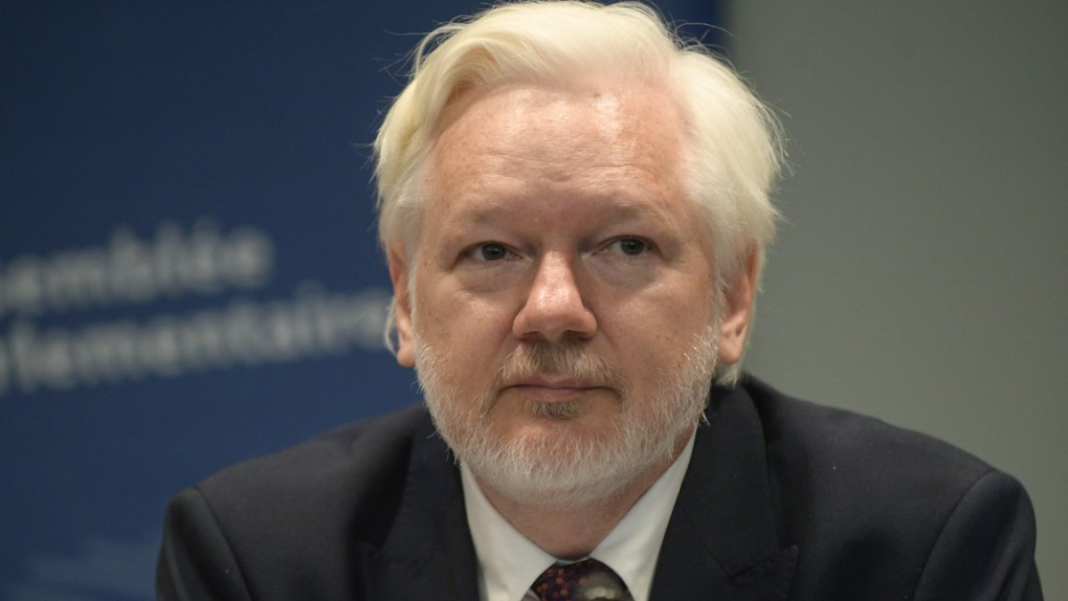
Julian Assange challenges Nobel Peace Prize award, seeks to block payment to Venezuelan opposition leader

WikiLeaks founder Julian Assange has filed a complaint against the Nobel Foundation. The complaint aims to prevent Venezuelan opposition leader Maria Corina Machado from receiving the 2025 Nobel Peace Prize. Assange claims that the award goes against the purpose of the prize because Machado publicly supports military actions and aggressive policies toward Venezuela.

According to a statement shared online by WikiLeaks, Assange is trying to stop the Nobel Foundation from releasing more than $1 million in prize money to Machado. The filing argues that Machado’s public remarks suggest she does not meet the standards set by Alfred Nobel’s will. Nobel’s rules specify that the Peace Prize should be given to individuals who have “conferred the greatest benefit to humankind” by promoting fraternity between nations, reducing armies, or holding and supporting peace congresses.

Assange contends that Machado’s political positions contradict these principles. Her support for international pressure on Venezuela, including sanctions and maritime operations, is presented in the complaint as evidence that she does not align with the core purpose of the Peace Prize.

Trump loses Nobel Peace Prize — Venezuela’s María Corina Machado takes the honor

Allegations Against Prize Recipient

The legal filing points to a recent interview, in which Machado openly praised U.S. President Donald Trump and his administration’s hardline policies toward Venezuela. She expressed gratitude for Trump’s actions, describing him as a champion of freedom in the region.

Assange claims that these policies include intensified sanctions, the seizure of Venezuelan oil tankers, and bombings of vessels accused of drug trafficking. According to the complaint, Machado’s support for these measures makes her unfit to receive a prize meant to promote peace.

The filing further warns that releasing the Nobel Prize funds to Machado could result in misuse of the endowment. Assange argues that the funds could be diverted to support aggressive actions, potentially contributing to crimes against humanity or war crimes. He points to Article 25(3)(c) of the Rome Statute, which states that anyone who “aids, abets, or otherwise assists” in the commission of war crimes may be prosecuted by the International Criminal Court.

WikiLeaks emphasized that the prize money could indirectly support continued aggression if released. The complaint frames the situation as a fundamental misuse of the Peace Prize, which was intended to support peace and reduce conflict, not fund or encourage warlike actions.

Greene breaks GOP silence, denounces Trump’s handling of Rob Reiner tragedy

Ongoing Legal Challenge

The lawsuit comes amid escalating U.S. actions against Venezuela. Recently, President Donald Trump announced a “total and complete blockade” of vessels trying to enter or leave Venezuela. He described the country as being “completely surrounded by the largest armada ever assembled in South America.” Machado praised these measures, saying the Venezuelan people are grateful to Trump for his policies.

Swedish authorities will now review Assange’s complaint and decide whether to halt the payment and investigate the Nobel Foundation officials. The foundation has not reversed its decision or frozen the prize money. The case highlights a legal and ethical debate over whether awarding the Peace Prize to someone supporting aggressive international actions aligns with Alfred Nobel’s original intentions.

Assange’s complaint is clear: the Peace Prize should remain a symbol of peace. Any association with actions that could lead to violence or civilian harm risks turning the award into an instrument that supports conflict rather than peace.

T U Deshmukh
T U Deshmukh
T U Deshmukh is the leading voice on the subject of Jobs, AI, Data and layoffs and she regularly contributes a column on Jobs for Newsinterpretation.

TOP 10 TRENDING ON NEWSINTERPRETATION

Cyber Attacks on Space Infrastructure: Satellites, GPS and the Ground Systems Behind Them

From the Viasat KA-SAT hack to GPS jamming over the Baltic, a research guide to how attackers target satellites, navigation signals and ground stations, and why it matters on Earth.

How AI Agents Are Used in Cyber Attacks: From Assisted Hacking to AI-Orchestrated Espionage

Attackers now use AI agents to scan networks, write exploits and run extortion campaigns. A research guide to documented cases, including the first reported AI-orchestrated espionage campaign, and what defenders should do.

Cyber Attacks on AI and LLMs: How Attackers Target Large Language Models

Prompt injection, data poisoning, model theft and jailbreaks: a research guide to how attackers target AI systems and large language models, with real cases and defences.

French Supermarket Refrigeration Cyberattack: How Hacking the Cold Chain Can Endanger Lives

In October 2026 attackers heated refrigeration cabinets in hundreds of French supermarkets to as much as 50°C. No one was hurt, but the attack shows how hacking the cold chain can endanger lives through fire, food poisoning and spoiled medicines.

Cyberattacks on Nuclear Facilities: Stuxnet, Kudankulam and the Limits of Air Gaps

Stuxnet, the Davis-Besse worm and malware at India’s Kudankulam plant: what they show about cyber risk at nuclear facilities and the limits of air gaps.

Triton: When Hackers Target the Safety Systems That Prevent Industrial Disasters

The 2017 Triton attack targeted the safety systems that prevent industrial disasters. What happened, who was charged, and how plants protect their last line of defence.

Cybersecurity Risks in Smart Cities: When Connected Infrastructure Fails

How connecting traffic control, emergency alerts and utilities concentrates cyber risk in cities, what the Dallas and Atlanta incidents showed, and what governments recommend.

Weaponized Drones: Hijacking, GPS Spoofing and Emerging Cyber Warfare Risks

How drones can be hijacked, jammed or misled by GPS spoofing, what researchers have demonstrated, and why governments treat drone fleets as a security risk.

Ransomware Attacks on Hospitals: How Healthcare Cyberattacks Put Patients at Risk

How ransomware against hospitals and their suppliers delays care and endangers patients, what the Düsseldorf and WannaCry cases show, and what research says about deaths.

Operational blunder exposes massive Russian cyber espionage attack on Ukrainian prosecutors

A major cyberattack has compromised the email accounts of...

Cyber Attacks on Space Infrastructure: Satellites, GPS and the Ground Systems Behind Them

From the Viasat KA-SAT hack to GPS jamming over the Baltic, a research guide to how attackers target satellites, navigation signals and ground stations, and why it matters on Earth.

French Supermarket Refrigeration Cyberattack: How Hacking the Cold Chain Can Endanger Lives

In October 2026 attackers heated refrigeration cabinets in hundreds of French supermarkets to as much as 50°C. No one was hurt, but the attack shows how hacking the cold chain can endanger lives through fire, food poisoning and spoiled medicines.

Cyberattacks on Nuclear Facilities: Stuxnet, Kudankulam and the Limits of Air Gaps

Stuxnet, the Davis-Besse worm and malware at India’s Kudankulam plant: what they show about cyber risk at nuclear facilities and the limits of air gaps.

Triton: When Hackers Target the Safety Systems That Prevent Industrial Disasters

The 2017 Triton attack targeted the safety systems that prevent industrial disasters. What happened, who was charged, and how plants protect their last line of defence.

Cybersecurity Risks in Smart Cities: When Connected Infrastructure Fails

How connecting traffic control, emergency alerts and utilities concentrates cyber risk in cities, what the Dallas and Atlanta incidents showed, and what governments recommend.

Ransomware Attacks on Hospitals: How Healthcare Cyberattacks Put Patients at Risk

How ransomware against hospitals and their suppliers delays care and endangers patients, what the Düsseldorf and WannaCry cases show, and what research says about deaths.

FBI warns of AVrecon malware targeting outdated routers linked to proxy based cybercrime

A serious cybersecurity warning has been issued regarding commonly...

Related Articles

Popular Categories
