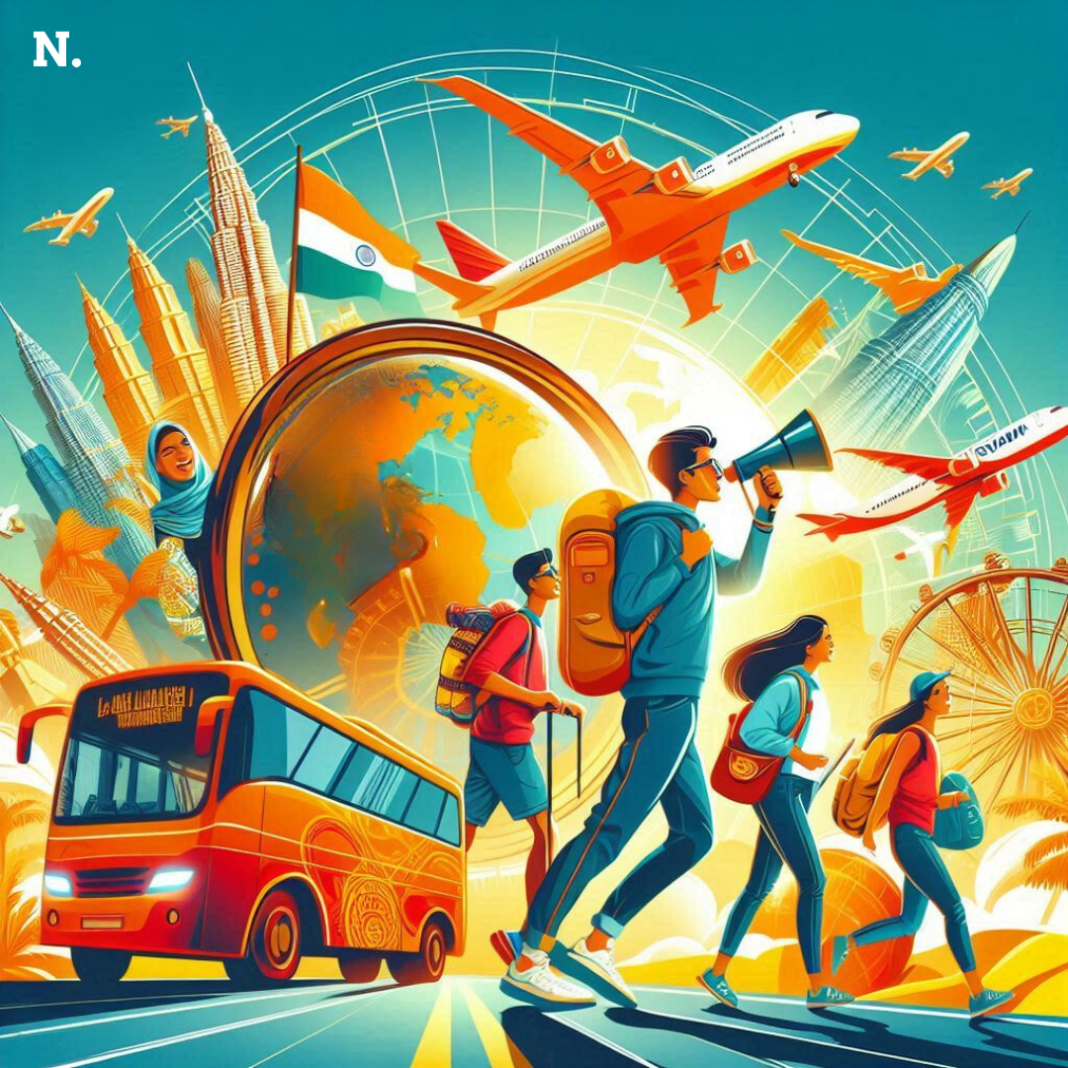

An increase in passport ownership and a growing desire for individualized and immersive travel experiences are driving the rapid growth of India’s travel sector. As the country’s economy continues to grow, its citizens are becoming more interested in exploring both domestic and international destinations. With India poised to become the third-largest economy in the world in the next few years, the number of travelers from the country is expected to keep rising significantly.
Increased Passport Ownership and Rising Demand for Travel
India currently has around 80 million passport holders, and this number is steadily increasing as more people express a desire to travel, both within India and abroad. One of the major reasons for this is the change in how the younger generation approaches life. Unlike earlier generations, which focused on saving for the future, younger people are eager to spend their earnings on travel and life experiences.
The surge in demand for travel after the COVID-19 pandemic has also played a crucial role. Many people, especially younger travelers, are now more focused on living in the moment and exploring new places. As a result, the travel industry has seen a sharp rise in bookings and interest, particularly in regions close to India, such as Dubai, Thailand, Vietnam, and Indonesia.
India as a Major Source of International Travelers
India is quickly becoming one of the largest source markets for outbound travelers in the world, particularly within Asia. Dubai and the Middle East are the top travel destinations for one-third of Indians. Countries like Thailand, Indonesia, and Vietnam are also growing in popularity among Indian tourists. The only exception to this trend is the United States, which continues to attract a large number of Indian visitors, despite being farther away.
India is currently the second-largest international market for travel to the United States, highlighting its significance as a global source market for travel. Between January and May of this year, nearly one million Indian travelers visited the US, setting a new record. Comparing this rise to the same period in 2023, there has been a 37 percent gain. This surge in Indian tourists makes India the second-largest market for the US, just behind the United Kingdom.
Outbound tourism from India is expected to grow at an impressive rate. Experts estimate that Indian outbound tourism will generate US$18 billion in 2024 alone. Over the next decade, this number will rise significantly, reaching US$55 billion, with a compound annual growth rate (CAGR) of 11 percent.
Personalized and Immersive Travel Experiences
As India’s travel market grows, there has been a noticeable shift towards more personalized and immersive travel experiences. Indian travelers are seeking unique experiences that allow them to connect with the places they visit on a deeper level. This includes cultural and culinary tours, adventure-based vacations, and ecotourism.
Many Indian tourists are also interested in exploring the rich heritage and local cultures of the countries they visit. There is a particular focus on wellness tourism, which has seen a major rise post-COVID-19. India, being the home of yoga, Ayurveda, and holistic wellness, has also contributed to this trend, with many travelers seeking experiences that enhance their well-being.
The rising disposable income of Indians is helping the country’s domestic tourism industry in addition to overseas travel. Many Indians are now taking shorter, more frequent trips within the country. These trips often focus on exploring India’s diverse landscapes, from its bustling cities to its serene beaches and majestic mountains.
Economic Growth and Infrastructure Development
India’s robust economic growth supports the country’s thriving travel industry. Since gaining independence in 1947, India’s contribution to global GDP has more than doubled, going from three percent to seven percent. This economic expansion has allowed more Indians to travel, both within the country and abroad.
India’s literacy rate has also seen a dramatic improvement over the years, rising from 23 percent at the time of independence to over 85 percent today. This increase in literacy has played a key role in empowering more people to seek out travel opportunities and explore the world.
Another significant factor contributing to the growth of India’s travel industry is the expansion of its infrastructure. The number of airports in India is expected to double in the coming years. Currently, India has around 150 airports, but this number is projected to reach 300 in the near future. This expansion will make travel more accessible to people across the country, further boosting the tourism industry.
India’s domestic and international travel markets are poised to grow significantly. A rising number of passport holders and increasing demand for unique travel experiences are driving this growth. Investments in infrastructure and travel services are boosting the industry. As a result, India’s travel sector is expected to flourish. More opportunities will arise for citizens to explore new destinations and create lasting memories.