

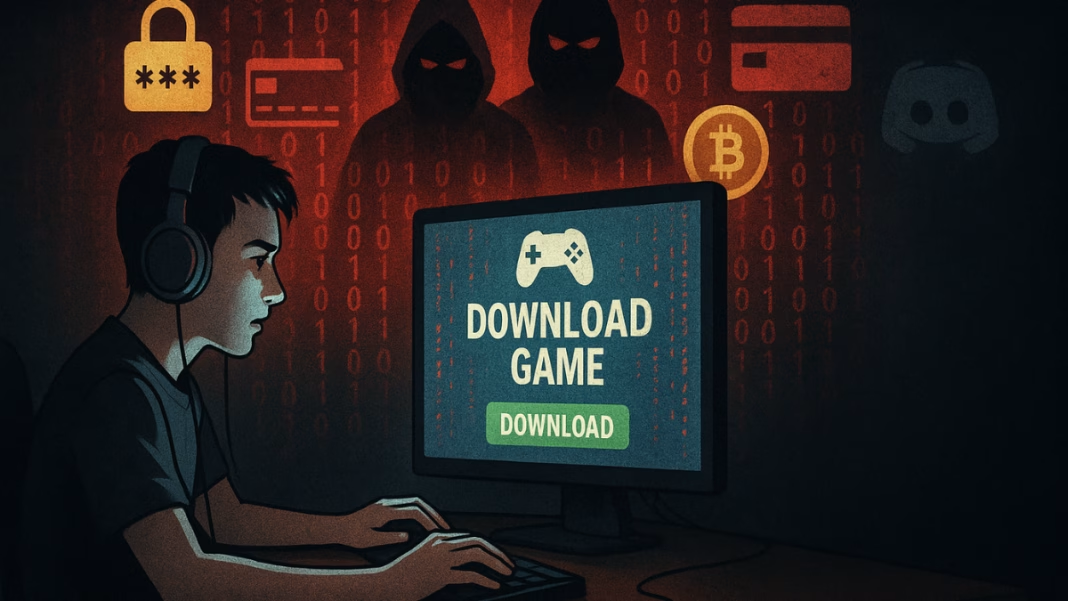
🔥 Cyber nightmare unfolds as malware masquerades as hit games like ‘Warstorm Fire’ and ‘Baruda Quest’

Cyber experts from Acronis have uncovered a scary new trick used by hackers to target gamers in the Middle East. These attackers are creating fake online games that look real and exciting. But when people download these games, their devices get infected with dangerous malware—software that steals private and personal information.

Dangerous Malware Hidden in Popular-Looking Games

The online gaming world is growing fast in the Middle East. It’s now worth over $7 billion and is especially popular among young people between the ages of 18 and 35. Countries like Saudi Arabia, Qatar, and Türkiye are among the worst affected by this new cyber threat.

The fake games are given names that sound fun and interesting—like Baruda Quest, Warstorm Fire, and Dire Talon. But these games aren’t real at all. They are made to look like new indie games in beta testing. When gamers try to install them, they actually install malware with names like Leet Stealer, RMC Stealer, and Sniffer Stealer. These are powerful tools that hackers use to steal passwords, credit card details, and even cryptocurrency wallets.

The hackers mainly use community apps like Discord to spread these fake games. Since many gamers trust and use Discord every day, it becomes easy for attackers to trick them. They often pretend to be regular users or game developers, sharing download links in group chats. These links lead to fake websites that look just like official game pages.

Hackers Use Clever Tricks to Fool Even Smart Users

This malware campaign is not like simple scams. It is very well-planned and designed to fool even smart and experienced users. The hackers use stolen images, logos, and names to make their fake websites look real. They even create YouTube videos that act like real game trailers, adding to the lie.

When someone downloads the game, it shows a fake error message. The person thinks the game just didn’t install properly. But behind the scenes, the malware starts working—collecting private information and sending it to the hackers without the user knowing.

No Spies Allowed—Apple’s Private Cloud Compute Redefines AI Privacy Standards

What makes this attack even more dangerous is that many antivirus tools do not catch the malware right away. This gives the hackers more time to use the stolen information for harmful purposes. It could lead to money being stolen, online accounts being hacked, or even personal photos and messages being leaked.

This campaign first started in Brazil and the United States. But it has now spread to many parts of the world, with the Middle East becoming one of the top targets. This is because of the fast-growing gaming culture in the region, especially among young, tech-savvy people.

Simple Tips Can Help Gamers Stay Safe

Acronis experts are warning all gamers to be extra careful. They say people should only download games or updates from trusted websites or official app stores. Gamers should also turn on two-step login (also called multi-factor authentication) wherever possible. This adds an extra layer of security in case someone tries to hack their accounts.

Even if you are smart with technology, these new types of cyberattacks can still trick you. That’s why it’s important to double-check links, avoid downloading games from random Discord chats, and never share personal details with strangers online.

This malware campaign shows how serious cyber threats are becoming—not just for big companies, but for regular people too. Young gamers are especially at risk, as they often share files, game tips, and download links with friends online.

Hackers are now using very sneaky methods to reach people directly in their homes. As online gaming continues to grow, so does the need for better personal cybersecurity.

By staying alert and careful, gamers can protect their information and enjoy their favorite games without falling into traps set by cybercriminals.

Renuka Bangale
Renuka Bangale
Renuka is a distinguished Chartered Accountant and a Certified Digital Threats Analyst from Riskpro, renowned for her expertise in cybersecurity. With a deep understanding of cybercrimes, malware, cyber warfare, and espionage, she has established herself as an authority in the field. Renuka combines her financial acumen with advanced knowledge of digital threats to provide unparalleled insights into the evolving landscape of information security. Her analytical prowess enables her to dissect complex cyber incidents, offering clarity on risks and mitigation strategies. As a key contributor to Newsinterpretation’s information security category, Renuka delivers authoritative articles that educate and inform readers about emerging threats and best practices.

TOP 10 TRENDING ON NEWSINTERPRETATION

Cyber Attacks on Space Infrastructure: Satellites, GPS and the Ground Systems Behind Them

From the Viasat KA-SAT hack to GPS jamming over the Baltic, a research guide to how attackers target satellites, navigation signals and ground stations, and why it matters on Earth.

How AI Agents Are Used in Cyber Attacks: From Assisted Hacking to AI-Orchestrated Espionage

Attackers now use AI agents to scan networks, write exploits and run extortion campaigns. A research guide to documented cases, including the first reported AI-orchestrated espionage campaign, and what defenders should do.

Cyber Attacks on AI and LLMs: How Attackers Target Large Language Models

Prompt injection, data poisoning, model theft and jailbreaks: a research guide to how attackers target AI systems and large language models, with real cases and defences.

French Supermarket Refrigeration Cyberattack: How Hacking the Cold Chain Can Endanger Lives

In October 2026 attackers heated refrigeration cabinets in hundreds of French supermarkets to as much as 50°C. No one was hurt, but the attack shows how hacking the cold chain can endanger lives through fire, food poisoning and spoiled medicines.

Cyberattacks on Nuclear Facilities: Stuxnet, Kudankulam and the Limits of Air Gaps

Stuxnet, the Davis-Besse worm and malware at India’s Kudankulam plant: what they show about cyber risk at nuclear facilities and the limits of air gaps.

Triton: When Hackers Target the Safety Systems That Prevent Industrial Disasters

The 2017 Triton attack targeted the safety systems that prevent industrial disasters. What happened, who was charged, and how plants protect their last line of defence.

Cybersecurity Risks in Smart Cities: When Connected Infrastructure Fails

How connecting traffic control, emergency alerts and utilities concentrates cyber risk in cities, what the Dallas and Atlanta incidents showed, and what governments recommend.

Weaponized Drones: Hijacking, GPS Spoofing and Emerging Cyber Warfare Risks

How drones can be hijacked, jammed or misled by GPS spoofing, what researchers have demonstrated, and why governments treat drone fleets as a security risk.

Ransomware Attacks on Hospitals: How Healthcare Cyberattacks Put Patients at Risk

How ransomware against hospitals and their suppliers delays care and endangers patients, what the Düsseldorf and WannaCry cases show, and what research says about deaths.

Operational blunder exposes massive Russian cyber espionage attack on Ukrainian prosecutors

A major cyberattack has compromised the email accounts of...

Cyber Attacks on Space Infrastructure: Satellites, GPS and the Ground Systems Behind Them

From the Viasat KA-SAT hack to GPS jamming over the Baltic, a research guide to how attackers target satellites, navigation signals and ground stations, and why it matters on Earth.

French Supermarket Refrigeration Cyberattack: How Hacking the Cold Chain Can Endanger Lives

In October 2026 attackers heated refrigeration cabinets in hundreds of French supermarkets to as much as 50°C. No one was hurt, but the attack shows how hacking the cold chain can endanger lives through fire, food poisoning and spoiled medicines.

Cyberattacks on Nuclear Facilities: Stuxnet, Kudankulam and the Limits of Air Gaps

Stuxnet, the Davis-Besse worm and malware at India’s Kudankulam plant: what they show about cyber risk at nuclear facilities and the limits of air gaps.

Triton: When Hackers Target the Safety Systems That Prevent Industrial Disasters

The 2017 Triton attack targeted the safety systems that prevent industrial disasters. What happened, who was charged, and how plants protect their last line of defence.

Cybersecurity Risks in Smart Cities: When Connected Infrastructure Fails

How connecting traffic control, emergency alerts and utilities concentrates cyber risk in cities, what the Dallas and Atlanta incidents showed, and what governments recommend.

Ransomware Attacks on Hospitals: How Healthcare Cyberattacks Put Patients at Risk

How ransomware against hospitals and their suppliers delays care and endangers patients, what the Düsseldorf and WannaCry cases show, and what research says about deaths.

FBI warns of AVrecon malware targeting outdated routers linked to proxy based cybercrime

A serious cybersecurity warning has been issued regarding commonly...

Related Articles

Popular Categories
