

Massive Data Breach at “Allianz Life” Exposes Personal Info of 1.4 Million Americans

Most Allianz U.S. Customers Hit by Major Hack

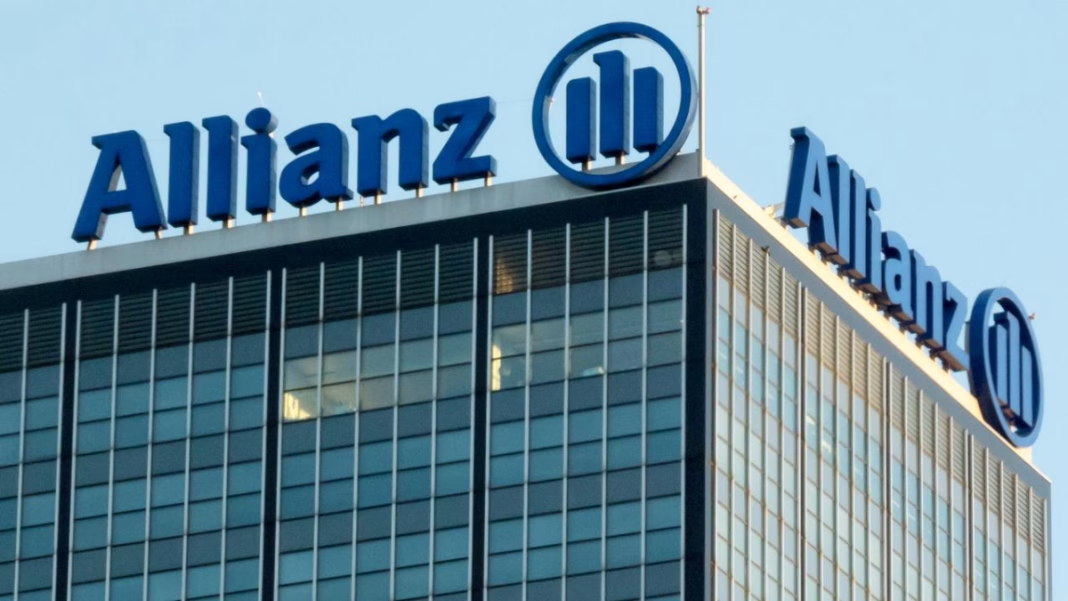
Insurance giant Allianz has confirmed that hackers got access to sensitive personal information belonging to most of its U.S. customers. The breach was discovered earlier this month and reported by the company on July 16.

According to Allianz, the attackers managed to break into a third-party system used by the company. This system was cloud-based and not owned by Allianz itself. Still, it held valuable customer data. The hackers are believed to have accessed personal information from nearly all of Allianz Life’s 1.4 million U.S. customers.

The stolen information also includes data from financial professionals and some Allianz employees. So far, the company has not said exactly what kind of data was taken. But since the system held personal records, it likely includes names, addresses, contact details, and possibly more sensitive information.

Allianz said it has not seen signs that its own internal network was affected. The breach happened through an outside vendor that provided cloud services. The company stressed that it acted quickly to stop the attack and informed the FBI right away.

The insurer has also started to contact the people affected. A formal notice was filed with the Attorney General’s Office in Maine, as required by law.

Third-Party Vendors Again at the Center of Cyber Breach

This breach highlights a growing problem in the cybersecurity world — third-party risks. More and more companies rely on outside vendors for software, storage, and IT services. But if those vendors are not fully secure, it opens the door for hackers to slip in.

A report from Verizon recently showed that 30% of all data breaches in the year ending October 2024 involved third parties. That number is double the rate from the year before, which was just 15%.

🕵️‍♂️ Silent Cyberattack Hits Russian Aerospace Giant — EAGLET Malware Used to Steal Defense Secrets

Experts say this type of breach is now more common and more serious. In the past, problems with vendors were often minor. But now, hackers use them as a backdoor to get to sensitive data. If one link in the chain is weak, the whole system becomes vulnerable.

In the case of Allianz, the hackers didn’t need to attack the main company. Instead, they targeted the cloud system run by a third party. This allowed them to bypass strong internal defenses and go straight to the stored customer records.

New Tech Brings New Risks

The Allianz breach comes as many companies begin to use advanced tools like artificial intelligence (AI) to protect their data. But experts warn that these tools also create new challenges.

One concern is agentic AI — systems that act on their own without direct control. These AI agents can help stop threats quickly. But they can also make mistakes. For example, if an AI system wrongly shuts down a key part of a company’s network, it could cause huge problems. And if it fails to notice a real attack, the damage could be worse.

As more people work remotely and use different devices, it becomes harder to protect every entry point. Phones, apps, and web browsers can all become weak spots. Experts say companies now need to protect not just their main systems but every device connected to their networks.

In Allianz’s case, it is still unclear how long the hackers had access or how much data they managed to steal. But the breach shows that even big companies with strong security can be at risk — especially when outside vendors are involved.

The company said it is continuing to investigate the incident and will update customers if more details come to light.
Renuka Bangale
Renuka Bangale
Renuka is a distinguished Chartered Accountant and a Certified Digital Threats Analyst from Riskpro, renowned for her expertise in cybersecurity. With a deep understanding of cybercrimes, malware, cyber warfare, and espionage, she has established herself as an authority in the field. Renuka combines her financial acumen with advanced knowledge of digital threats to provide unparalleled insights into the evolving landscape of information security. Her analytical prowess enables her to dissect complex cyber incidents, offering clarity on risks and mitigation strategies. As a key contributor to Newsinterpretation’s information security category, Renuka delivers authoritative articles that educate and inform readers about emerging threats and best practices.

TOP 10 TRENDING ON NEWSINTERPRETATION

Cyber Attacks on Space Infrastructure: Satellites, GPS and the Ground Systems Behind Them

From the Viasat KA-SAT hack to GPS jamming over the Baltic, a research guide to how attackers target satellites, navigation signals and ground stations, and why it matters on Earth.

How AI Agents Are Used in Cyber Attacks: From Assisted Hacking to AI-Orchestrated Espionage

Attackers now use AI agents to scan networks, write exploits and run extortion campaigns. A research guide to documented cases, including the first reported AI-orchestrated espionage campaign, and what defenders should do.

Cyber Attacks on AI and LLMs: How Attackers Target Large Language Models

Prompt injection, data poisoning, model theft and jailbreaks: a research guide to how attackers target AI systems and large language models, with real cases and defences.

French Supermarket Refrigeration Cyberattack: How Hacking the Cold Chain Can Endanger Lives

In October 2026 attackers heated refrigeration cabinets in hundreds of French supermarkets to as much as 50°C. No one was hurt, but the attack shows how hacking the cold chain can endanger lives through fire, food poisoning and spoiled medicines.

Cyberattacks on Nuclear Facilities: Stuxnet, Kudankulam and the Limits of Air Gaps

Stuxnet, the Davis-Besse worm and malware at India’s Kudankulam plant: what they show about cyber risk at nuclear facilities and the limits of air gaps.

Triton: When Hackers Target the Safety Systems That Prevent Industrial Disasters

The 2017 Triton attack targeted the safety systems that prevent industrial disasters. What happened, who was charged, and how plants protect their last line of defence.

Cybersecurity Risks in Smart Cities: When Connected Infrastructure Fails

How connecting traffic control, emergency alerts and utilities concentrates cyber risk in cities, what the Dallas and Atlanta incidents showed, and what governments recommend.

Weaponized Drones: Hijacking, GPS Spoofing and Emerging Cyber Warfare Risks

How drones can be hijacked, jammed or misled by GPS spoofing, what researchers have demonstrated, and why governments treat drone fleets as a security risk.

Ransomware Attacks on Hospitals: How Healthcare Cyberattacks Put Patients at Risk

How ransomware against hospitals and their suppliers delays care and endangers patients, what the Düsseldorf and WannaCry cases show, and what research says about deaths.

Operational blunder exposes massive Russian cyber espionage attack on Ukrainian prosecutors

A major cyberattack has compromised the email accounts of...

Cyber Attacks on Space Infrastructure: Satellites, GPS and the Ground Systems Behind Them

From the Viasat KA-SAT hack to GPS jamming over the Baltic, a research guide to how attackers target satellites, navigation signals and ground stations, and why it matters on Earth.

French Supermarket Refrigeration Cyberattack: How Hacking the Cold Chain Can Endanger Lives

In October 2026 attackers heated refrigeration cabinets in hundreds of French supermarkets to as much as 50°C. No one was hurt, but the attack shows how hacking the cold chain can endanger lives through fire, food poisoning and spoiled medicines.

Cyberattacks on Nuclear Facilities: Stuxnet, Kudankulam and the Limits of Air Gaps

Stuxnet, the Davis-Besse worm and malware at India’s Kudankulam plant: what they show about cyber risk at nuclear facilities and the limits of air gaps.

Triton: When Hackers Target the Safety Systems That Prevent Industrial Disasters

The 2017 Triton attack targeted the safety systems that prevent industrial disasters. What happened, who was charged, and how plants protect their last line of defence.

Cybersecurity Risks in Smart Cities: When Connected Infrastructure Fails

How connecting traffic control, emergency alerts and utilities concentrates cyber risk in cities, what the Dallas and Atlanta incidents showed, and what governments recommend.

Ransomware Attacks on Hospitals: How Healthcare Cyberattacks Put Patients at Risk

How ransomware against hospitals and their suppliers delays care and endangers patients, what the Düsseldorf and WannaCry cases show, and what research says about deaths.

FBI warns of AVrecon malware targeting outdated routers linked to proxy based cybercrime

A serious cybersecurity warning has been issued regarding commonly...

Related Articles

Popular Categories
