

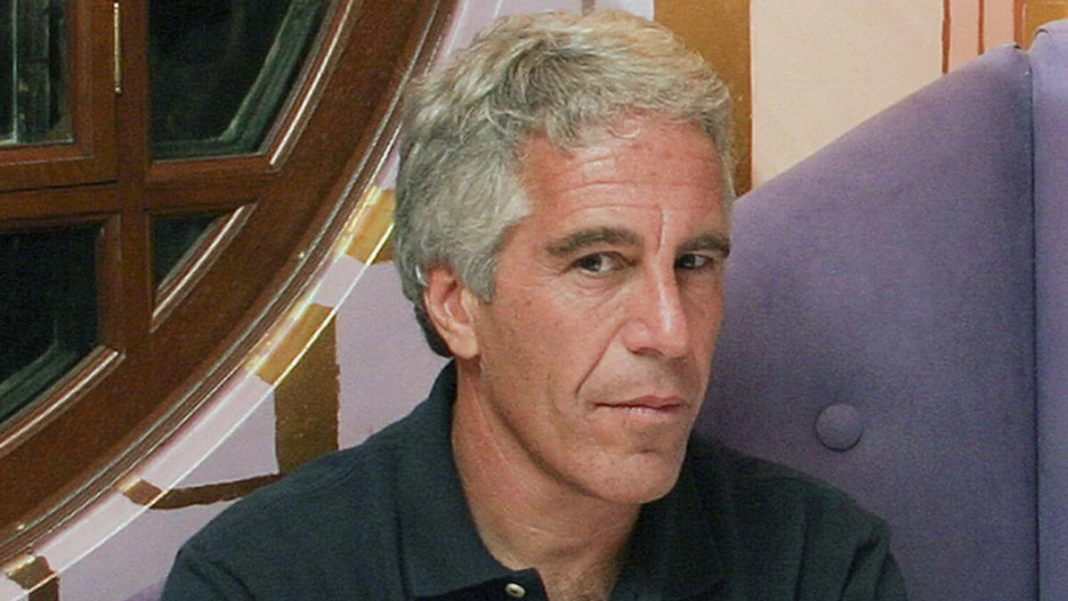

Leaked emails have revealed that convicted sex offender Jeffrey Epstein quietly arranged meetings between former Israeli Prime Minister Ehud Barak and prominent UAE billionaire Sultan Ahmed bin Sulayem years before Israel and the United Arab Emirates officially normalized relations under the Abraham Accords.
The emails, reported by Drop Site News, suggest that Epstein acted as a behind-the-scenes connector, helping influential political and business figures from Israel and the UAE communicate at a time when public ties between the two countries did not exist. The revelations are drawing attention because they show how private diplomacy and business discussions were already taking place long before formal agreements were announced in 2020.
Epstein’s Role as a Quiet Middleman
According to the leaked correspondence, Epstein positioned himself as a trusted intermediary between Ehud Barak and Sultan Ahmed bin Sulayem as early as 2013. At that time, Barak had recently stepped down from the Israeli government, where he had served as defense minister and deputy prime minister. Bin Sulayem was already a powerful figure in the UAE as the head of DP World, one of the world’s largest port operators owned by the Dubai government.
In one email, Epstein described bin Sulayem as closely connected to Dubai’s ruling leadership, referring to him as a key aide to Mohammed bin Rashid al-Maktoum, the ruler of Dubai and vice president of the UAE. Epstein suggested that building a relationship with such a figure could be strategically important.
Barak responded cautiously. In an email cited in the report, he indicated that open cooperation or major investments would be difficult without a sincere peace process in the region or significant political change. However, he also wrote that the relationship itself could be useful and worth thinking about more carefully.
The emails indicate that Epstein did not simply suggest an introduction. He actively worked to arrange meetings and continued to follow up, suggesting that Barak and bin Sulayem met several times through Epstein’s efforts.
Business Links Before Official Diplomacy
The leaked emails also show Epstein attempting to encourage business cooperation between Israeli and Emirati interests. In July 2013, he reportedly asked Barak for his opinion on a possible investment by bin Sulayem in an Israeli logistics-related company.
At the time, DP World was expanding rapidly across the Middle East and Africa. The company’s growth has often aligned with the UAE’s broader foreign policy goals, including strengthening trade routes and influence in key regions. In recent years, DP World’s activities have gained renewed attention due to regional competition, including rivalry with Saudi Arabia over ports and shipping lanes in the Red Sea.
Although there is no public record that the proposed Israeli investment moved forward, the emails suggest that economic cooperation was being quietly explored well before formal diplomatic ties were established.
When the Abraham Accords were announced in 2020, the agreement was widely presented as a sudden and historic breakthrough. The leaked emails challenge that view by showing that Israel and the UAE had already built deep, informal connections through intelligence, security, and business channels over many years.
Emails, Networks, and Controversial Connections
The report also highlights the close personal relationship between Jeffrey Epstein and Sultan Ahmed bin Sulayem. Their email exchanges reportedly date back to at least 2007, even after Epstein had been indicted on sexual abuse charges. Epstein is said to have hosted bin Sulayem at his private Caribbean island, Little St. James, and the two remained in contact for years.
Some of the released emails include crude and inappropriate jokes, reflecting the informal and personal nature of their communication. These messages are part of a much larger collection of Epstein’s correspondence that has been released following pressure from U.S. lawmakers.
Petra bill ignites firestorm over Epstein’s $170M link to Peter Thiel
The wider email trove has revealed Epstein’s connections to powerful figures across politics, media, and global business. He was known to have close ties to British publisher Robert Maxwell, later identified as having links to Israeli intelligence, and to U.S. retail billionaire Les Wexner, who supported pro-Israel lobbying and philanthropic efforts.
Epstein was found dead in his New York jail cell in 2019 while awaiting trial. The newly released emails do not allege that the Abraham Accords themselves were negotiated through him, but they provide detailed evidence that informal Israel–UAE engagement existed long before the agreements were signed.