

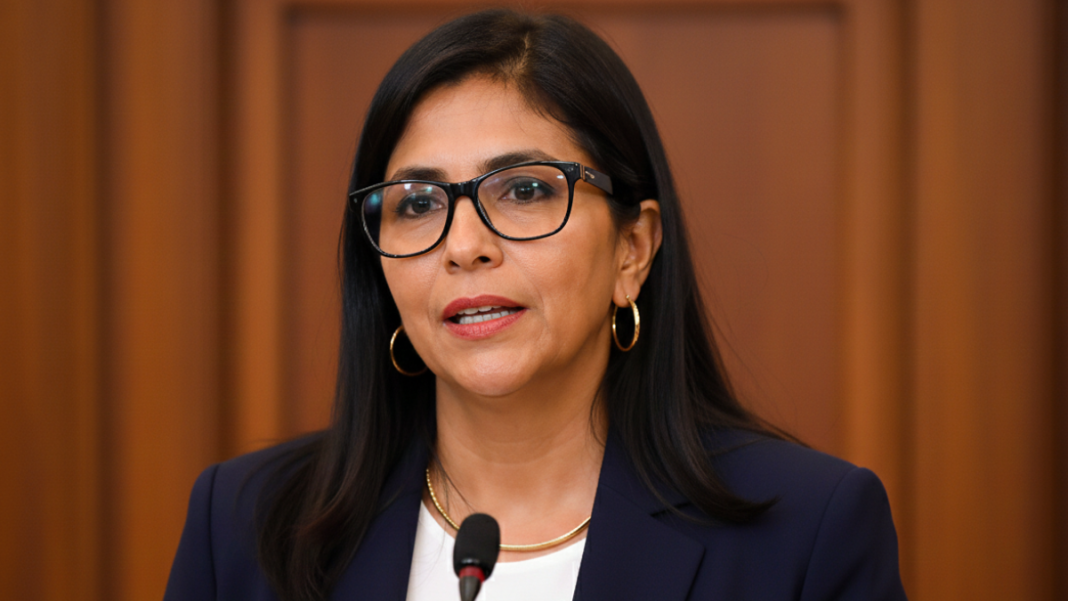

Venezuela’s recent political changes have raised numerous questions among people in the country and around the world. After Nicolás Maduro was removed from power, many expected the opposition to take charge, hoping the moment would lead to political change. However, unexpectedly, Delcy Rodríguez became the leader of Venezuela’s interim government with the support of the United States.
This surprised both Venezuelans and international observers. Instead of a complete change in the political system, the transition kept much of the existing structure in place. This choice seems to focus on maintaining stability and control over current institutions and dealing with economic issues, rather than making a strong move toward new democratic leadership.
A Leadership Change Without a System Collapse
Nicolás Maduro’s removal was swift and largely without public protest. His reign brought economic hardship and political oppression, so when he was ousted, many Venezuelans felt hopeful for change.
“This Wasn’t a Guess”: Polymarket rocked by perfectly timed $630,000 bets on Maduro’s arrest
However, their expectations were dashed when Delcy Rodríguez was appointed to lead the interim government. Instead of empowering the opposition, Washington opted for a figure from within the existing regime, signaling a preference for continuity over drastic change.
President Trump echoed this, expressing doubts about the opposition while praising Rodríguez’s ability to manage the transition. For many, this felt like a disappointment; Maduro was gone, but the political landscape remained largely the same, leaving them longing for genuine reform.
Delcy Signals Stability Over Immediate Democratic Transition
One of the main factors driving this decision was a deep rooted fear of chaos. In Venezuela, political power runs deeper than just the people who are elected. If there were a sudden change in leadership, it could have easily led to resistance or unrest.
By backing Delcy Rodríguez, the Trump administration seemed to focus on maintaining stability. She was already a part of the existing power structure, which meant it was less likely that security forces or government officials would push back against the transition. This choice was about trying to navigate a complex situation while aiming to keep the peace.
Trump loses Nobel Peace Prize — Venezuela’s María Corina Machado takes the honor
In this context, Delcy Rodríguez emerged as a figure who could deftly navigate the pressures from within Venezuela while also engaging with international players. It’s important to recognize that Venezuela’s society is deeply divided. A large portion of the population has continued to support Maduro and his political movement.
Many observers have drawn parallels to Venezuela’s recent history. When Hugo Chávez named Nicolás Maduro as his successor in 2013, he did so without going through elections, focusing instead on ensuring continuity. Today, a similar narrative unfolds with Delcy Rodríguez rising to prominence through a process centered around power dynamics rather than a popular vote, prompting reflections on the nature of leadership in Venezuela.
Oil, Economics, and a Delayed Vote
Economic realities played a central role in shaping the outcome. Venezuela holds vast oil reserves, but years of mismanagement and sanctions have damaged the industry. Reviving production requires cooperation from existing institutions.
Delcy Rodríguez has experience overseeing economic matters and is seen as open to limited reforms. Her approach aligned with U.S. interests, particularly in restarting controlled oil exports and easing economic pressure.
Secretary of State Marco Rubio outlined a phased strategy focused first on stabilization and supervised oil sales. Later steps included reconciliation measures such as releasing detainees and rebuilding civil society. A final transition phase was mentioned, though without a timeline.
Despite constitutional provisions calling for quick elections when a president cannot serve, voting was not treated as urgent. President Trump stated that the country needed fixing before elections could occur, delaying any immediate democratic process.
For ordinary Venezuelans, daily life remained difficult. Inflation, shortages, and weak public services persisted even as leadership changed. In the end, backing Delcy Rodríguez reflected a decision driven by urgency and control. Maduro’s removal changed leadership, but the foundations of power remained firmly in place.