

Pakistan is working to strengthen its air defence after reported losses during Operation Sindoor. The operation was carried out by India in May 2025 and targeted multiple locations across Pakistan following a major terrorist attack in Jammu and Kashmir.
During the operation, several important military assets were reportedly hit. These included airfields, radars, command centres, and aircraft. One of the most significant claims was the destruction of an Airborne Warning and Control System (AWACS) aircraft.
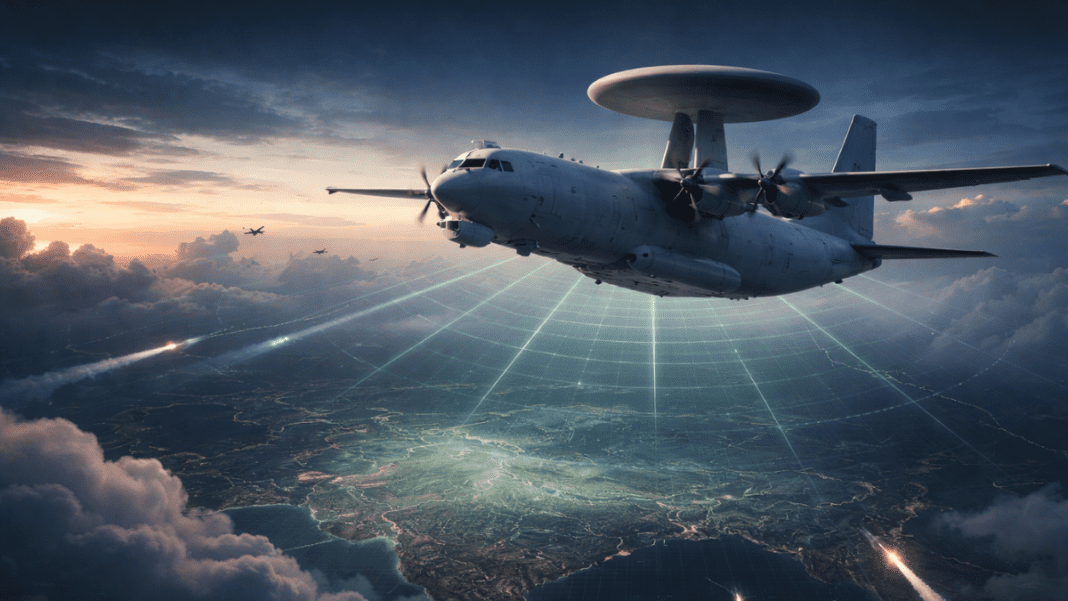
An AWACS aircraft is a key part of modern air warfare. It helps detect enemy aircraft, missiles, and drones from long distances. It also guides fighter jets and supports air defence systems. Because of this, losing such a system is considered a major setback.
Reports indicated that Pakistan may have lost one of its Saab 2000 Erieye aircraft. There were also claims that another aircraft was damaged in a missile strike on Bholari Air Base, as mentioned by former Pakistan Air Force officer Masood Akhtar. However, Pakistan has not officially confirmed these losses.
The reported damage also included radars, runways, and hangars. This affected Pakistan’s ability to monitor and control its airspace. Statements linked to Indian Air Force chief Amar Preet Singh also highlighted the scale of the strikes.
NSE hit by 40 crore cyberattacks during ‘Operation Sindoor’ simulation, systems stay secure
China’s KJ-500 Deal Signals Strategic Military Support
To recover from these losses, Pakistan has begun talks with China to acquire the Shaanxi KJ-500. These negotiations reportedly started in June 2025, shortly after the operation.
The KJ-500 is a modern airborne early warning aircraft. It can track multiple threats at long distances and provide real-time information to military units. This makes it a powerful asset in air defence and coordination.
The reported deal is part of a larger defence package from China. This package is said to include advanced fighter jets like the J-35A and air defence systems such as the HQ-19. These systems are designed to work together using advanced technology and shared data networks.
With the addition of the KJ-500, Pakistan aims to rebuild its surveillance and command capabilities. It would also improve coordination between its air force and missile defence systems.
This move reflects the strong defence relationship between China and Pakistan. China has long been a key supplier of military equipment and technology to Pakistan.
Operation Sindoor Impact And Continuing Regional Tensions
Operation Sindoor was launched on the night of May 7 and targeted nine locations linked to terrorist activity. The strikes were carried out after a deadly attack in Pahalgam that killed 26 people.
The operation reportedly caused widespread damage to Pakistan’s military infrastructure. Airfields and key installations were hit. Radars were damaged at multiple locations, and command centres were also affected.
Runways at two locations were reportedly damaged. Hangars at three different airbases were also hit. These strikes disrupted Pakistan’s air operations.
There were also claims of destroyed aircraft, including a C-130 class plane and several fighter jets. Reports suggested that long-range strikes of over 300 km were carried out, possibly targeting high-value airborne systems like AEW&C aircraft. These details were also linked to statements associated with Amar Preet Singh.
The reported loss of an AWACS aircraft is significant because such systems are central to aerial surveillance. They help detect threats early and guide responses.
Pakistan’s move to acquire the KJ-500 shows an effort to restore this capability. It also highlights how the effects of Operation Sindoor are still being felt months after the strikes.
The situation reflects ongoing regional tensions, where military actions are followed by efforts to rebuild and strengthen defence systems.